
For George Washington: A Revolutionary Life, Mount Vernon partnered with descendants to create AI-assisted, historically informed portraits of people from Washington’s world—enslaved and free—whose likenesses have been lost to history.
When visitors step inside Mount Vernon’s exhibit, George Washington: A Revolutionary Life, they encounter more than the story of Washington himself. They meet the people who shaped his world.
To present a fuller version of Washington’s life story, Mount Vernon undertook an ambitious project to create portraits of people from Washington’s life whose likenesses were never recorded or have been lost to time—family members, military and religious allies, close associates, and many of the men and women enslaved at Mount Vernon.
Working with descendants of Mount Vernon’s enslaved community, historians, and digital artists at Solid Light, Mount Vernon harnessed the power of AI to develop thoughtfully reconstructed portraits that bring us closer to the real people behind the historical record.
Descendant Collaboration
From the outset, descendant involvement shaped every stage of the project. Mount Vernon engaged the League of the Descendants of the Enslaved at Mount Vernon and individual families before any portraits were created. Their voices guided the ethical framework and creative direction of each image.
Many families shared treasured photographs, some only a few generations removed from the individuals portrayed, which became essential reference points. Descendants were also asked to complete detailed questionnaires about family traits, personality characteristics, and physical features. These insights helped inform facial expressions, posture, and emotional tone, ensuring that each portrait reflected both history and family memory.
Historical Research and Material Accuracy
Each portrait was built from multiple layers of research and collaboration. Mount Vernon scholars drew on primary sources, including George Washington’s own records, 18th-century newspapers, runaway advertisements, and the Mount Vernon Slavery Database.
Mount Vernon experts and scholars of 18th-century clothing and material culture ensured historically accurate dress, hairstyles, and accessories.
The Base Portraits
Many of the portraits of the enslaved began at Mount Vernon, where actors were photographed in period clothing by photographer Steven M. Cummings. Some were photographed in the very landscapes and working spaces where the individuals portrayed would have lived and labored. These base images provided the posture, lighting, and foundation for each portrait.
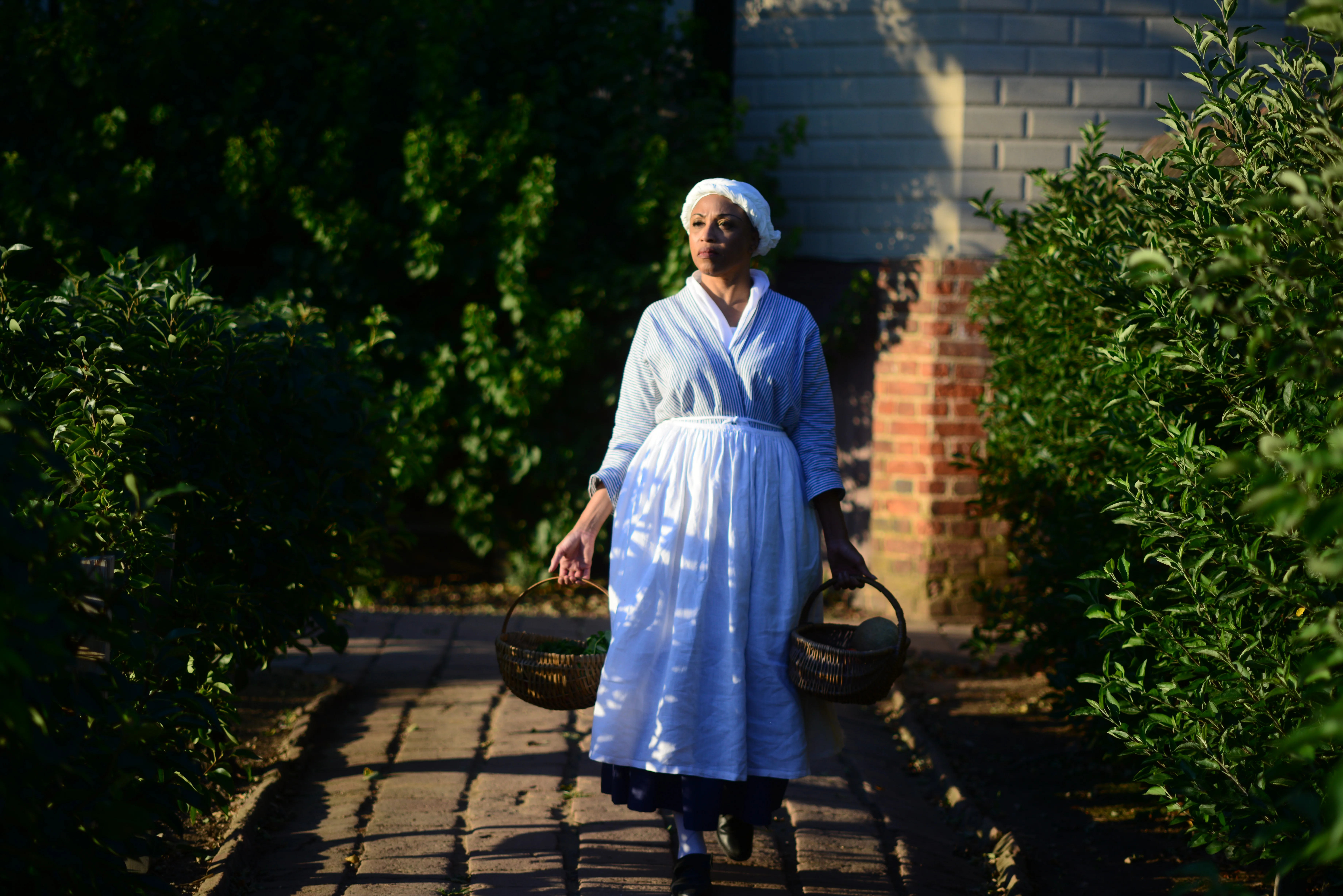
Actors were posed in historically informed settings and clothing, providing the foundation that was later refined using AI tools, historical research, and descendant input. Here, an actress portrays Doll, Mount Vernon’s enslaved chief cook, in the lower garden. (Steven M. Cummings / MVLA)
From Research to Portrait
Using the compiled research—historical documentation, descendant input, family photographs, and base photography—Solid Light began building each image. AI tools were used to generate the initial structure, form, and painterly quality of the portraits, combining base photographs and family images with prompts informed by 18th-century sources and oral histories. Digital artists then refined the results, adjusting details and composition to ensure the portraits remained faithful to the historical research and descendant guidance.
The process was iterative and collaborative. Drafts were shared in virtual meetings with descendants, Mount Vernon staff, and the Solid Light team. Families responded candidly, sometimes recognizing familiar features, sometimes requesting changes to better reflect personality or emotion. Adjustments were made, refined, and reviewed again. Historical experts in 18th-century clothing and hairstyles also weighed in to ensure that elements beyond family resemblance were historically accurate.
In addition to members of the enslaved community, the project also created portraits of non-enslaved individuals from Washington’s life whose likenesses do not survive. These include Washington’s parents (Mary Ball Washington and Augustine Washington), Thomas Fairfax, Edward Braddock, James Anderson, Moses Seixas, Tanacharison, and even a 15-year-old George Washington. These portraits further expand the visual record of Washington’s world.
Below, learn more about the resources used to create each of these portraits.
Arlington
(at Mount Vernon 1768–after 1774)
Arlington was born into a family of enslaved Africans whose history in Virginia may have reached back to the 1630s. He was named after the Custis family’s original plantation, Arlington, on the Eastern Shore of Virginia, where he may have been born. A man named Arlington was recorded there as early as 1722 and may be the same man.
Arlington’s family was moved from the Eastern Shore to York County sometime before Daniel Parke Custis died in 1757. After George Washington married Martha Dandridge Custis in 1759, Arlington was moved again—brought to Mount Vernon as part of the Custis dower estate. By the late 1760s, he was working at Mansion House Farm, doing heavy physical labor like ditching. He was later reassigned to River Farm. In 1772, he helped construct Washington’s mill complex.
The last known record of Arlington at Mount Vernon dates to 1774.
Portrait
Because no known portrait or physical description of Arlington survives, his likeness was developed through community input, regional photographs, and historical context. The Eastern Shore Harmon family provided photographs that helped inform Arlington’s facial features.
Descendant feedback also played an important role in shaping the emotional tone of the portrait. Family advisors responded strongly to Arlington’s direct gaze and sense of presence, noting that he looked “proud” and that his eyes seemed to look beyond the viewer. They also valued the portrait’s melancholy quality. Details such as the lines around his mouth and eyes help convey experience and endurance.
Mount Vernon experts of 18th-century clothing and material culture also reviewed the portrait to ensure historical accuracy. Arlington’s clothing reflects the practical garments of an enslaved field worker and ditcher, appropriate to the agricultural labor Arlington performed at Mount Vernon.
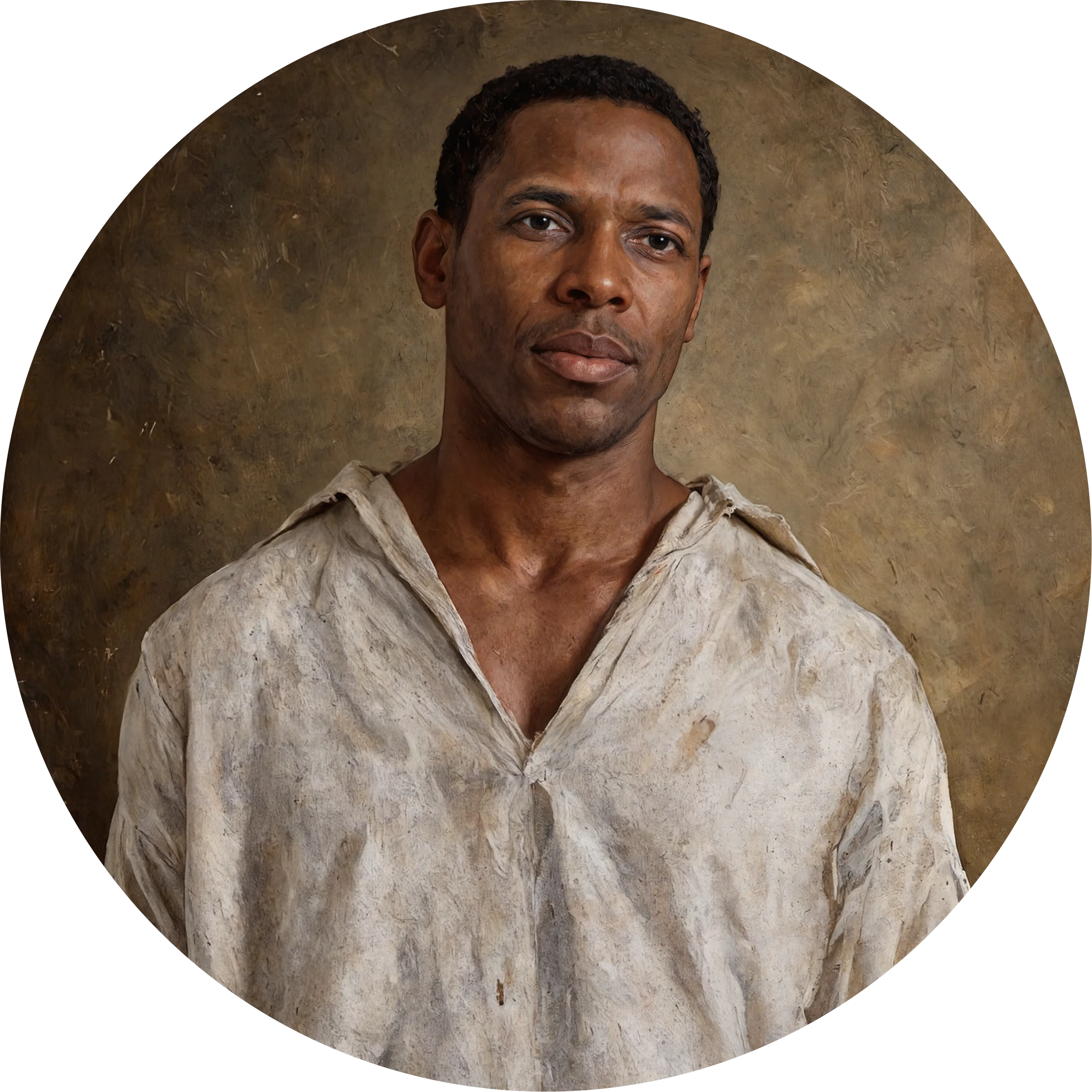
"Arlington," artist rendering with the support of historic sources and AI, 2026. Courtesy, League of the Descendants of the Enslaved at Mount Vernon & MVLA
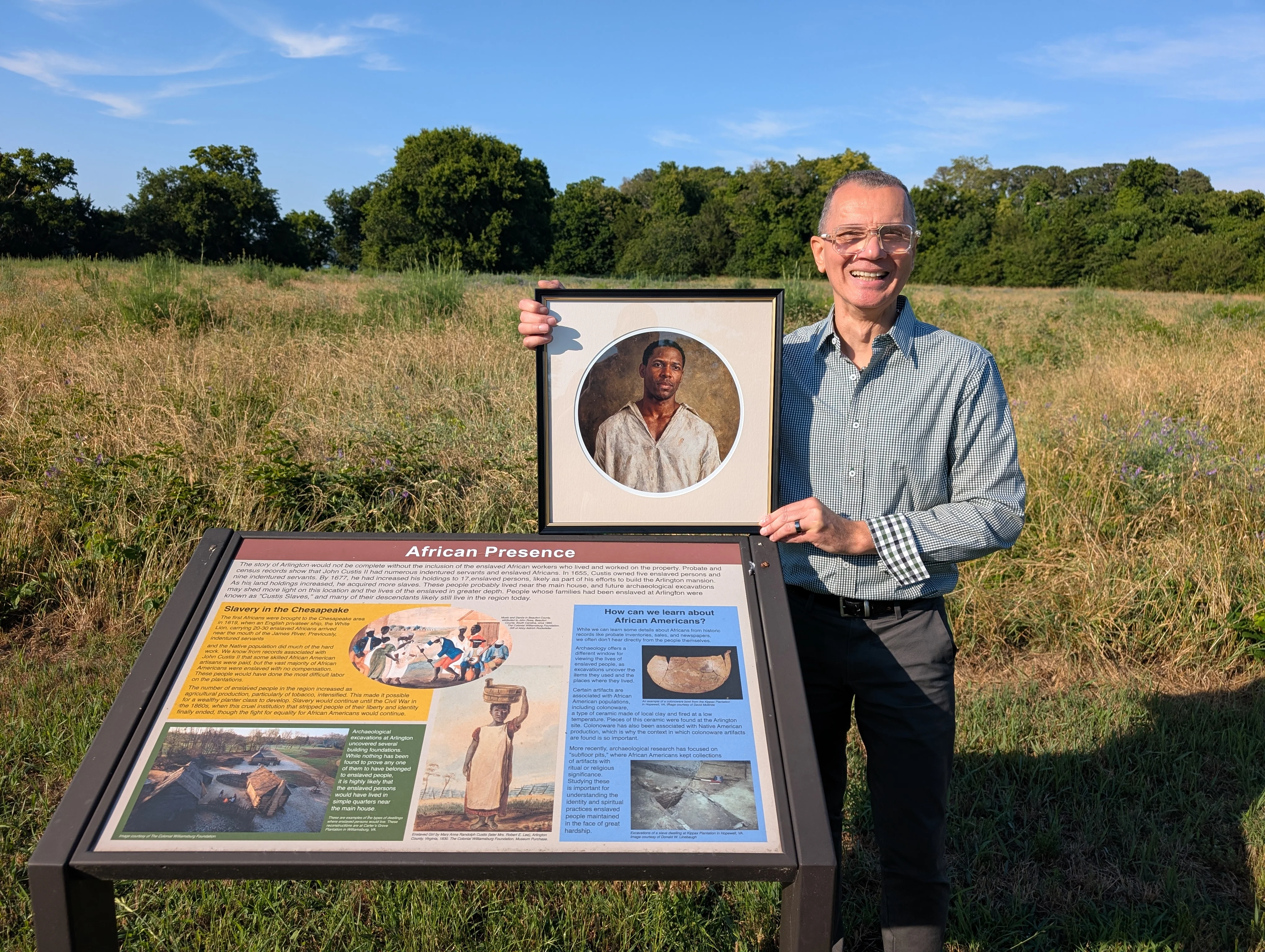
Tyrone Goodwyn holds the portrait of Arlington at the site of the Custis family’s Arlington plantation on Virginia’s Eastern Shore. Goodwyn, a historian and spokesperson for the project, helped provide context for Arlington’s story and his connection to the Custis estate.
Augustine Washington
(1694 – 1743)
George Washington’s father, Augustine, was born in Virginia but lived for a time with his mother in England. He returned to America, became a tobacco planter, and started an ironworks furnace. He inherited land and enslaved people from his father and gained more wealth when he married Jane Butler. The couple had four children. When Jane died, Augustine married Mary Ball. George was the first of their six children. Augustine moved several times. He oversaw construction of the initial one-and-a-half-story house that would become the Mount Vernon mansion.
Portrait
No confirmed life portrait of Augustine Washington survives. To approximate his likeness, Mount Vernon examined surviving portraits of his children—particularly Lawrence Washington, George Washington, Betty Washington Lewis, and Charles Washington—to identify shared family traits and complexion. Because Augustine did not live beyond the age of 50, younger wartime portraits of George Washington were consulted to approximate earlier family resemblance and inherited features.
Augustine’s portrait draws heavily on mid-18th-century Virginia male portrait conventions, including planter-era examples from the 1730s and 1740s. Comparable regional portraits helped guide his posture, attire, and overall presence as a Virginia landowner. Period garments and silhouette references ensured that his clothing reflects the style and status of a colonial gentleman of his standing. Mount Vernon scholars, including Amanda Isaac, Curator of Fine and Decorative Arts, reviewed the portrait during its development to ensure historical and material accuracy.
Contemporary descriptions characterize Augustine as six feet tall, fair in complexion, physically strong, and gentle in temperament. These attributes informed both his stature and expression in the portrait, resulting in a representation grounded in documented family resemblance, period portrait traditions, and material culture research.
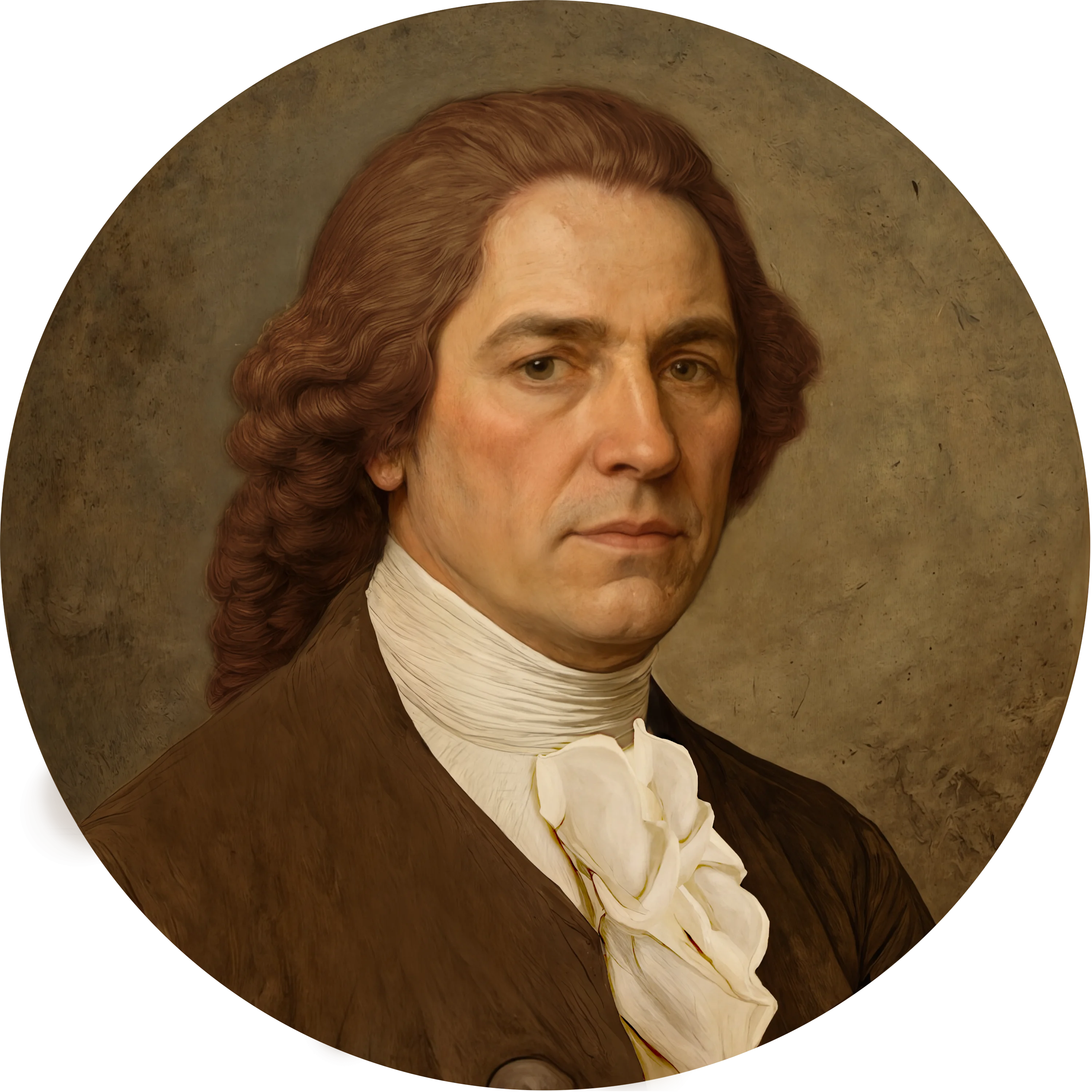
"Augustine Washington," artist rendering with the support of historic sources and AI, 2025. Courtesy, MVLA.

This portrait of Williamsburg merchant William Prentis was used as a reference for mid-18th-century dress, posture, and presentation in the creation of Augustine Washington’s likeness. Painting by Charles Bridges, ca. 1735-1745. (Public domain)
Caroline Branham
(c. 1764 – 1843)
Caroline Branham served as an enslaved housemaid in the Mansion, tending to the daily needs of the Washington family and their guests. She also sewed clothing and household linens for the plantation. She and her husband, Peter Hardiman, met at Mount Vernon where she was born. He was an enslaved groom rented by Washington to care for his horses.
Branham became the property of George Washington Parke Custis after the death of his grandmother, Martha Washington. He was believed at the time to be the father of Branham’s youngest daughter Lucy. Branham never gained her freedom. She is buried in the graveyard of Christ Church in Alexandria, Virginia.
Portrait
The portrait of Caroline Branham was shaped by a combination of family-submitted photographs, cultural direction from descendants, and historical context provided by Mount Vernon records. Although no historical images or detailed physical descriptions of Caroline survive, her descendants—members of the Edwards/Julien family—provided extensive insights that guided the portrait’s development.
Photographs of Rosa Branham (1882–1972), Caroline’s great-granddaughter, were submitted to help shape inherited features and family resemblance. These images, along with written responses from multiple descendants, emphasized physical traits such as a strong body, broad hips, and a kind face. Repeated mention was made of a thin, straight nose at the bridge with a delicate flare at the nostrils, brown eyes, and medium to light-medium skin tone. These intergenerational features helped inform the construction of Caroline’s facial structure and presence.
The family also offered emotional descriptors—resilient, exhausted, intelligent, creative, and determined—which shaped her expression and posture. As both a housemaid and seamstress at Mount Vernon, Caroline would have worked long days supporting the Mansion’s operations and attending to its many visitors. The portrait reflects her lived experience with dignity and care, including appropriate period dress and domestic styling. She is also depicted wearing earrings, informed by historical records showing that George Washington purchased silver earrings for enslaved individuals, as noted in a 1762 invoice listing “4 Silver Bobs for Servants."

"Caroline Branham," artist rendering with the support of historic sources and AI, 2025. Courtesy, League of the Descendants of the Enslaved at Mount Vernon & MVLA
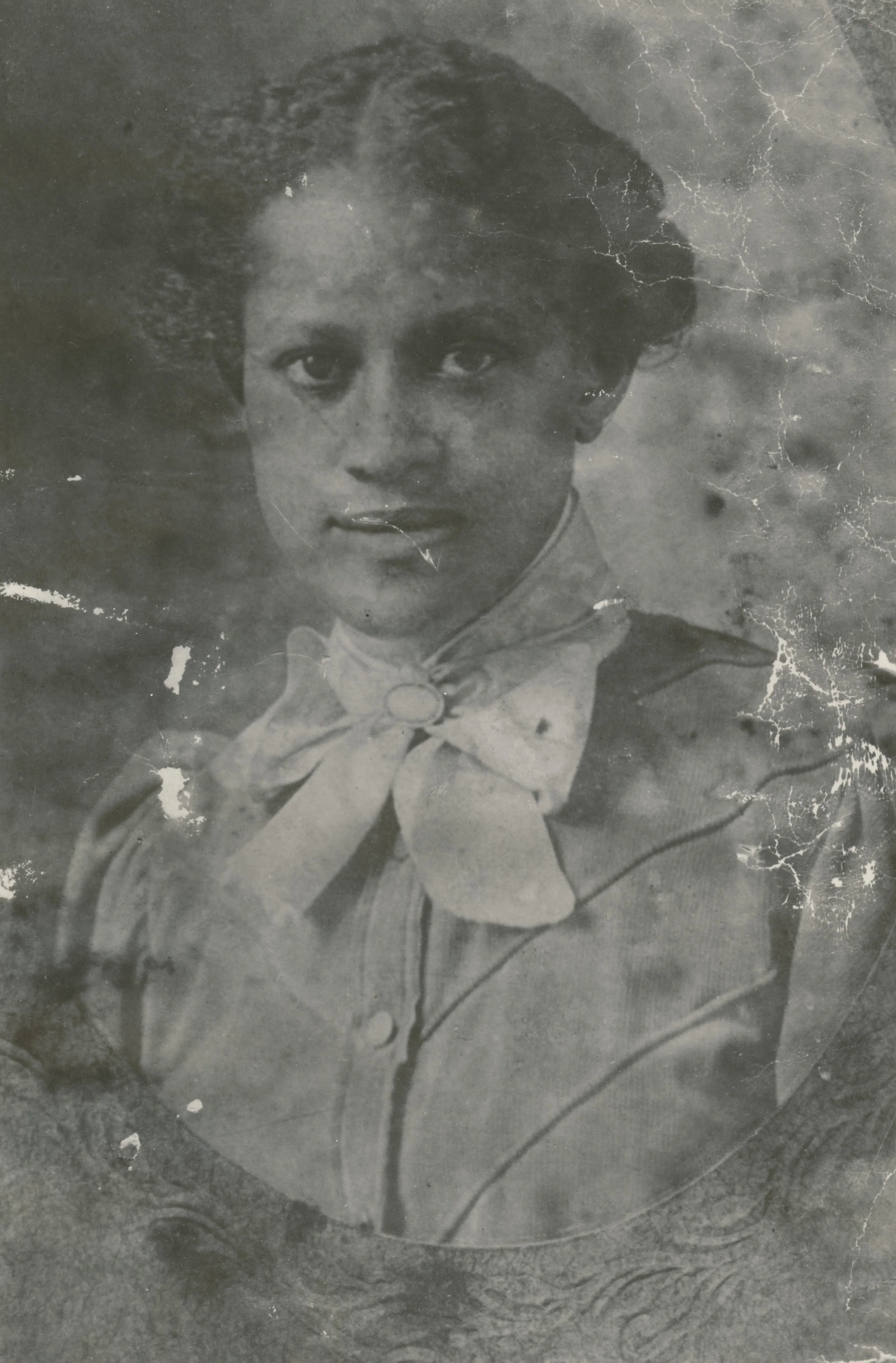
Rosa Branham (1882–1972) was the great-granddaughter of Caroline Branham. The Branham family provided family photographs and cultural direction to build the attributes and features for Caroline Branham’s portrait. Courtesy, the Edwards / Julien Family, direct descendants of Caroline Branham
Christopher Sheels
(1776 – after 1802)
Born into slavery at Mount Vernon, Christopher Sheels was the son of Alce, an enslaved spinner. At just 13 years old, he was selected to serve in George Washington’s presidential household, where he likely worked as a waiter. After the presidency, in 1797, Sheels became Washington’s enslaved valet (personal servant) and took care of Washington’s daily needs—including his appearance—by caring for his clothes and accessories. Sheels married an enslaved woman, and they made plans to leave bondage together but were discovered. Sheels was likely inherited by George Washington Parke Custis after Washington’s death, but the record is incomplete.
Portrait
No confirmed visual likeness of Christopher Sheels survives. To create his portrait, Mount Vernon relied on documentary records, contextual research, and descendant-submitted photographs.
Sheels is identified in historical records as “mulatto,” a term used in 18th-century documents to describe a person of mixed race. While detailed physical descriptions of him do not survive, this designation, combined with his age and documented roles as a waiter and later George Washington’s valet, helped guide general considerations of complexion and presentation.
A significant contribution to the portrait came from the Michie/Daniels family, descendants connected to Mount Vernon’s enslaved community. Henrietta Michie (b. 1841), was the great-grandniece of Christopher Sheels. The family provided multiple generations of photographs, which were used to build shared attributes and facial features for Sheels’ likeness. These descendant photographs helped inform skin tone, facial structure, and inherited traits.
Clothing and grooming were based on research into the attire of Washington’s valet, including late 18th-century livery standards and household dress practices.
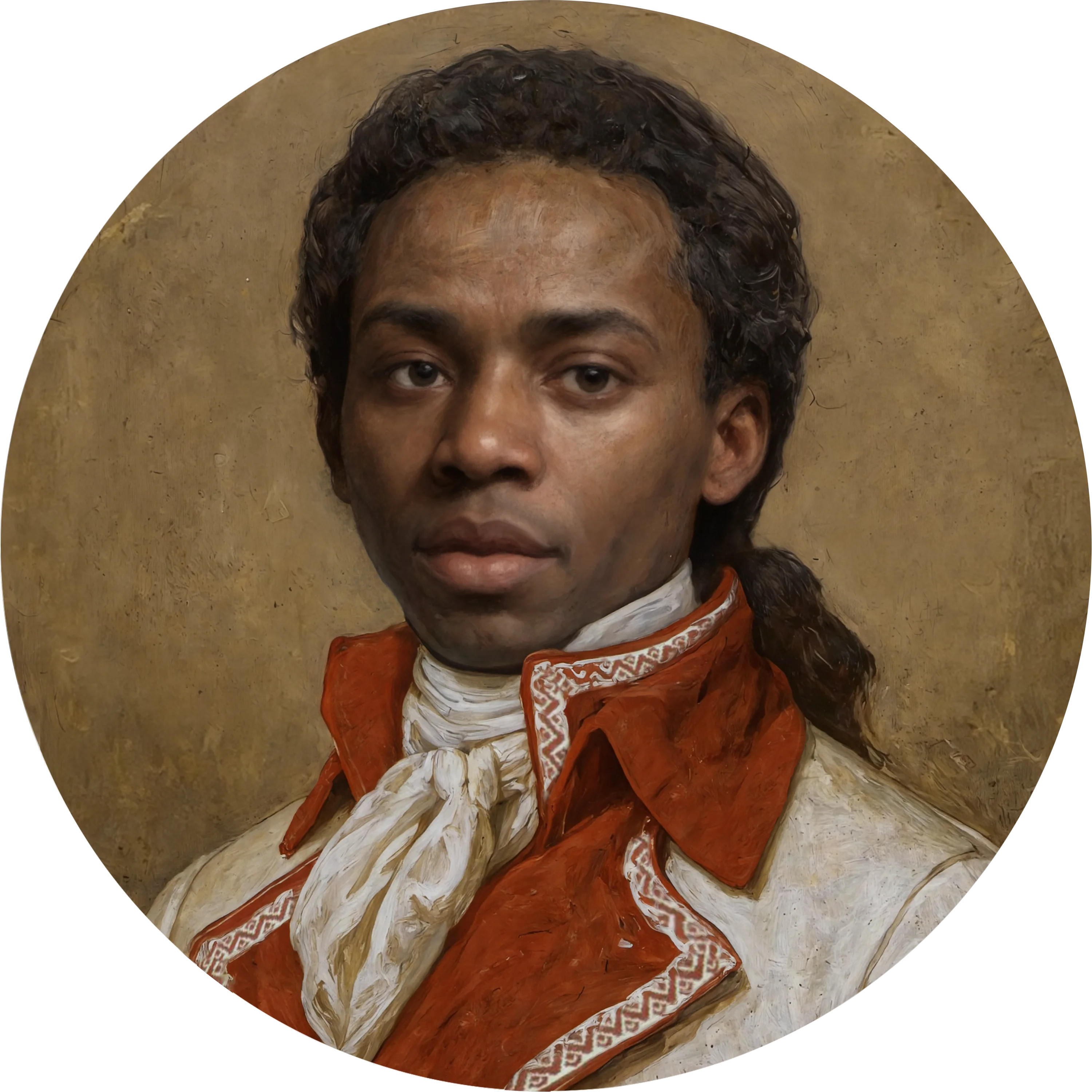
"Christopher Sheels," artist rendering with the support of historic sources and AI, 2025. Courtesy, League of the Descendants of the Enslaved at Mount Vernon & MVLA
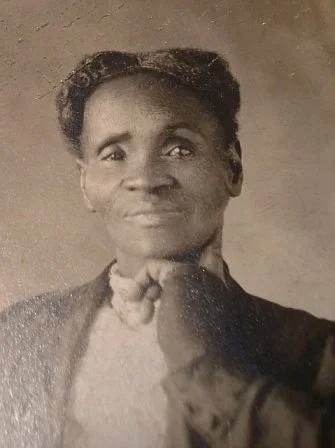
Henrietta Michie (1841 – after 1894) was the great-grandniece of Christopher Sheels. The Michie / Daniels family provided family photographs and cultural direction to build attributes and features of Christopher Sheels’ portrait. Courtesy of the Michie / Daniels family, descendants of Christopher Sheels
Daphne
(c. 1740s – before 1799)
Daphne was an enslaved field worker at River Farm, one of the five farms that made up Washington’s plantation system. Like many women in the plantation workforce, she labored in the fields producing the crops that supported Mount Vernon’s economy.
When Washington inherited Mount Vernon, tobacco was the plantation’s primary cash crop. The crop required intensive hand labor to plant, weed, and prepare for market, work carried out largely by enslaved women like Daphne. In the mid-1760s, Washington shifted the estate away from tobacco production and toward wheat farming, a change that altered the rhythms of plantation labor. Field workers who once planted tobacco by hand increasingly worked in the cultivation and harvesting of wheat and other grains.
Daphne was the mother of seven children. Records suggest that Joe later became a carpenter and Moses a cooper at Mansion House Farm, while Lucy remained connected to River Farm after marrying Cyrus, a postilion. Daphne appears in Mount Vernon records into the 1790s, when she was likely in her 50s, but records suggest she died before 1799.
Portrait
Few personal details about Daphne survive in the historical record. Information about her life comes primarily from Mount Vernon farm reports, ledgers, and correspondence that document her work assignment as a field laborer and record the names of her children. These records offer glimpses of daily life; a ledger from 1792 notes that Daphne sold chickens to the Washington household, and, in 1795, Washington wrote to farm manager William Pearce, remarking on the good behavior of Daphne’s children and suggesting they be considered for work in the garden.
The portrait of Daphne draws on contextual research about women’s agricultural labor at Mount Vernon. Clothing and styling reflect typical garments worn by field workers, including durable work clothing and a headwrap suited to agricultural labor.
Descendants of Daphne also shared multiple family photographs, which helped inform general inherited features used in constructing the portrait. Together, these historical records, contextual research, and descendant photographs informed the creation of a portrait that reflects Daphne’s life at Mount Vernon.
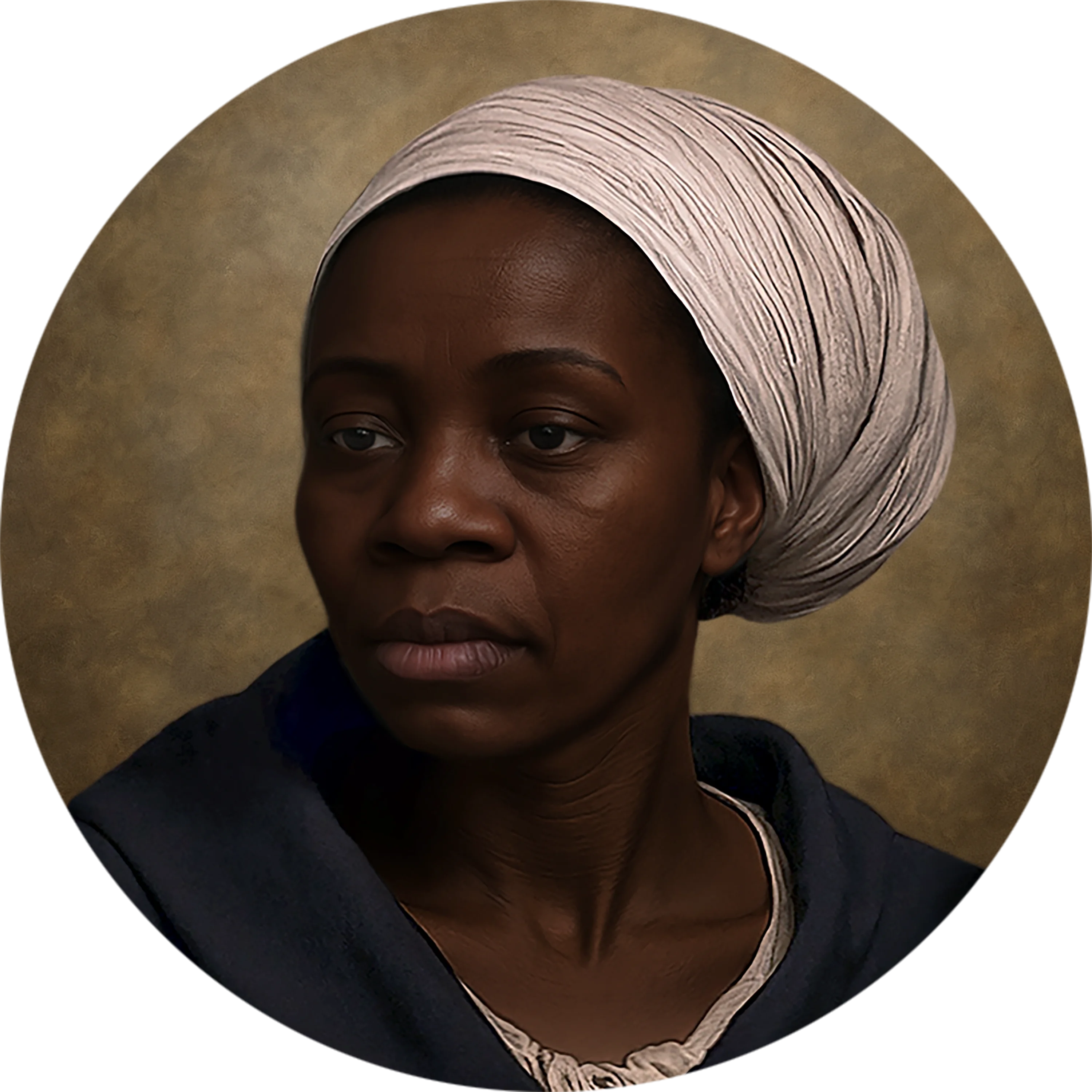
"Daphne," artist rendering with the support of historic sources and AI, 2025. Courtesy, League of the Descendants of the Enslaved at Mount Vernon & MVLA
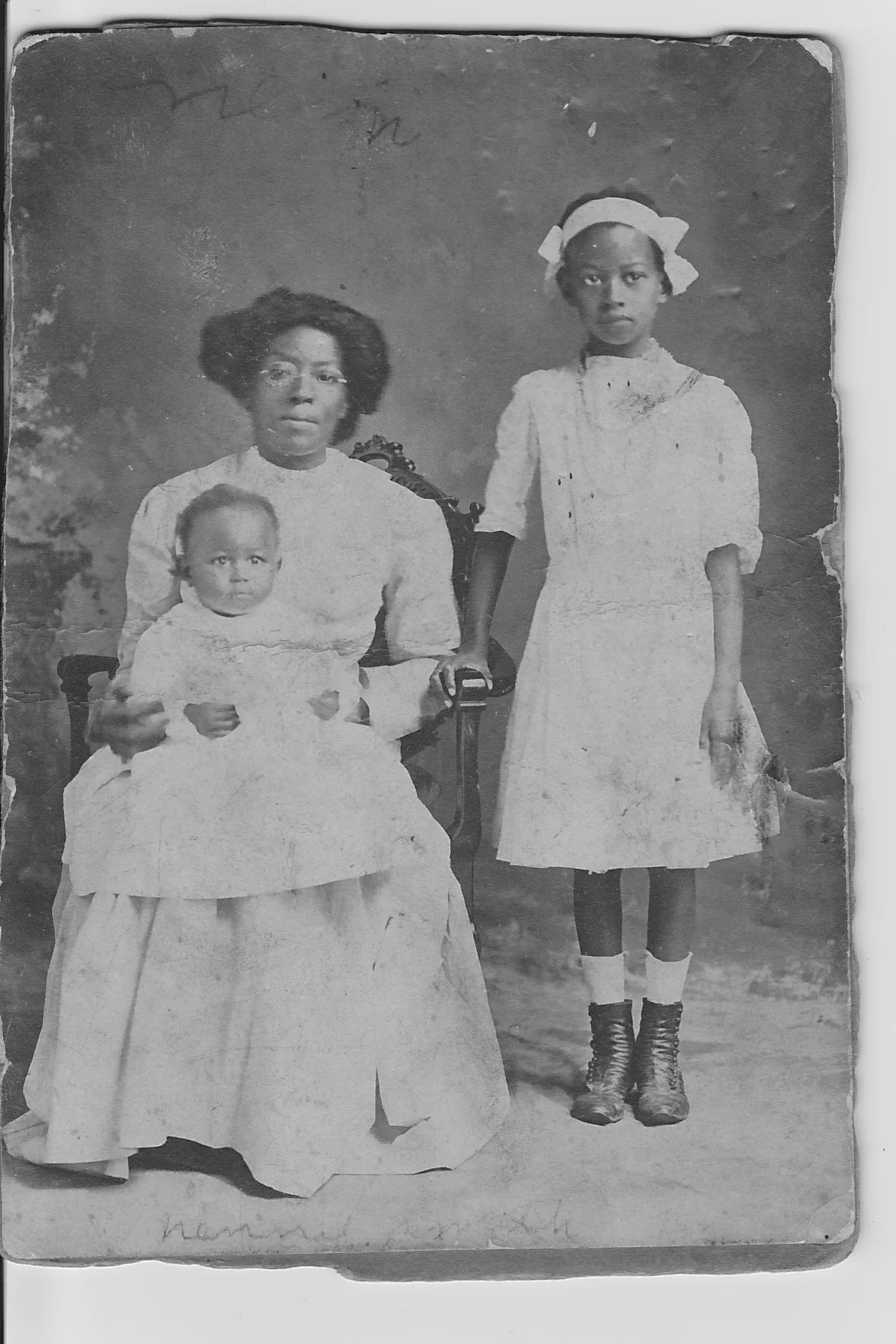
Annie Taylor is the 3rd great-granddaughter of Daphne, and Grace and Helen Smith are the 4th great-granddaughters of Daphne. Combined with written sources and oral traditions, the Napper family provided multiple generations of photographs and cultural direction to build the attributes of Daphne’s portrait. Courtesy, Cherryle Hooks, 6th great-granddaughter of Daphne.
Daniel Payne
(1762–after 1783)
Daniel Payne was born in 1762. Few records document his early life, family connections, or work, though a 1774 account lists him among those working at Mansion House Farm.
During the Revolutionary War, while George Washington led the Continental Army against Britain, Daniel pursued freedom for himself. At age 19, he escaped aboard the British warship HMS Savage when it anchored near Mount Vernon in 1781.
By 1783, he had adopted the surname Payne and appeared in the Book of Negroes, the British register documenting Black Loyalists evacuated after the war. The record described him as formerly enslaved by General Washington and bound for Nova Scotia.
Portrait
Because no known portrait of Daniel Payne survives, his likeness was developed through descendant input, family photographs, and historical records. A 1781 list compiled by Lund Washington documenting the enslaved people from Mount Vernon who escaped to the HMS Savage described Daniel as “very likely,” an 18th-century phrase that could suggest someone capable and physically attractive.
Descendant-submitted photographs played a central role in shaping Daniel’s appearance. A photograph of John Henry Paine, a descendant of Daniel Payne, served as the primary visual reference. Additional family photographs contributed other shared traits, including a narrow face, brown eyes, a widow’s peak, a wiry but strong build, and a distinctive downward slope along the edge of the face. Daniel’s posture and expression (leaning slightly forward, as though listening intently, with direct eye contact) was guided by family direction.
Daniel is portrayed in his early 20s, after his escape from Mount Vernon and during the continuing Revolutionary War.
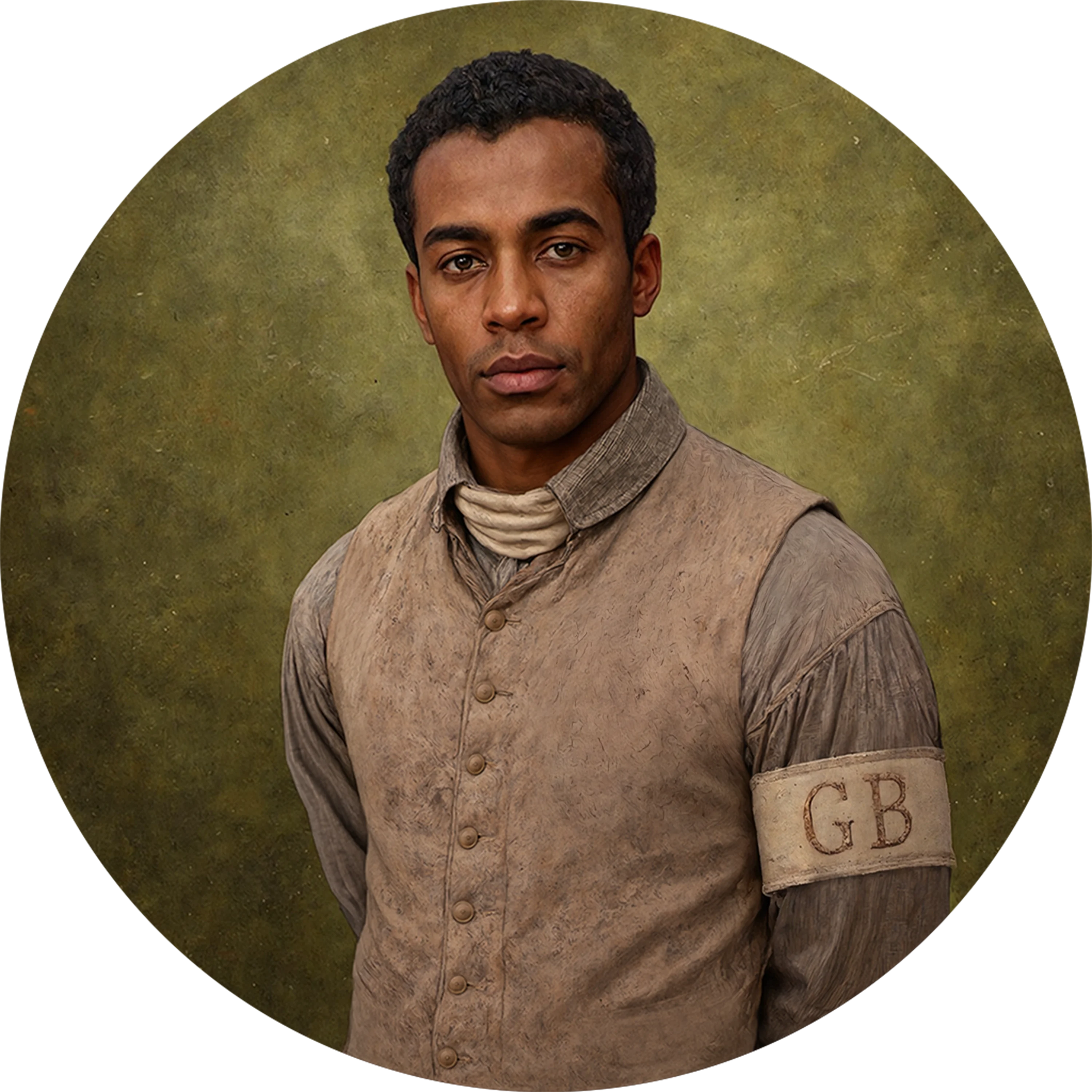
"Daniel Payne," artist rendering with the support of historic sources and AI, 2026. Courtesy, League of the Descendants of the Enslaved at Mount Vernon & MVLA
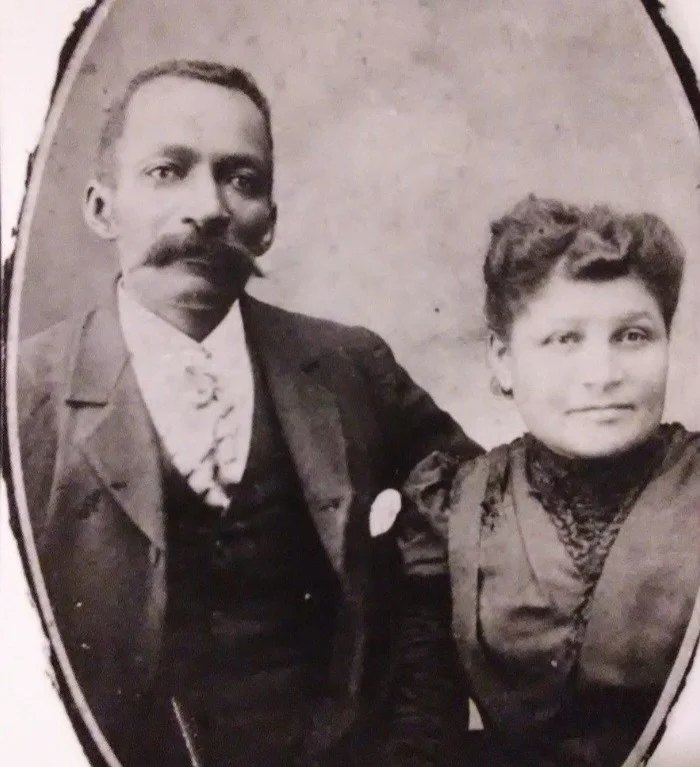
John Henry Paine was a descendant of Daniel Payne. The Payne family provided family photographs and cultural direction to build the attributes and features of Daniel Payne’s portrait. Courtesy of David Payne, direct descendant of Daniel Payne.
Davy Gray
(C. 1743 – After 1802)
As an enslaved overseer, Davy Gray bore the responsibility of meeting Washington’s productivity expectations. He provided agricultural advice to Washington and successfully advocated for Muddy Hole Farm’s families, including his wife Molly.
Portrait
The portrait of Davy Gray was created using historical documentation related to his life and work at Mount Vernon. Gray arrived at the estate in 1759 as part of Martha Washington’s dower share of enslaved workers. He began as a field worker and, by 1778, was assigned the role of overseer. By 1799, Gray served as overseer at Muddy Hole Farm, where he lived with his wife, Molly, and also managed agricultural work at River Farm and Dogue Run Farm.
As an overseer, Gray was responsible for supervising enslaved laborers and overseeing crop production. He stood out in this role, which was typically held by white men, and received certain privileges associated with his position, including leather breeches, occasional cash gifts, and housing with a brick chimney, which was more substantial than standard log cabins.
Historical records also document Gray’s advocacy on behalf of other workers. In 1793, he successfully persuaded George Washington to change a cornmeal distribution practice that left laborers hungry.
These records formed the basis for creating Gray’s portrait, emphasizing his role as a manager, advocate, and trusted figure within Mount Vernon’s enslaved community.
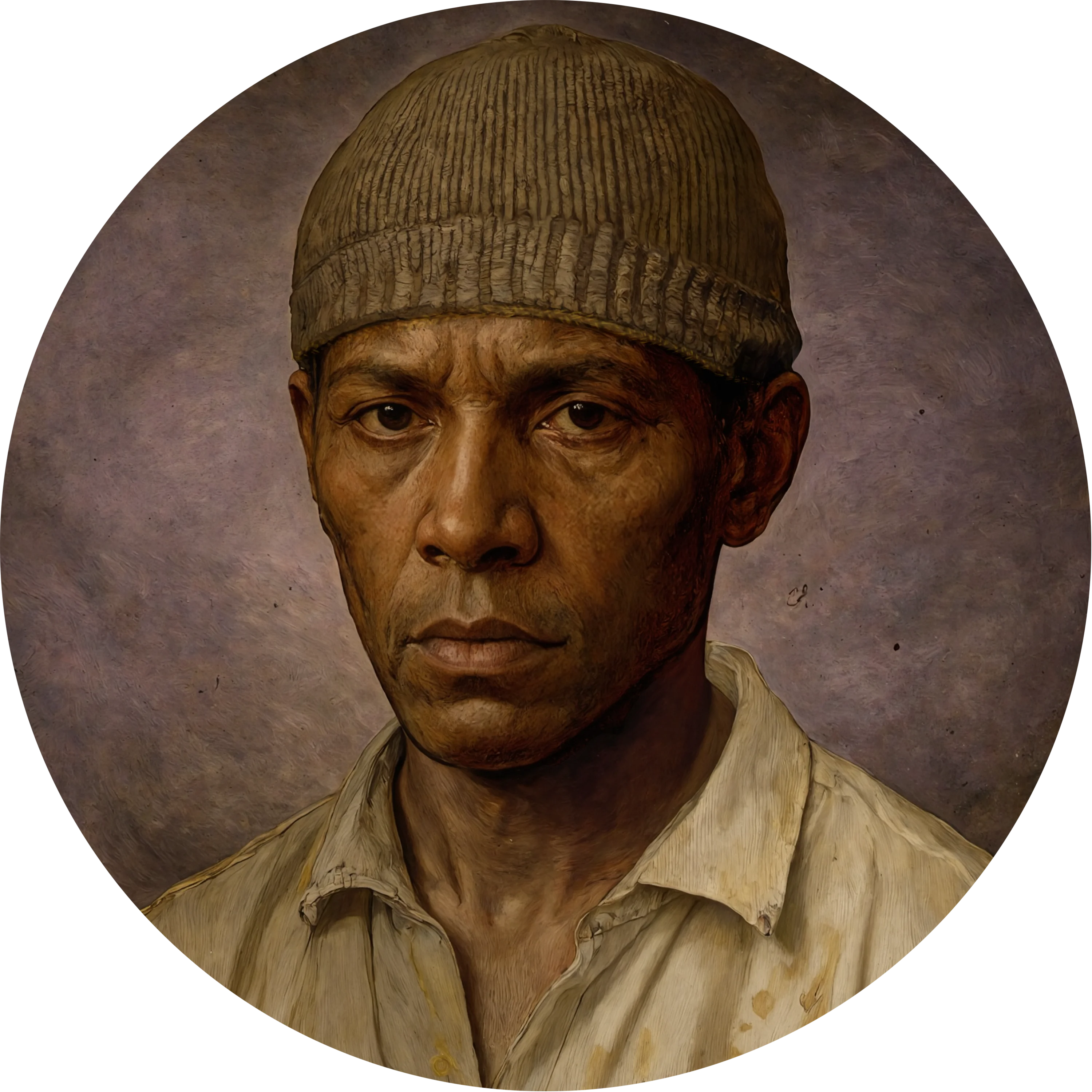
"Davy Gray," artist rendering with the support of historic sources and AI, 2025. Courtesy, League of the Descendants of the Enslaved at Mount Vernon & MVLA
Dick and Charity Jasper
(Dick: C. 1753 – After 1820) (Charity: C. 1757 – After 1801)
Dick and Charity raised six children at Dogue Run Farm. Their work was grueling and often disrupted by Washington’s building projects and crop experiments. As an enslaved carter, Dick drove the wagon that delivered bricks during construction projects. Charity, an enslaved field hand, often had to learn specialized agricultural skills to ensure successful experiments on the farm.
Portrait
The portrait of Dick and Charity Jasper was developed using surviving historical records and descendant-submitted family traits. Although no direct visual references of Dick or Charity survive, important physical details were recorded about their sons in the 1824 Fairfax County “Register of Free Negroes.” Their son Morris Jasper was described as a “black man... 5 feet 9 3/4 inches high” with a flat nose, while son Dick Jasper Jr. was listed as a “black man... 5 feet 8 1/4 inches high” with a pleasant countenance. These descriptions informed general assumptions about the parents’ likely appearance.
Descendants emphasized resiliency as a defining family trait and described inherited physical features. Modern family photographs were also submitted to provide visual reference points for shared characteristics across generations.
Dick Jasper’s contributions extended beyond enslavement; in 1835, he and his son Morris were among those who returned to Mount Vernon to assist with landscaping around George Washington’s new tomb. Charity’s legacy lived on through her grandson, William Jasper, who in 1881 deeded land to create the Laurel Grove School, a school for Black children in Franconia.
Clothing and styling for this portrait reflect the couple’s roles as field workers.
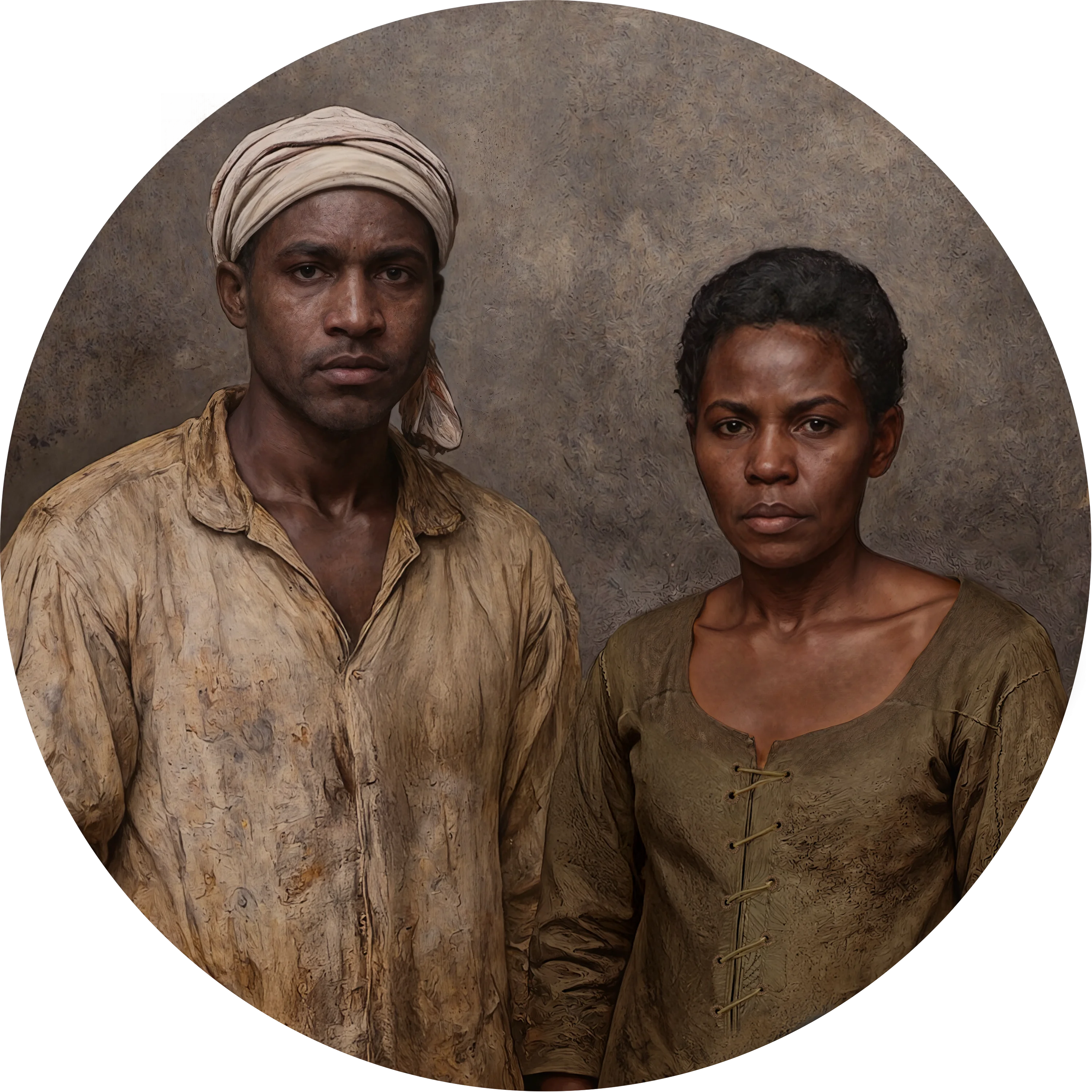
"Dick & Charity Jasper," artist rendering with the support of historic sources and AI, 2025. Courtesy, League of the Descendants of the Enslaved at Mount Vernon & MVLA
Doll
(C. 1721 – After 1802)
Doll, Mount Vernon’s enslaved chief cook for many years, was 38 years old when Martha Washington brought her to Mount Vernon.
Her expertise in cooking, baking, food preservation, and menu planning informed several generations of Mount Vernon cooks. The steady stream of visitors meant that Doll’s days started early to prepare large and elaborate meals.
At Martha Washington’s death, 81-year-old Doll remained enslaved and became the property of one of the Custis grandchildren. She was valued at $5 by the estate’s executors. Doll had 5 surviving children, 14 grandchildren, and 4 great-grandchildren.
Portrait
Because no historical descriptions of Doll's physical appearance exist in surviving records, Mount Vernon turned to her descendants to help inform her likeness. As part of this process, family members completed an ancestor questionnaire, sharing common family traits such as medium-deep skin tone, brown eyes, and a broad nose with a wide base and straight or slightly concave bridge.
Importantly, Ada Daniels (1899–1946), Doll’s fourth great-granddaughter, served as a key generational link. The Michie/Daniels family provided multiple generations of family photographs, which offered valuable visual references for shared features, especially in the eyes and cheeks, that helped shape the portrait. These modern materials, combined with oral history and familial insights, allowed Mount Vernon to create a portrait that honors Doll’s legacy with authenticity and care.
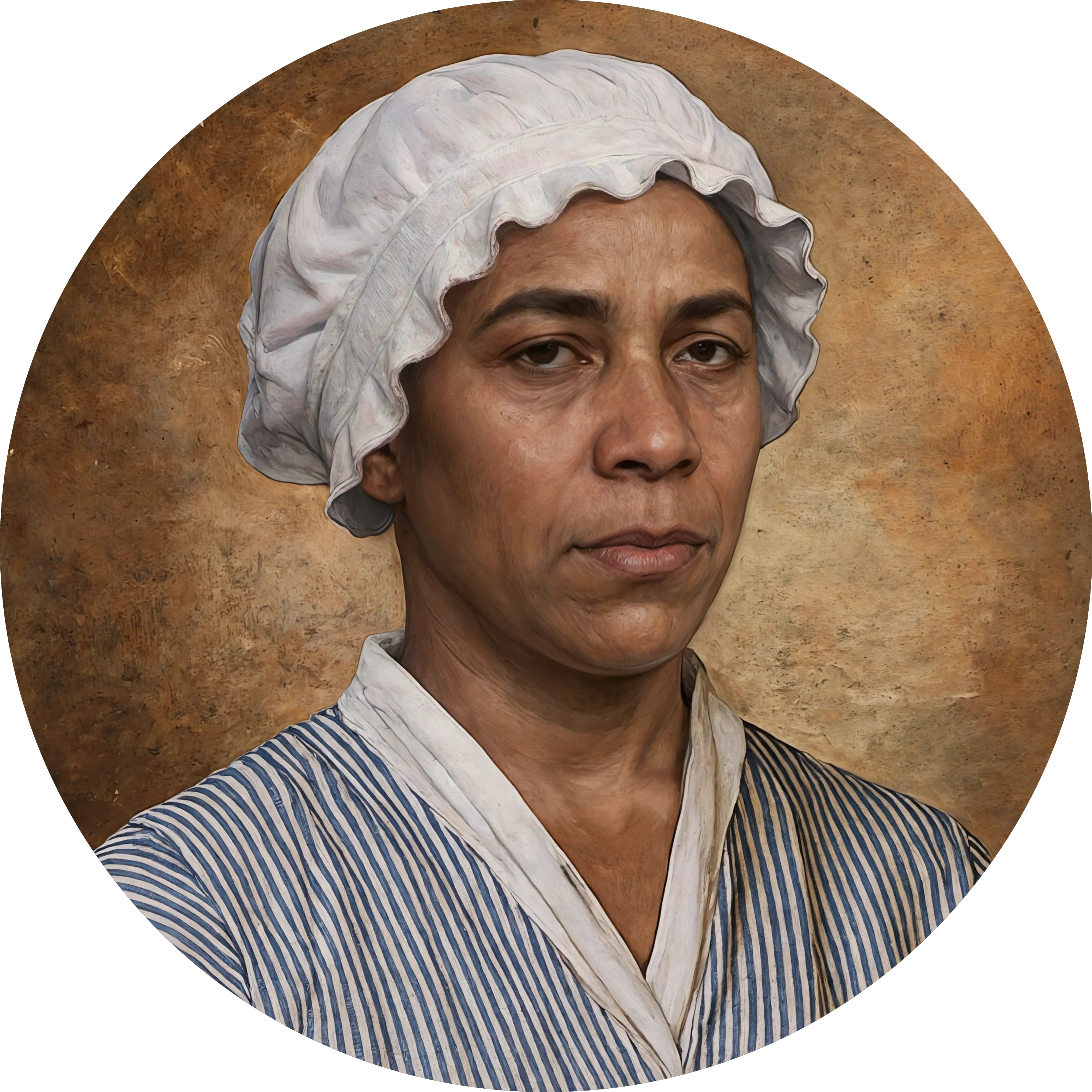
"Doll," artist rendering with the support of historic sources and AI, 2025. Courtesy, League of the Descendants of the Enslaved at Mount Vernon & MVLA
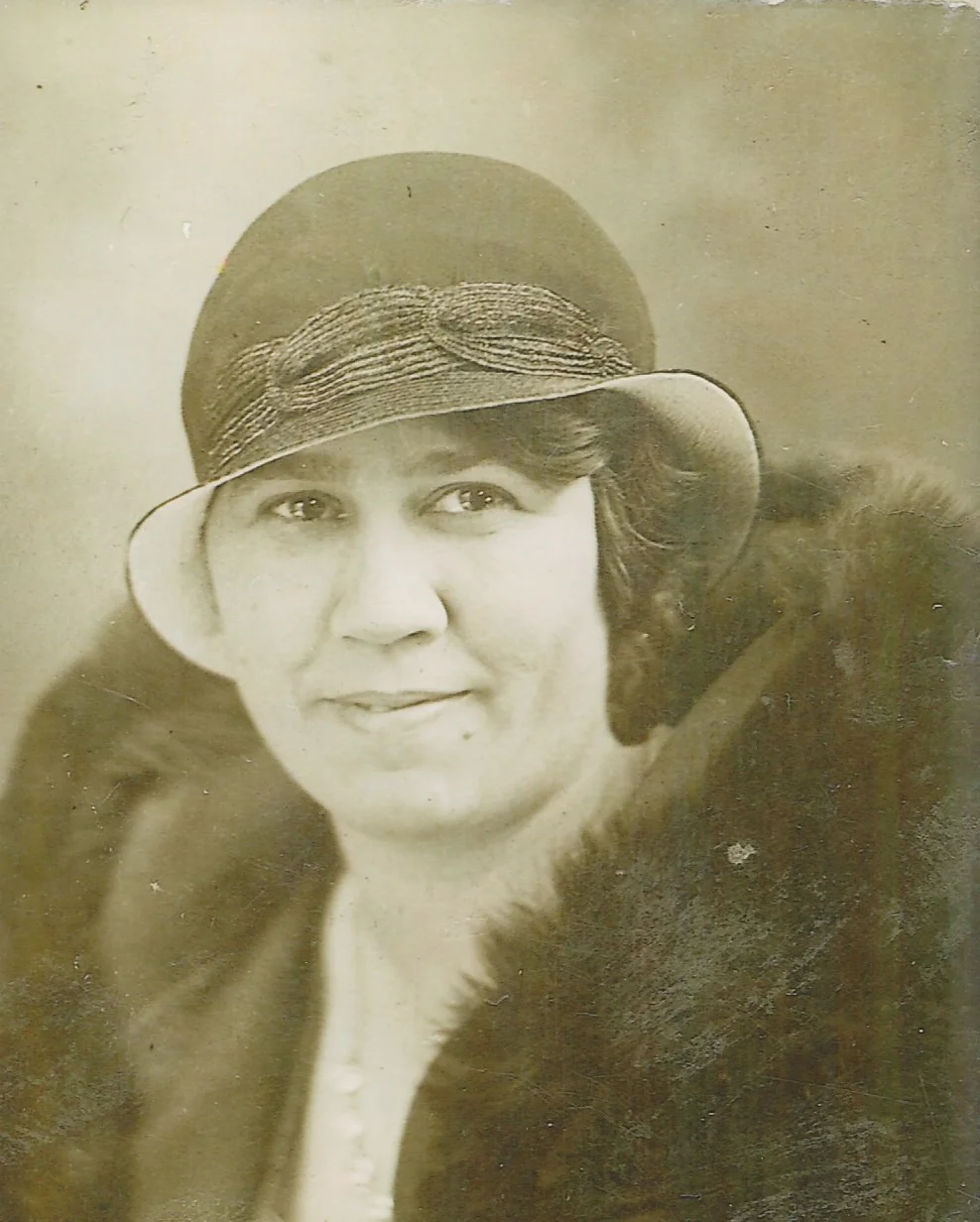
Ada Daniels (1899–1946) was the 4th great-granddaughter of Doll. The Michie / Daniels family provided family photographs and cultural direction to build the attributes and features of Doll’s portrait. Courtesy of the Michie / Daniels family, direct descendants of Doll
Edy Jones
(C. 1773 – After 1813)
Edy Jones lived at Union Farm and was assigned work as an enslaved plower, a job that required her to drive horses and oxen. Her husband, Davy, lived at Mansion House Farm. They saw each other on Sundays and nights when Davy had time to make the two-mile trip to Union Farm.
Portrait
The portrait of Edy was created using a combination of historical documentation and descendant input, including modern family photographs and generational traits.
George Washington mentioned Edy in a 1787 diary entry as “the girl Eby” who was being trained to plow. Her children are documented in the 1831 Fairfax County “Register of Free Negroes,” offering rare physical descriptions that helped guide her likeness. Her son David was described as “a black man… five feet 8 1/2 inches high, large nose, thick lips, large ears.” Joseph was noted as “a black boy… five feet 8 1/4 inches high with thick lips,” and Levi as having a “long face [and] thick lips.” Daughter Nancy was recorded as “five feet and 3/4 inches high.”
These descriptors were key to shaping the facial features and stature of Edy, whose own appearance was not documented. Her clothing and hairstyle reflect her labor, with a headwrap or short hair typical of women working in the fields.
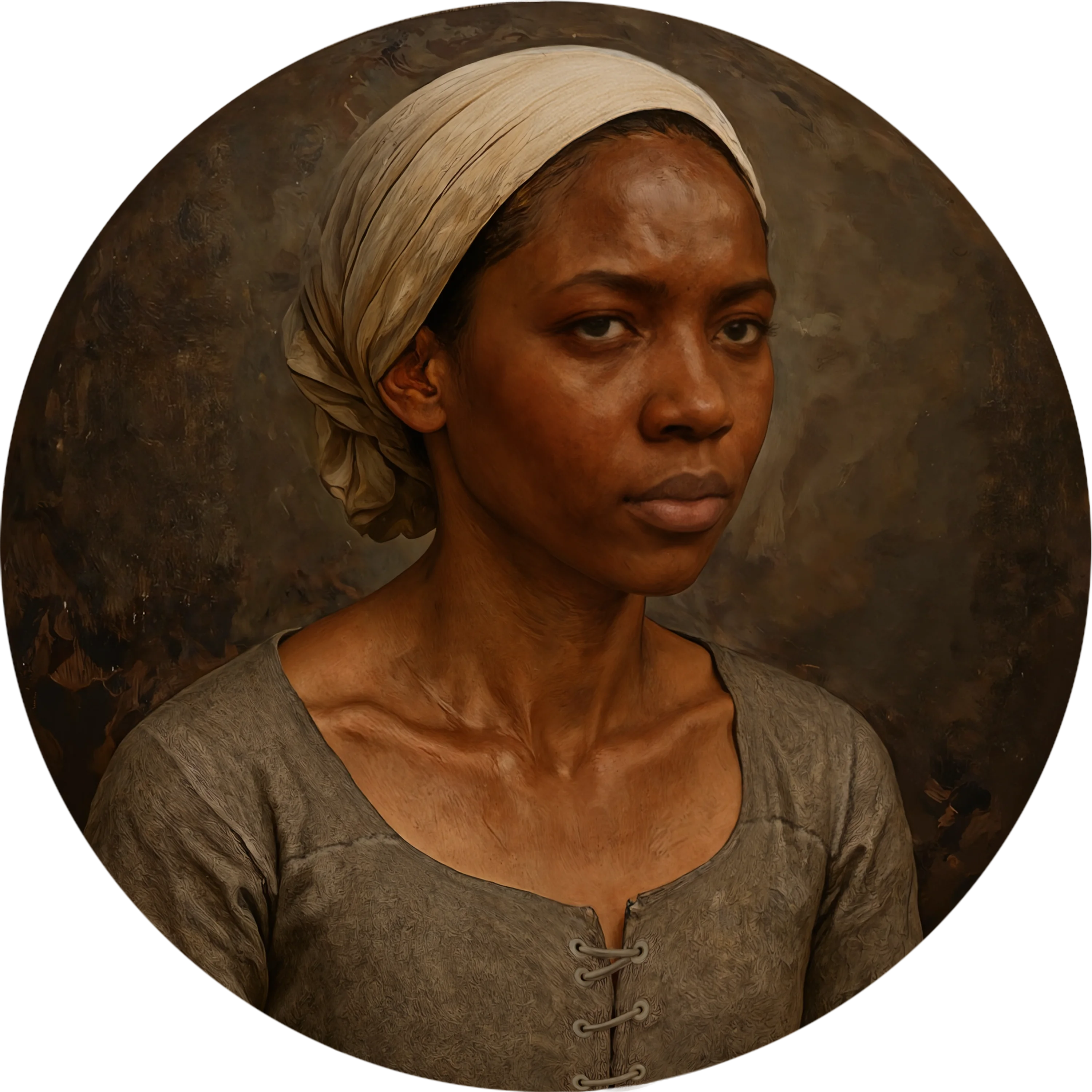
"Edy Jones," artist rendering with the support of historic sources and AI, 2025. Courtesy, League of the Descendants of the Enslaved at Mount Vernon & MVLA
Edward Braddock
(1695 – 1755)
General Braddock’s military career began at age 15 when he followed his father into the army. He rose through the ranks and took command of the British forces in North America. He grew up in London and at age 15 followed his father into the army for a lengthy career that culminated in North America in 1755.
When he arrived in the colonies, Braddock conferred with colonial leaders and Native representatives to plan a four-pronged attack on French forts from Canada to Virginia. He would lead the first expedition personally.
After a grueling overland journey to Fort Duquesne, he suffered mortal wounds during an attack. George Washington received Braddock’s military sash and a pair of his pistols in honor of his actions.
Portrait
No confirmed life portrait of General Edward Braddock is known to survive. To construct his likeness, the portrait was developed using visual references from mid-18th-century British military portraiture.
The image was designed to represent Braddock at approximately age 60, the year of his death following the Battle of the Monongahela in 1755. At least one account describes him in his later years as rather short and stout, characteristics that informed the general proportions and physical presence of this portrait.
Because no known descendant photographs or direct visual references exist, the portrait relied on general genealogical and physical conventions common among British officers of the period. Contemporary military portraits from the 1750s were consulted to guide the overall silhouette, pose, and presentation, as well as the details of British military attire appropriate to Braddock’s rank.
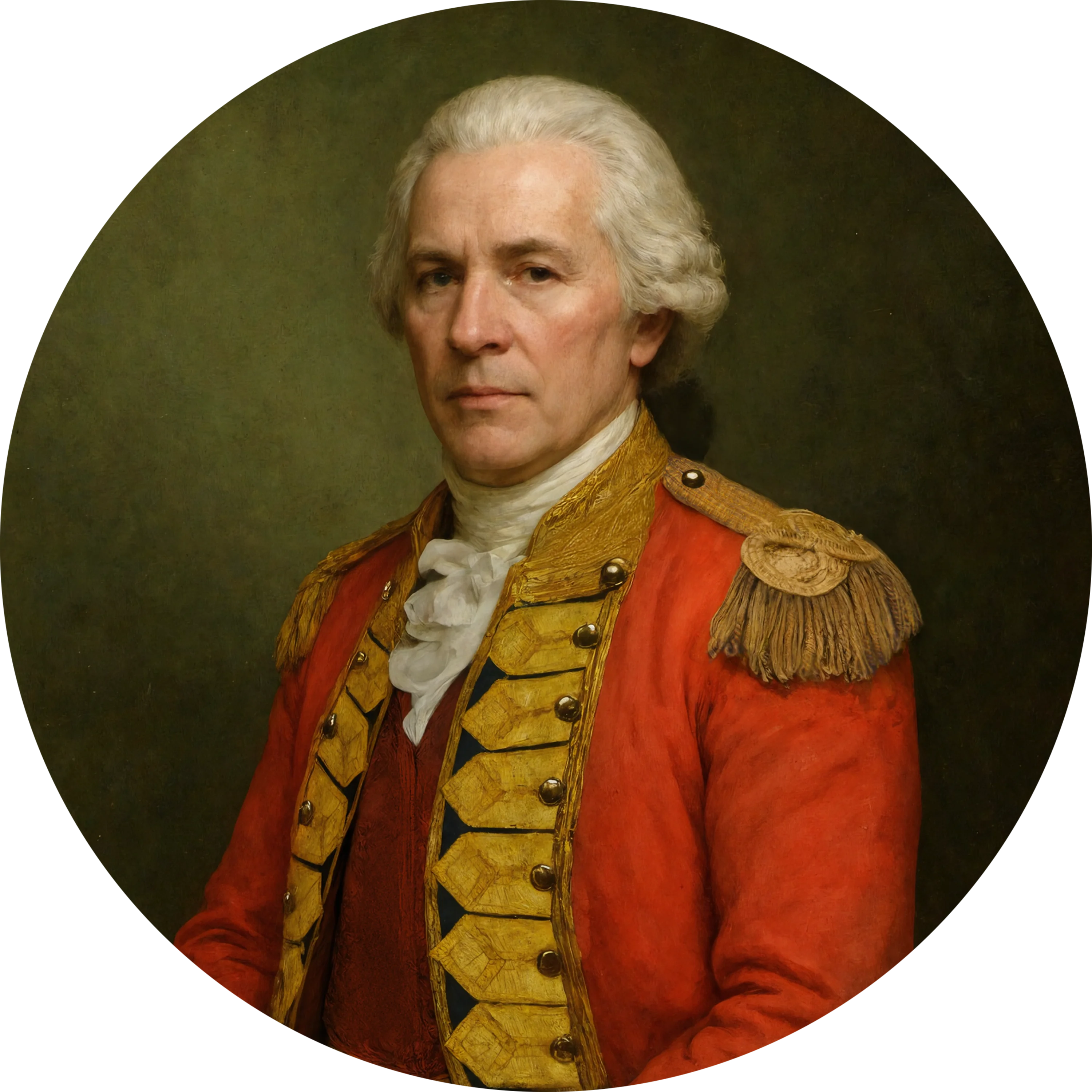
"Edward Braddock," artist rendering with the support of historic sources and AI, 2025. Courtesy, MVLA
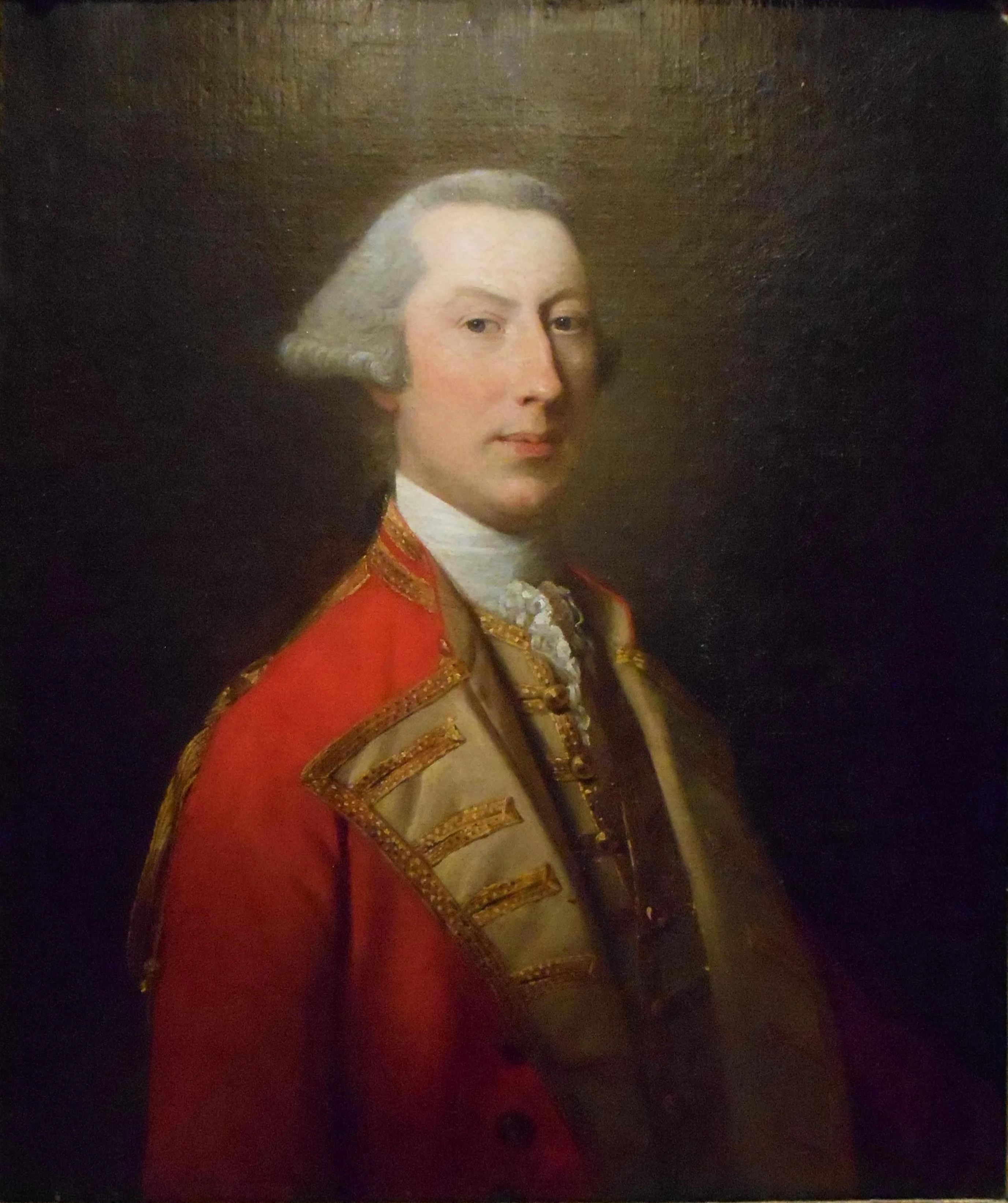
This portrait of a British general, ca. 1760, was among the visual references used to guide the uniform, pose, and presentation in the creation of Edward Braddock’s portrait. General Gabriel Christie, painted by David Martin. (Public domain)
Frank Lee
(c. 1755–1821)
Frank Lee was born in about 1755 in Westmoreland County, Virginia. Washington purchased Frank and his brother, William Lee, in 1767. He married Lucy, an agricultural worker at Union Farm and later the estate cook. Together they had several children including Edmund, Michael, Philip, and Patty.
In 1786, he was about 31 years old and worked as a waiter in the house. He was responsible for serving meals and waiting on the Washingtons and their guests, monitoring food stores, supervising house cleaning, and other tasks. After Lucy and their children moved to Mansion House Farm in the early 1790s, the Lee family most likely lived in the south wing of the Mansion cellar.
Frank received his freedom in 1801 by the terms of Washington’s will. Lucy and their children, however, were the legal property of the Custis estate. When Martha died in 1802, Lucy and most of their children were inherited by Lawrence and Eleanor Parke Custis Lewis of Woodlawn in Fairfax County.
For the next 26 years, Frank stayed in the vicinity of Mount Vernon, presumably to be close to his family. He died in 1821.
Portrait
The portrait of Frank Lee was shaped by surviving descriptions, visual references connected to his brother William Lee, and guidance from descendants and Mount Vernon staff. A Mount Vernon guest remembered Frank for his “politeness and kindness,” while another description called him “portly, polite, and most accomplished.” In this context, “portly” was understood to suggest dignity and bearing rather than heaviness.
Because no confirmed portrait of Frank Lee survives, other visual references helped guide his likeness. The portrait was informed by images associated with William Lee, Frank’s brother, including John Trumbull’s 1780 portrait of George Washington with a Black figure traditionally identified as William Lee. A Benjamin Henry Latrobe sketch of an unidentified enslaved man, which some suggest may depict Frank Lee, also provided useful context.
The portrait presents Frank after his marriage to Lucy, reflecting him as an established member of the Mansion household. Mount Vernon staff advised on the appearance of Washington’s livery, noting that the garments should fit closely and appear neat and formal. Frank is shown clean-shaven, with no beard or shadow, and with his hair styled in a queue, consistent with Washington’s preferences for male house staff.
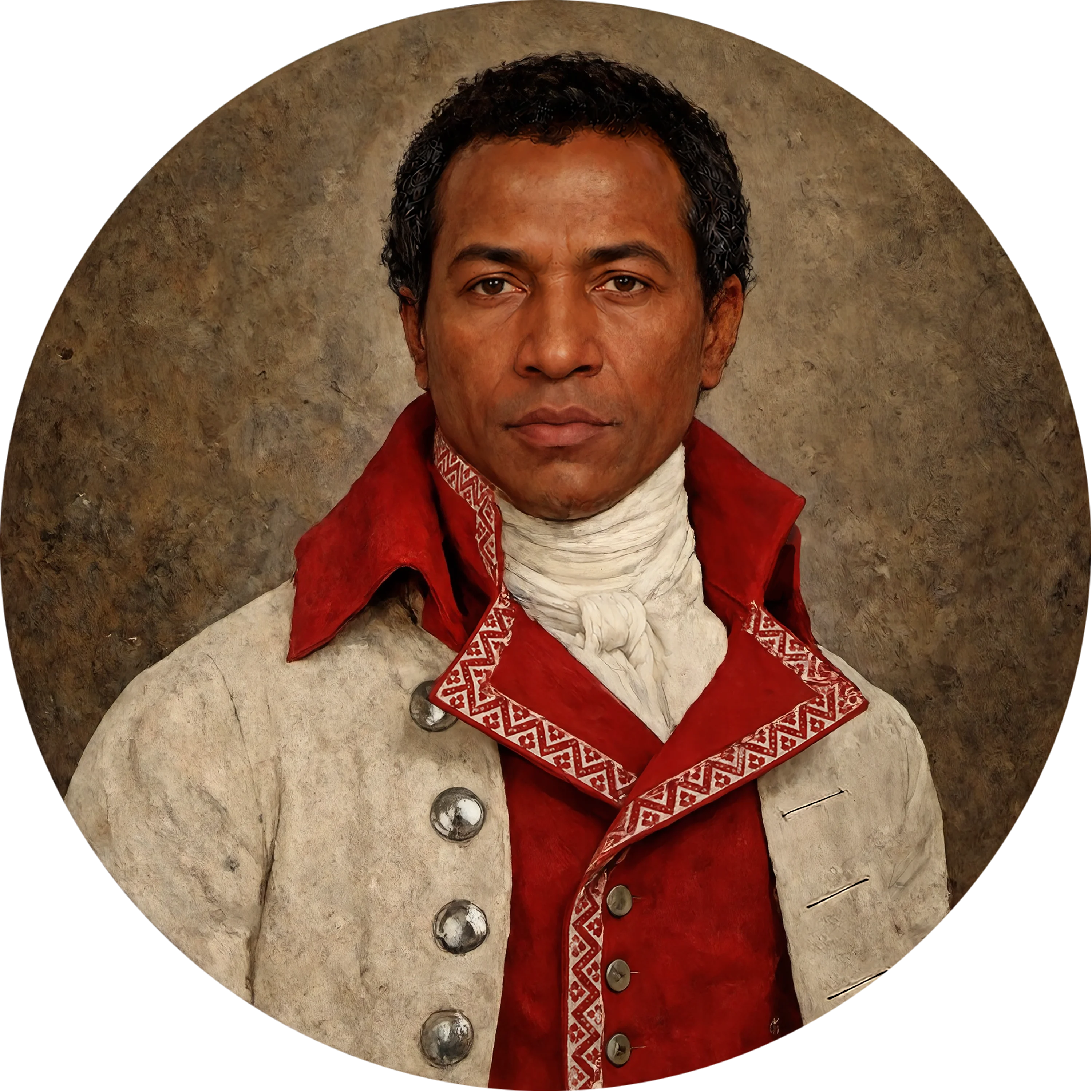
"Frank Lee," artist rendering with the support of historic sources and AI, 2025. Courtesy, League of the Descendants of the Enslaved at Mount Vernon & MVLA
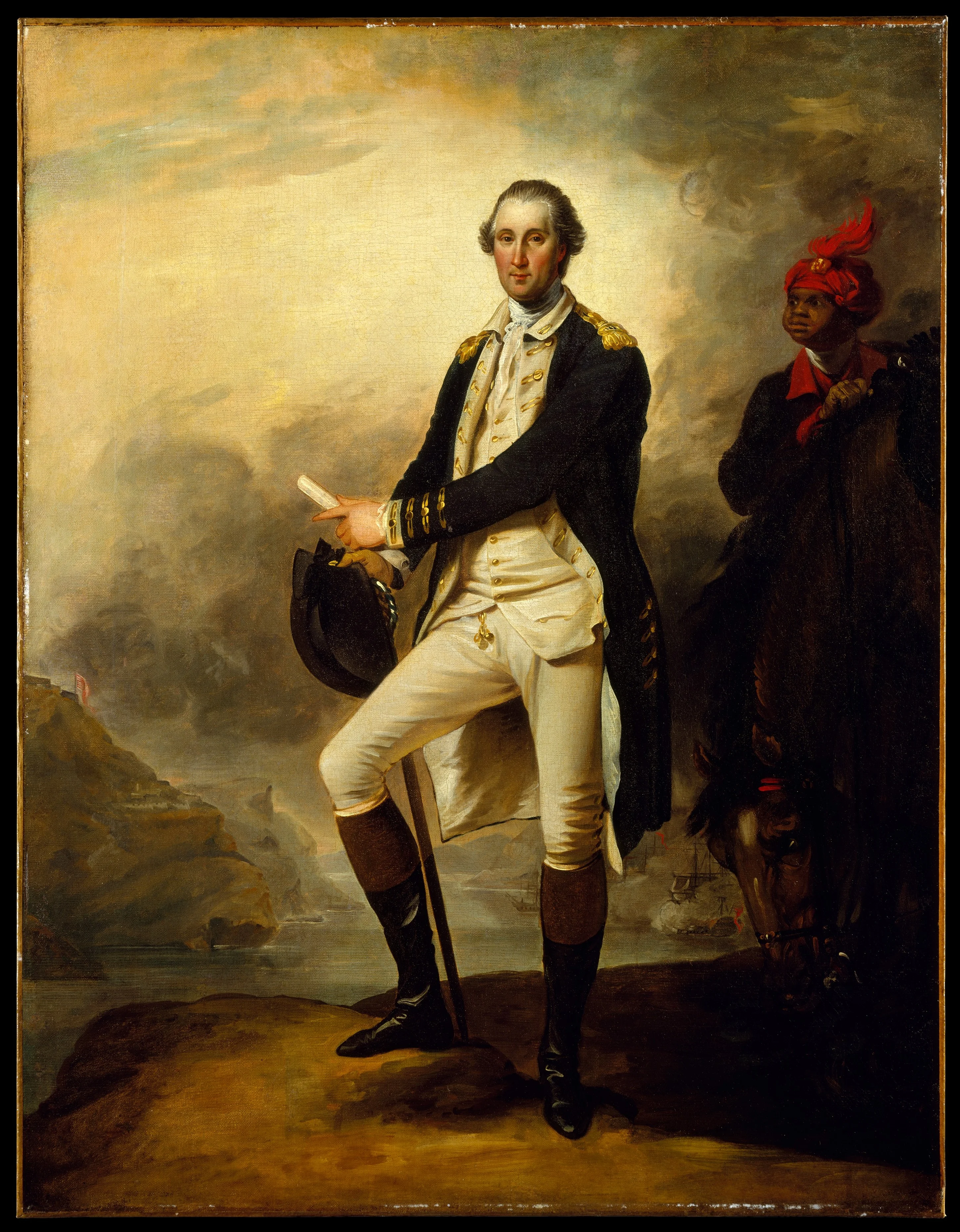
This portrait of Washington includes a man identified as William Lee, Frank Lee’s brother. “George Washington and William Lee,” by John Trumbull, 1780. (The Metropolitan Museum of Art)
George
(C. 1760s – After 1831)
As an enslaved gardener, George experimented with different plant varieties in both the pleasure and kitchen gardens at Mansion House Farm. He stood five feet four and a half inches tall, “the little finger on his right hand crooked.” His wife Sall Twine and their children lived at Dogue Run Farm.
Portrait
The portrait of George was created using a combination of descendant input and historical records. Described by his family as a short man, mulatto (a term used in 18th-century documents to describe a person of mixed race), and someone who loved working with plants, George was also remembered as a devoted father and husband. His descendants shared modern family photographs and detailed physical traits passed down through generations, such as hazel eyes, light-medium skin, and a short, rounded nose with a slightly upturned tip. Many noted a family height of under 5'5".
These familial recollections were supported by a rare description in the 1831 Fairfax County Register of Free Negroes, which recorded George as “a mulatto man… five feet four and a half inches high, the little finger of the right hand crooked, no other perceivable marks or scars.”
Historically, George was originally enslaved by Mary Ball Washington, George Washington’s mother. Washington began renting his labor in the 1770s, and he officially inherited George in 1789 upon his mother’s death. These sources together provided the foundation for George’s portrait.
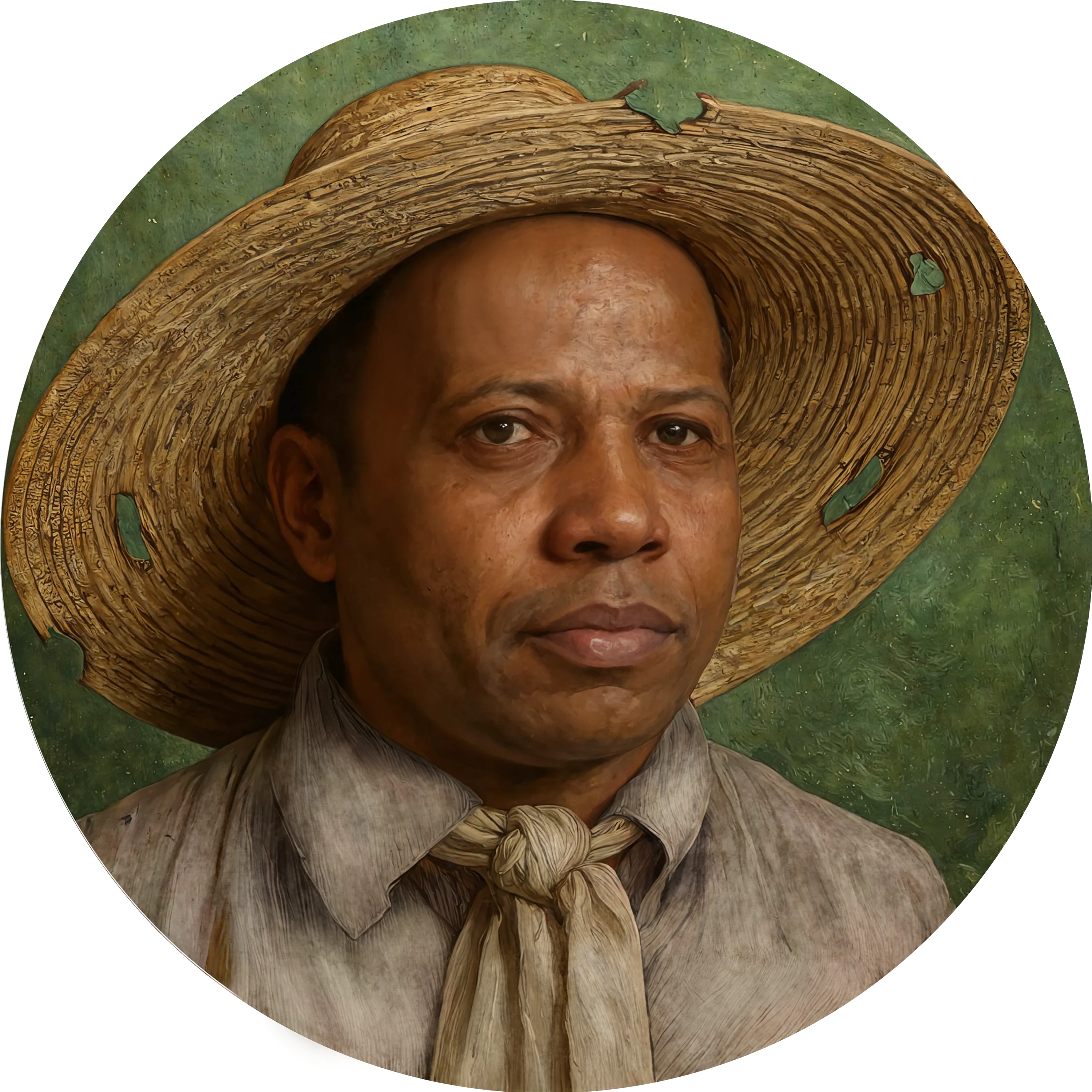
"George," artist rendering with the support of historic sources and AI, 2025. Courtesy, League of the Descendants of the Enslaved at Mount Vernon & MVLA
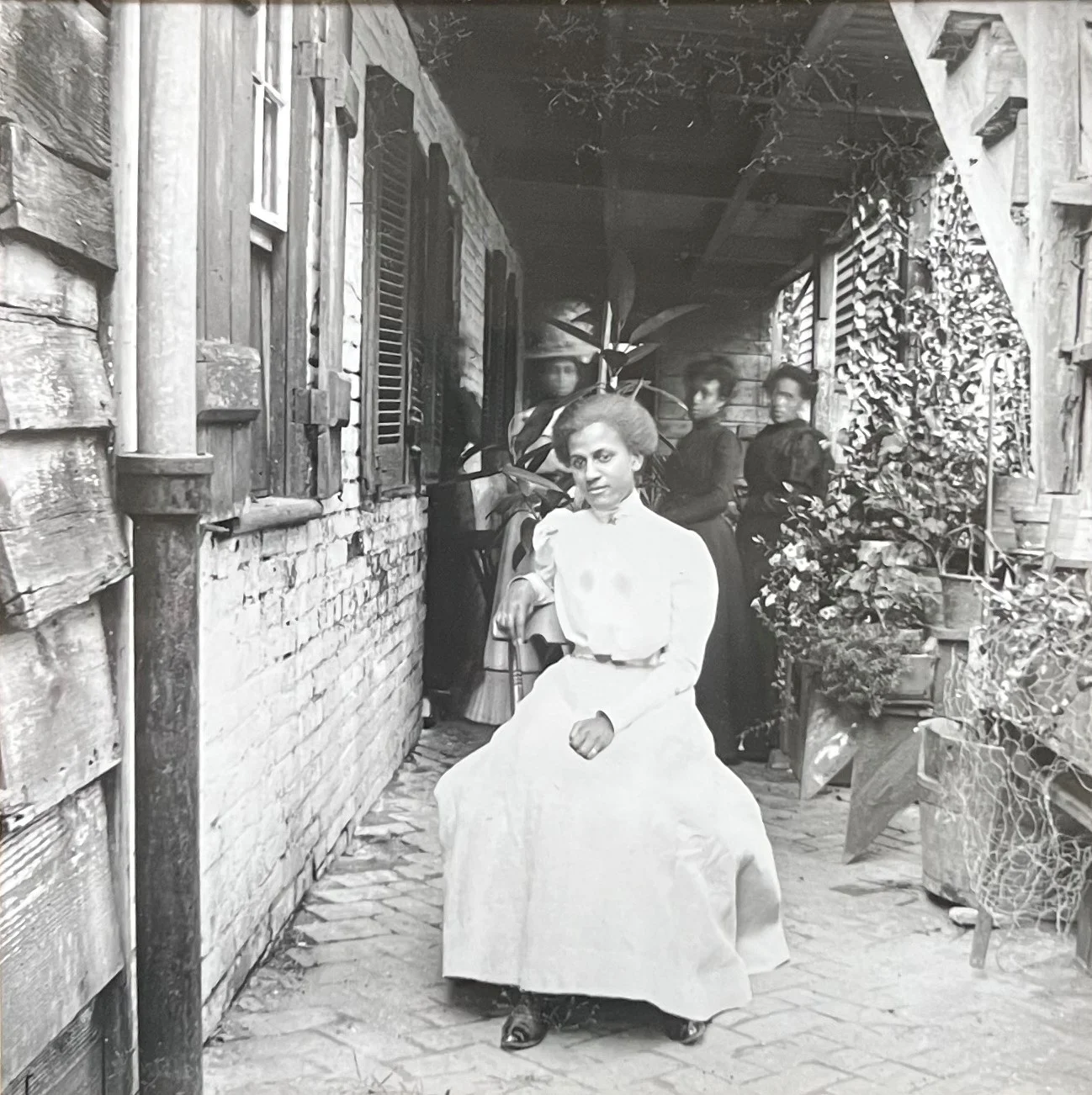
Barbara Pope—author, teacher, and civil rights activist—was George's great-great-granddaughter. Courtesy Ann Chinn, a direct descendant of George
George Washington, Age 15
(1732 – 1799)
At 15, George Washington was a determined young Virginian working to establish his place in a world shaped by hierarchy and opportunity. After his father’s death when he was 11, Washington could no longer pursue the formal education or advantages available to his older half-brothers. Instead, he educated himself through reading, practice, and careful attention to behavior and reputation.
Eager to succeed, he studied etiquette and copied the Rules of Civility to guide how he presented himself to others. Around this time, he began training as a land surveyor, a practical career that allowed him to earn income and build connections. These early experiences—marked by discipline, ambition, and adaptability—set him on a path toward leadership in Virginia and beyond.
Portrait
No portraits of George Washington as a teenager survive. To construct his likeness at age 15, Mount Vernon drew upon the earliest known portrait of Washington, painted by Charles Willson Peale in 1772, when Washington was 40 years old. This image provided a key reference for his facial structure, which was then interpreted to reflect a younger age.
Additional guidance came from family resemblance, particularly the portrait of his half-brother Lawrence Washington, which informed elements such as hairstyle and presentation appropriate to a young Virginia gentleman of the mid-18th century. The team also considered the appearance established through Mount Vernon’s earlier wax figures of Washington, especially the figure depicting him as a young surveyor. These figures were developed through extensive study by anthropologist Dr. Jeffrey Schwartz, who cross-referenced multiple sources, including Washington’s clothing, surviving portraits, the Houdon life mask and bust, and other material evidence, to approximate his physical features with a high degree of accuracy. Guidance from these figures also informed details such as hair color, helping align the portrait with established interpretations of Washington’s early appearance.
The portrait’s clothing and overall styling were based on mid-18th-century portraiture, ensuring an accurate silhouette and dress appropriate to a young man of Washington’s social position in colonial Virginia.
Together, these sources shaped a historically grounded representation of George Washington at age 15.
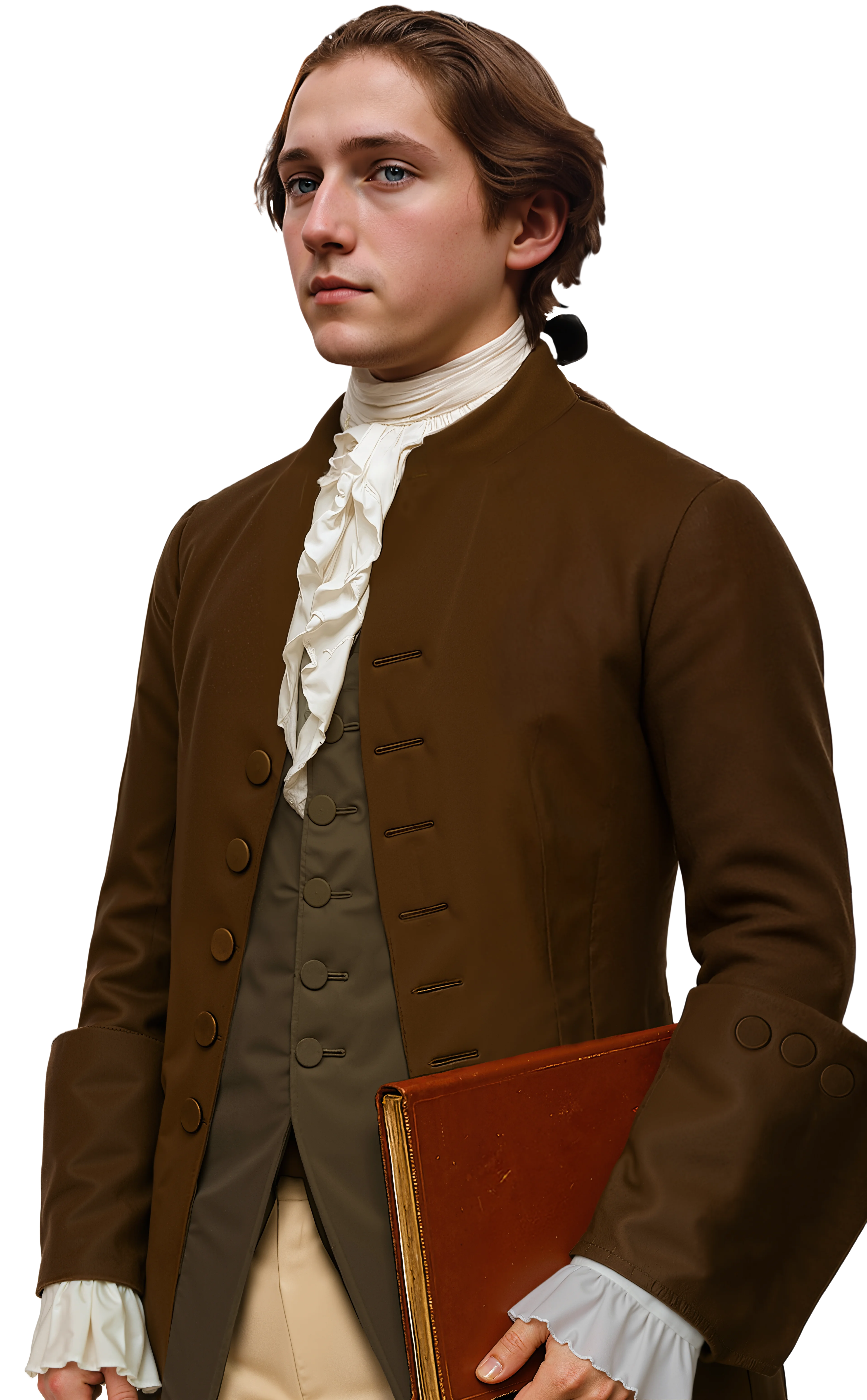
"George Washington," artist rendering with the support of historic sources and AI, 2025. Courtesy, MVLA
Hercules Posey
(c. 1747 – 1812)
Hercules Posey was an enslaved cook at Mount Vernon. Washington prized Posey’s culinary skills so highly that he took him to Philadelphia to cook for the presidential family, friends, members of Congress, and visiting foreign dignitaries.
Posey bought fashionable clothes with money he earned by selling various kitchen leftovers. He was a well-known figure in the city, seen walking the city streets in his distinctive dress. In 1797, after he was reassigned to manual labor at Mount Vernon, he escaped bondage. He eventually made a life for himself as a free man and chef in New York City.
Portrait
No photographs or known direct visual references of Hercules Posey survive. To create his portrait, Mount Vernon drew from a combination of historic descriptions, documented lifestyle details, and collaboration with the League of the Descendants of the Enslaved at Mount Vernon, whose input helped inform the portrayal.
A vivid description written by George Washington Parke Custis in the 1850s provided critical visual cues. Custis described Hercules as “a dark-brown man… little, if any, above the usual size, yet possessed of such great muscular power as to entitle him to be compared with his namesake of fabulous history.” Custis also detailed Hercules’s elaborate dress habits: polished shoes with buckles, a blue cloth coat with a velvet collar, a cocked hat, a gold-headed cane, and a long watch chain.
Though no descendant-submitted photos were provided, Mount Vernon relied on a robust network of documented historical sources to inform Hercules’s physicality, posture, and expression, reconstructing a likeness that conveys both his skill and his self-determined dignity.
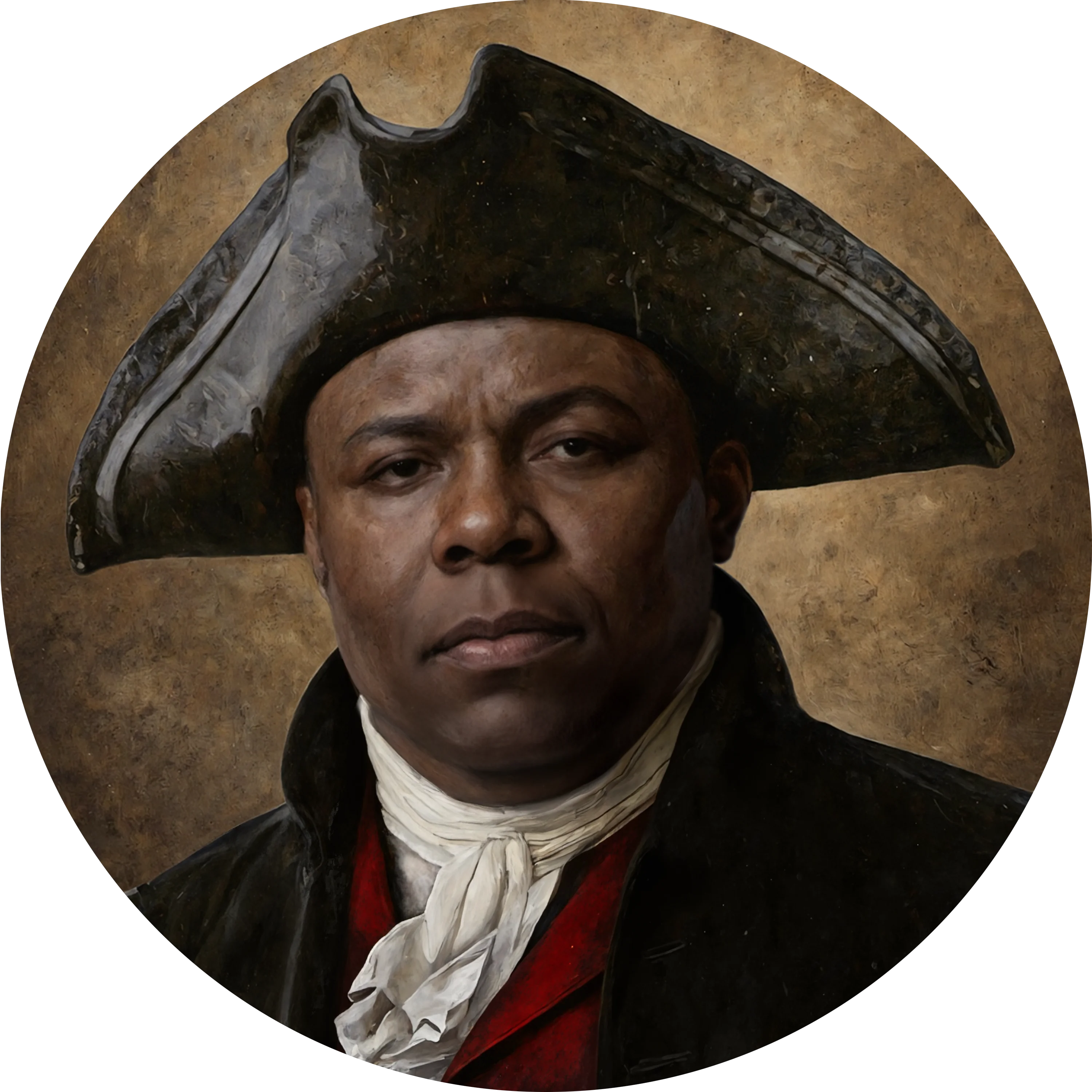
"Hercules Posey," artist rendering with the support of historic sources and AI, 2025. Courtesy, League of the Descendants of the Enslaved at Mount Vernon & MVLA
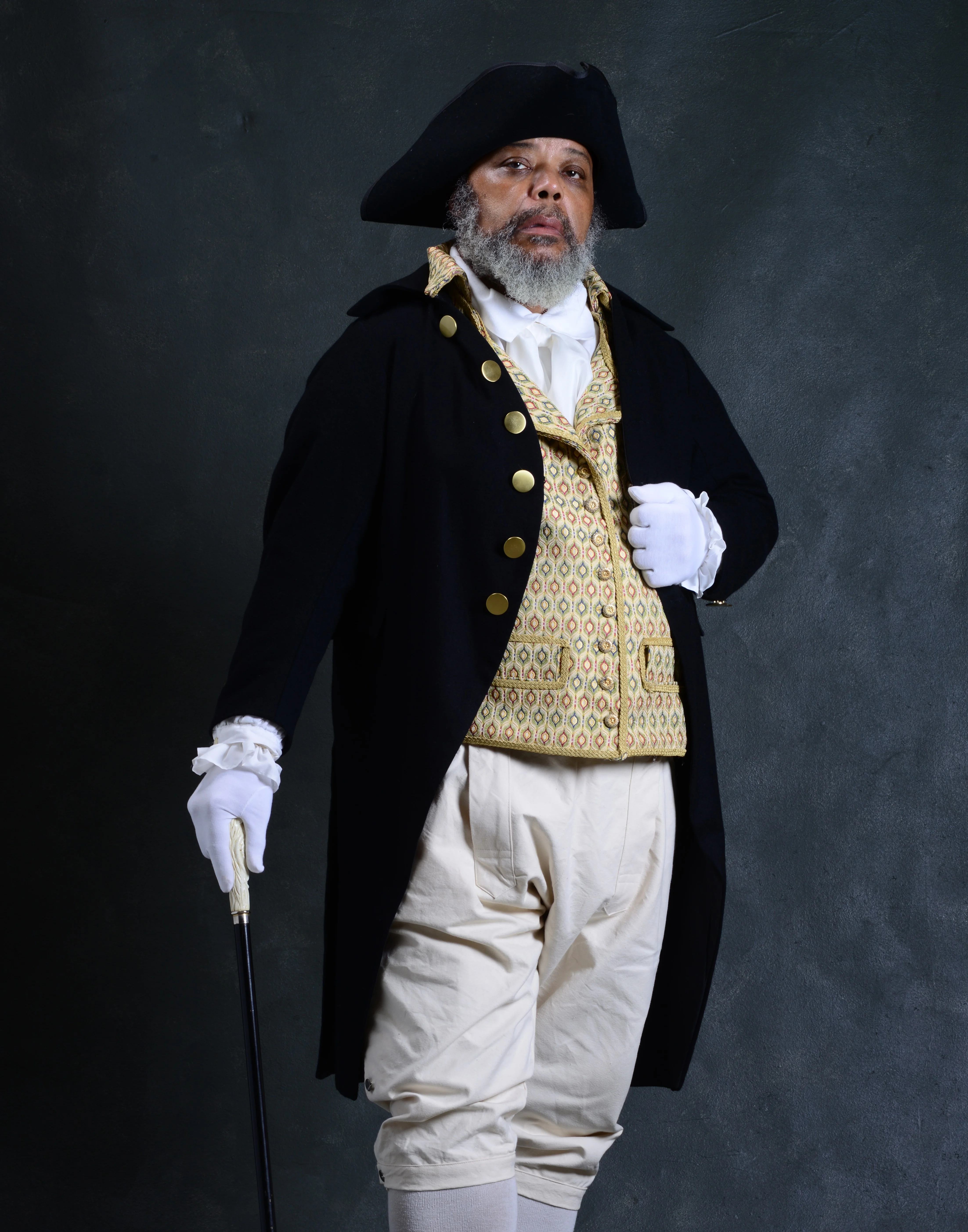
The base photo of a model portraying Hercules Posey, from which the AI portrait was created. (Steven M. Cummings / MVLA)
James Anderson
(1745 – 1807)
James Anderson served as Mount Vernon’s farm manager from 1796 to 1802. Born in Scotland, he apprenticed and managed farms for the landed gentry before moving to America. For Washington, he oversaw daily operations and wrote reports about activities on all five farms.
Anderson proposed that Washington enter the whiskey-making business. Early in his employment, Anderson realized Washington's farms provided all the necessary ingredients to distill whiskey. He also knew the proceeds from alcohol would be greater than those from raw materials. After a one-year trial demonstrated the profit potential, Washington committed to entering the lucrative whiskey-making business. The enterprise raised significant income.
Portrait
No confirmed portrait of James Anderson is known to survive. To construct his likeness, Mount Vernon worked with a descendant of the Anderson family and examined photographs spanning multiple generations to identify shared family traits and features.
Among the visual references consulted was a photograph of Edwin Alexander Anderson Jr. (1860–1933), a United States Navy officer and the 5th great-grandson of James Anderson. These family images helped inform facial structure and general appearance, allowing the portrait to reflect inherited characteristics within the Anderson lineage.
The portrait’s styling and attire were guided by late-18th-century portrait conventions, particularly examples from the 1790s depicting overseers, farm managers, and gentlemen of similar social standing. Period portraits were used to establish accurate references for hairstyle, shirt, neckcloth, waistcoat, and coat appropriate to a professional manager working within the world of Virginia plantation agriculture.
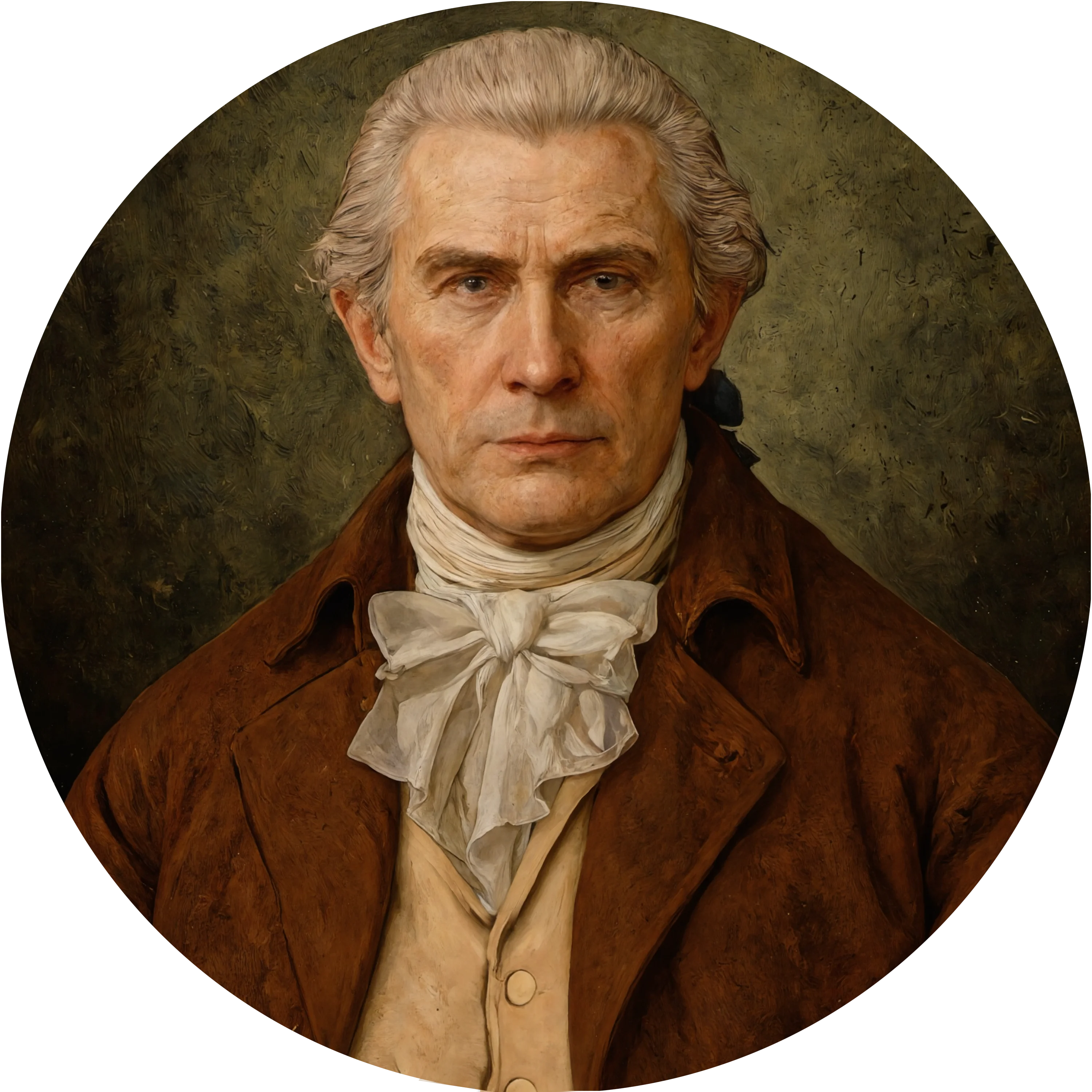
"James Anderson," artist rendering with the support of historic sources and AI, 2025. Courtesy, MVLA

Edwin Anderson is the 5th great-grandson of James Anderson. Photographs of Anderson family members were provided by descendant Peggy Stallworth and used to help inform the reconstructed likeness of James Anderson. (Courtesy, Library of Congress)
Kate
(c. 1740s–after 1799)
There were many enslaved women named Kate who lived and worked at Mount Vernon, so it is unclear when Kate was born. Washington may have inherited her from his half-brother Lawrence.
In 1786, Kate was an adult and worked in agriculture. She was married to Will, the enslaved overseer at Muddy Hole Farm. They had at least four children named Molly, Virgin, Will, and Kate.
In 1794, Will approached Washington because Kate wanted to be the midwife for the estate’s enslaved women. Kate argued that “she was full as well qualified for this purpose” as the white women Washington had previously paid to do this work. In 1799, Kate was given money to purchase scissors “to cut the tongues of young children,” a reference to treating tongue-tie, an oral condition that could prevent infants from nursing properly and threaten their survival if left untreated. By asking to become the midwife for other enslaved women, Kate ensured that this important role was undertaken by a member of their own community, not an outsider.
Kate and her surviving children received their freedom in 1801 by the terms of George Washington’s will. However, Will was the legal property of the Custis estate and did not receive his freedom. He was inherited by George Washington Parke Custis of Arlington after Martha’s death in 1802.
Portrait
Because no known portrait of Kate survives, her likeness was shaped through descendant feedback, historical context, and Mount Vernon staff guidance. Descendants sought an image that conveyed Kate as a confident mother and midwife, capable of making difficult decisions for herself and others.
Kate is shown holding a baby, reflecting her role as a midwife within the enslaved community. Mount Vernon staff reviewed the portrait for historical accuracy, recommending either short cropped hair or a headwrap rather than styled hair.
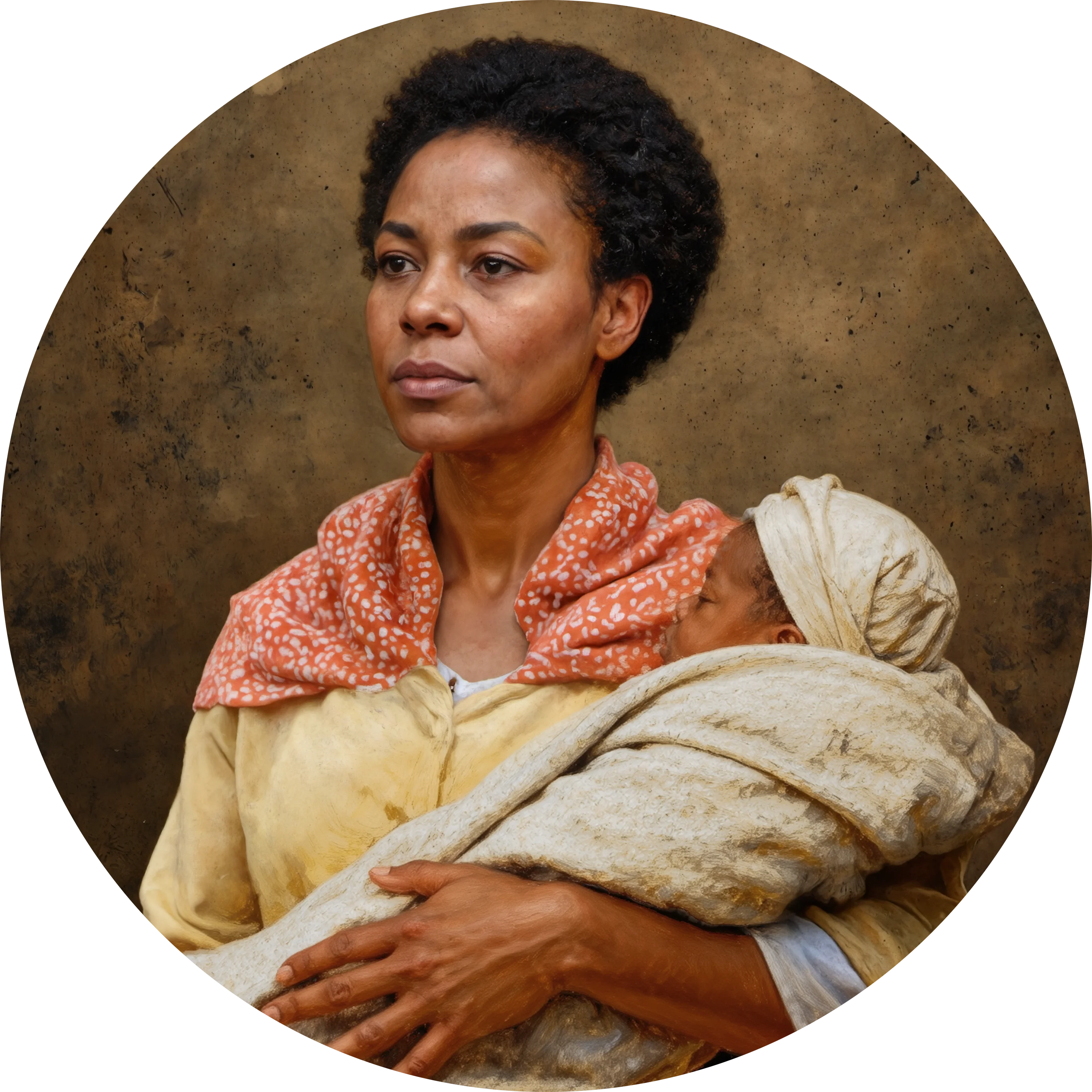
"Kate," artist rendering with the support of historic sources and AI, 2026. Courtesy, League of the Descendants of the Enslaved at Mount Vernon & MVLA
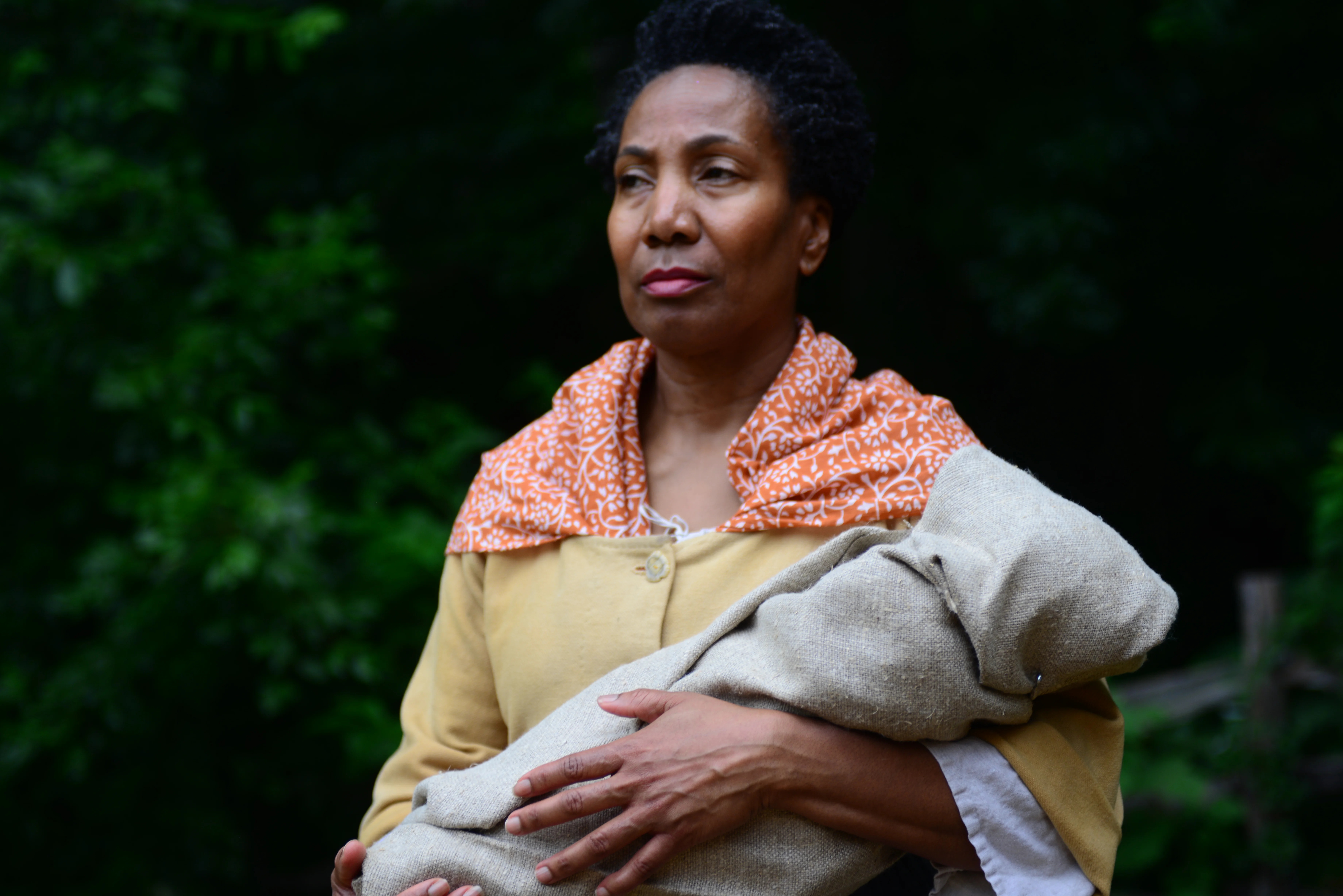
The base photo of a model portraying Kate, from which the AI portrait was created. (Steven M. Cummings / MVLA)
Kitty
(c. 1750s–after 1802)
Kitty was likely born in the mid-1750s. She first appears in the records at the Custis’s Claiborne plantation in King William County, Virginia. She was brought to Mount Vernon sometime after Martha’s marriage to George in 1759.
She married Isaac, a carpenter at Mansion House Farm. They had many children, including Sinah, Mima, Alla, Lucy, Grace, Letty, Nancy, Barbara, and Levina.
In 1786, she was a spinner working at Mansion House farm. By the early 1790s, she also ran the dairy, milking cows and managing milk and butter stocks.
Because she and her children were the legal property of the Custis estate, they did not receive their freedom when Washington died in 1799. When Martha died in 1802, Kitty was inherited by Thomas and Elizabeth Parke Custis Law of Washington, D.C. Her children were divided up by different heirs. Isaac received his freedom in 1801 by the terms of George Washington’s will.
Portrait
No known portrait of Kitty survives. Her likeness was developed through descendant input, family photographs, and historical research, with Fox family photographs guiding the portrait’s facial features. The primary visual reference was an image of Ellen Fox-Inggulls, Kitty's great-granddaughter.
Descendants described recurring family traits that helped guide Kitty’s likeness, including short stature and medium-brown to darker skin tones believed to reflect the family during Kitty’s lifetime. Family feedback emphasized that Kitty should not appear downtrodden, but resilient and strong in character. The final portrait presents her with a proud stance and direct presence, reflecting a middle-aged enslaved woman, mother, and grandmother who had endured decades of labor and family separation.
Mount Vernon scholars of 18th-century clothing also reviewed the portrait to ensure that Kitty’s dress reflected the period and her daily labor. She is shown in practical clothing and a headwrap suited to her work.

"Kitty," artist rendering with the support of historic sources and AI, 2026. Courtesy, League of the Descendants of the Enslaved at Mount Vernon & MVLA
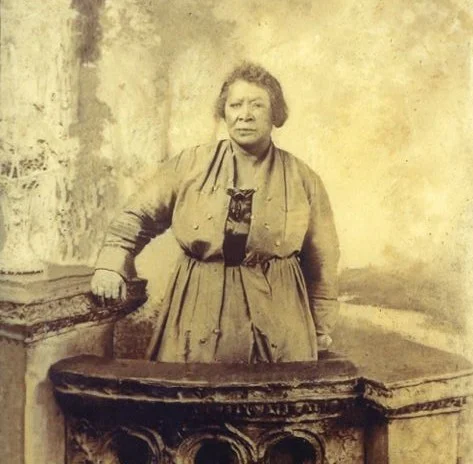
Ellen Fox-Inggulls was Kitty's great-granddaughter. The Fox family provided family photographs and cultural direction to build the attributes and features of Kitty’s portrait. Courtesy of Corey Jarrell, a direct descendant of Kitty.
Lucy Lee
(c. 1755–after 1802)
Lucy Lee came to Mount Vernon as a child in 1759, when Martha Dandridge Custis married George Washington. She was the daughter of Doll, an enslaved cook, and likely learned cooking skills from her mother.
Lucy spent many years as a field worker before being transferred to the kitchen in 1792, where she prepared meals for the Washington household and its many guests. Her days began before dawn, when she started the kitchen fire and prepared for the meals ahead.
Lucy’s husband, Frank Lee, served the food she cooked. Together they had several children, including Edmund, Mike, Philip, and Patty. The Lee family likely lived in the south wing of the Mansion cellar, where the Washingtons kept a second kitchen.
Portrait
Because no historical descriptions of Lucy Lee's physical appearance exist in surviving records, Mount Vernon turned to her descendants to help inform her likeness. A previously created portrait of her mother, Doll, also helped guide Lucy’s portrait, suggesting family continuity in shared features. Doll’s portrait had been shaped through descendant questionnaires and multiple generations of family photographs, including materials connected to Ada Daniels (1899–1946), Doll’s fourth great-granddaughter. Those references helped guide shared family features, especially in the eyes and cheeks.
Mount Vernon staff also reviewed elements of Lucy’s dress to ensure historical accuracy and to reflect her work in the kitchen. Her clothing was designed to be practical for daily labor, including a cap set slightly farther back on her head with a ruffle around the brim.
Together, these details helped shape a portrait grounded in both family memory and the material culture of Mount Vernon.
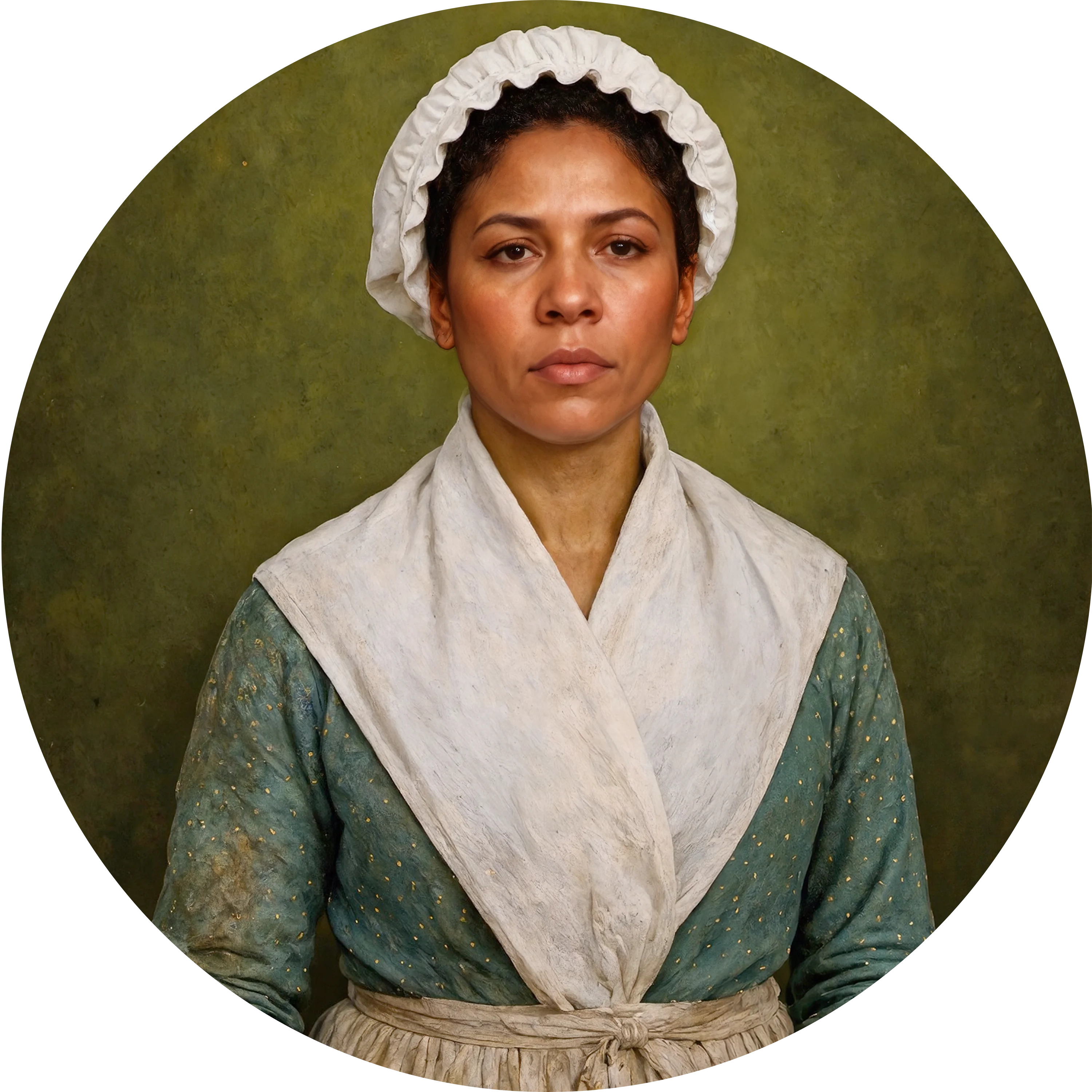
"Lucy Lee," artist rendering with the support of historic sources and AI, 2025. Courtesy, League of the Descendants of the Enslaved at Mount Vernon & MVLA
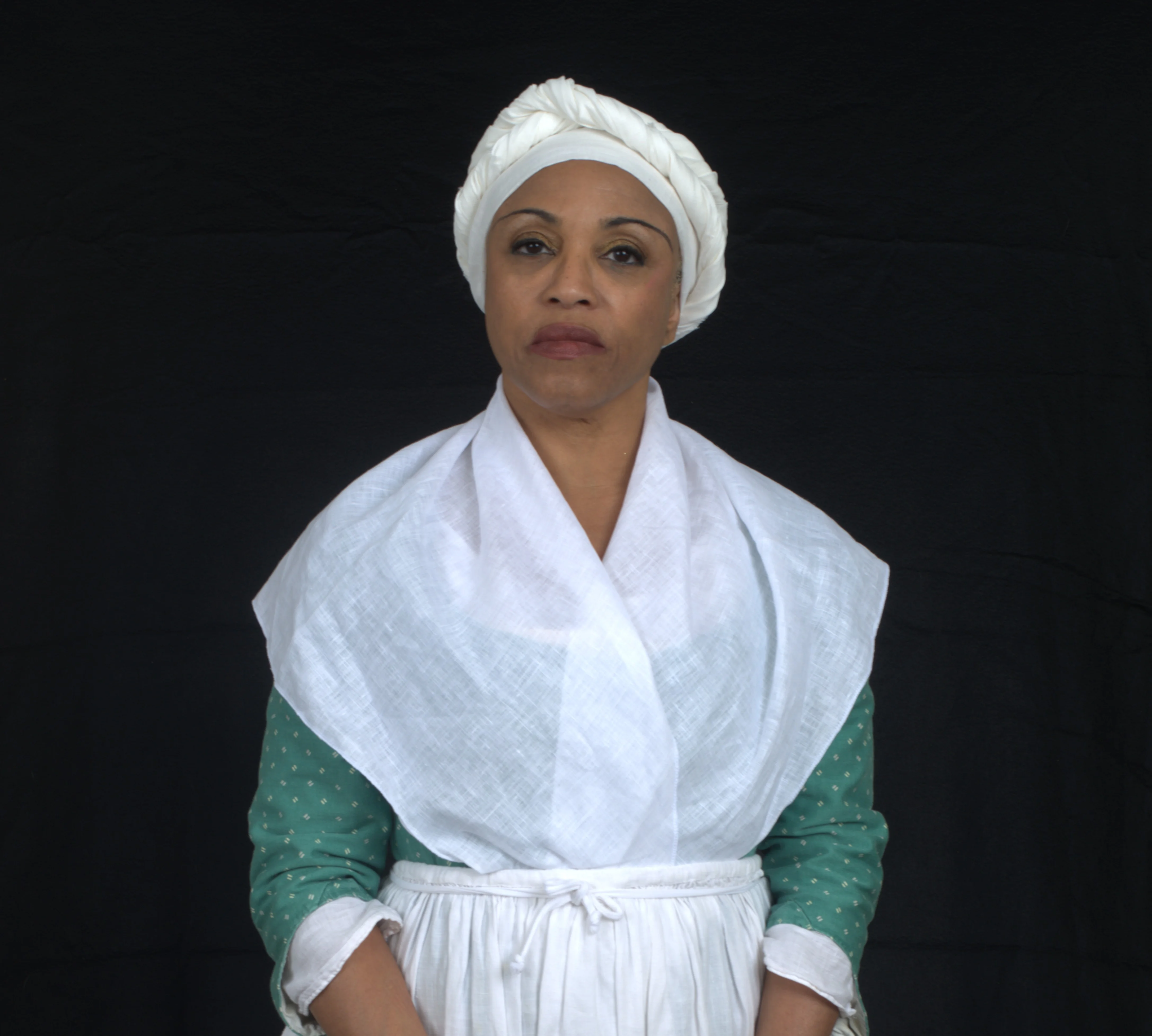
The base photo of a model portraying Lucy Lee, from which the AI portrait was created. (Steven M. Cummings / MVLA)
Mary Ball Washington
(c. 1708 – 1789)
George Washington’s mother, Mary, grew up in Tidewater Virginia. An orphan by age 12, she lived with her uncle until she married in her early 20s. Her uncle introduced her to Augustine Washington. The couple moved to Popes Creek, Virginia, where their oldest child George was born.
Pious and literate, Mary taught her children about her faith. After her husband died, she chose not to remarry, embracing independence and ensuring for herself legal freedoms not afforded to married women. Throughout her life she continually relied on her children for financial support. Rather than move in with any of her children, she lived in her home in Fredericksburg until her death.
Portrait
No confirmed life portrait of Mary Ball Washington survives. To construct her likeness, Mount Vernon drew upon surviving portraits of her children—George Washington, Betty Washington Lewis (her daughter), and Charles Washington (her youngest son)—to identify shared family features and complexion.
The portrait’s composition and dress were informed by Virginia portraiture of the 1730s and 1740s, along with period garments from museum collections to ensure an accurate silhouette and construction appropriate to her status. Mount Vernon scholars, including Amanda Isaac, Curator of Fine and Decorative Arts, provided expertise and feedback throughout the portrait’s development to ensure historical accuracy. Contemporary descriptions of Mary as tall, physically robust, quietly commanding, and deeply pious guided her posture and expression.
Together, family likeness, regional portrait traditions, curatorial expertise, and material culture research shaped a historically grounded representation of Mary Ball Washington.
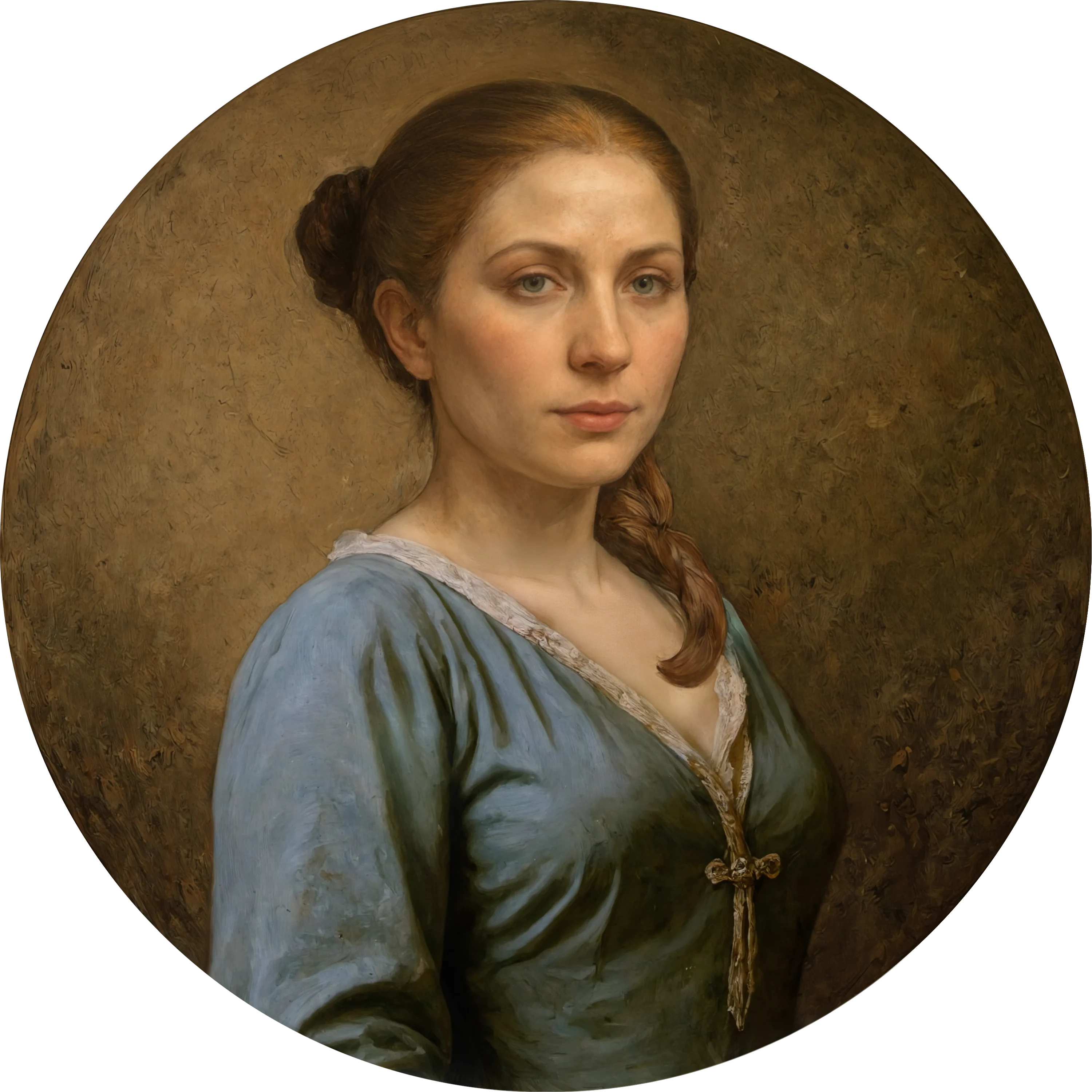
"Mary Ball Washington," artist rendering with the support of historic sources and AI, 2025. Courtesy, MVLA

Elizabeth Bolling Gay (Mrs. William Gay), by Charles Bridges between 1735 and 1744. Elizabeth Bolling Gay was a member of a prominent Virginia family. Portraits such as this helped guide the style and silhouette of the dress used in the recreation of Mary Ball Washington’s likeness. (Public domain)
Moses Mendes Seixas
(1744 – 1809)
Moses Seixas, raised in New York City and Newport, Rhode Island, was a Jewish American and the son of a father who immigrated from Portugal. His mother was born in New York. He rose to prominence as warden of Newport’s Touro Synagogue of Congregation Jeshuat Israel. He also co-founded the Bank of Rhode Island, which operated from his house until 1818.
Seixas represented his congregation when Newport’s religious leaders welcomed Washington in 1790. Afterwards he wrote a letter to express his congratulations and appreciation. Writing soon after Rhode Island became the last state to ratify the Constitution of the United States, Seixas sought assurances that the freedom of religion and rights of citizens would apply to Jewish people in the new republic.
Portrait
No confirmed portrait of Moses Seixas is known to survive. To approximate his likeness, the portrait was informed by images of close relatives, including his brother Reverend Gershom Mendes Seixas and his nephew Moses Benjamin Seixas. These portraits provided visual reference points for family resemblance and general facial structure.
The portrait’s composition and attire were guided by late-18th-century portrait conventions, particularly examples from the 1790s depicting men of similar social standing and profession. Period portraits were consulted to establish appropriate styling for the upper body, including hairstyle, neckcloth, and jacket, consistent with a civic and religious leader in the early United States.
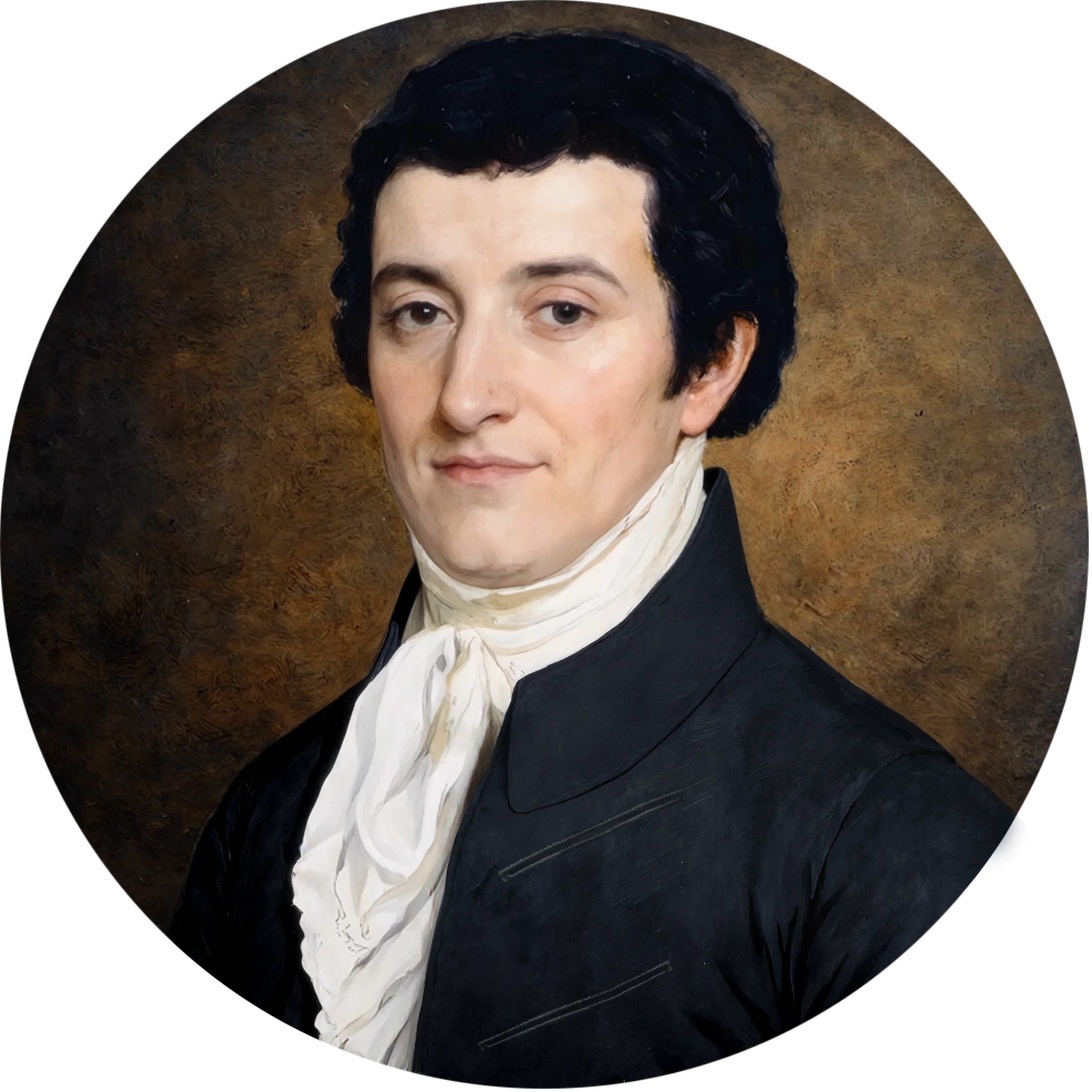
"Moses Mendes Seixas," artist rendering with the support of historic sources and AI, 2025. Courtesy, MVLA
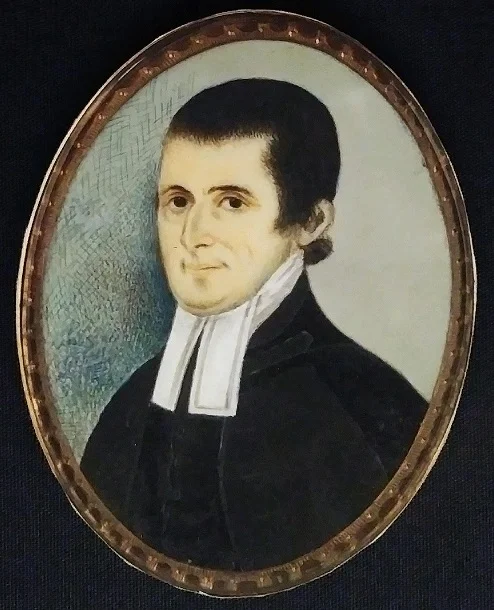
This portrait of Reverend Gershom Mendes Seixas was studied to help inform the likeness of his brother, Moses Seixas. "Rev. Gershom Mendes Seixas," by unknown, c. 1784. (Public domain)
Myrtilla & Boatswain
(Myrtilla: c. 1750s – 1823) (Boatswain: before 1758 – after 1799)
Married couple Myrtilla and Boatswain had at least five children: Lily, Ben, Harry, Lally, and young Boatswain. Enslaved at Mount Vernon, they were assigned work as a seamstress and ditcher, respectively.
Parenting under enslavement came with constant worry and a lack of control of their children’s safety. A cart accident kept young Boatswain close to his mother for three months when he was 12 years old. Two years later, following a long illness, he was assigned work as a ditch digger, a physically demanding job. Myrtilla advocated for a less strenuous job for her son, a request Washington considered suspicious.
Shortly after being transferred from Mansion House to Dogue Run Farm, young Boatswain died. Distraught, his mother was unable to work for three days.
Portrait
No visual depictions or physical descriptions of Myrtilla and Boatswain survive. To construct their portrait, Mount Vernon relied on a combination of historical documentation and contributions from descendants—most notably the Holland family, who are direct descendants of the couple. The family submitted modern photographs and cultural insights that helped guide facial attributes and expressions in the portrait, ensuring a grounded interpretation.
The portrait was also informed by written records from George Washington’s estate that reference the family and the challenges they faced. These sources, while not visually descriptive, provided essential context about their roles and resilience, shaping the mood, clothing, and presence of the portrait.
Myrtilla’s role as a spinner in the Mansion House influenced choices in dress and styling, likely a headwrap or short hair, and domestic work clothing. Boatswain, a field laborer and ditcher, is depicted with practical clothing appropriate for physical outdoor labor, and short-cropped hair or a cap.
Together, historical context and descendant contributions allowed for a portrait that reflects the dignity and strength of a family who endured hardship, loss, and labor while remaining deeply connected to one another.
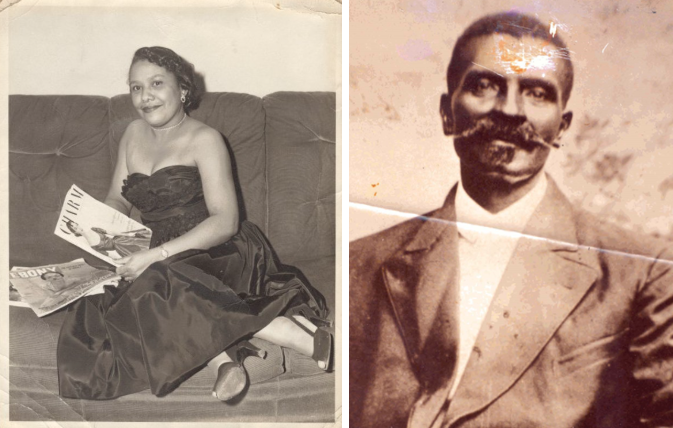

"Myrtilla & Boatswain," artist rendering with the support of historic sources and AI, 2025. Courtesy, League of the Descendants of the Enslaved at Mount Vernon & MVLA
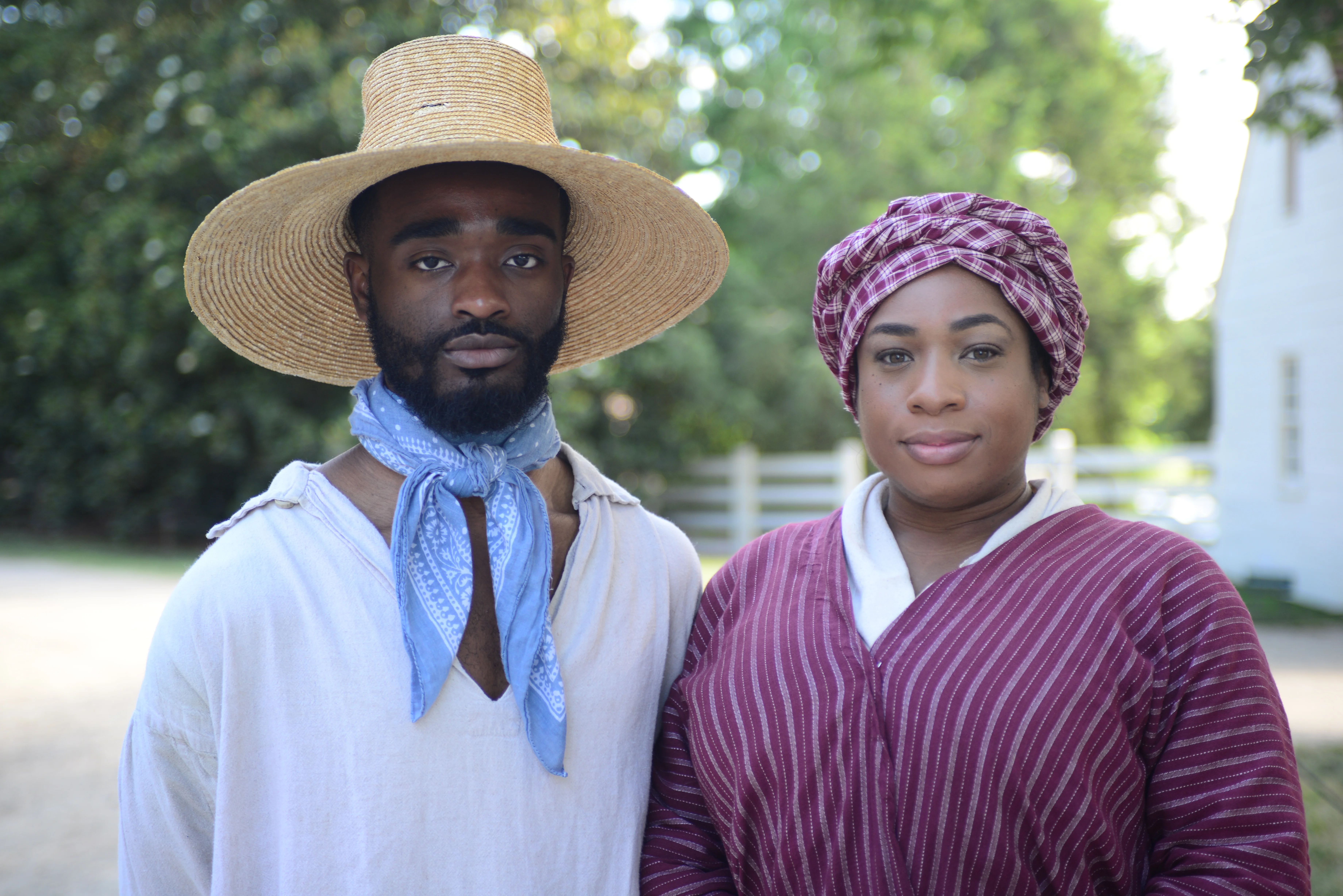
The base photo of models portraying Myrtilla and Boatswain, from which the AI portrait was created. (Steven M. Cummings / MVLA)
Ona Judge Staines
(1774 – 1848)
Ona Judge was born at Mount Vernon to Betty, an enslaved seamstress, and Andrew Judge, a white tailor. Like her mother, she was the legal property of the Custis estate.
At 10, Judge became Martha Washington’s maid. At 15, she began work at the President’s House in Philadelphia. While in the city, she made connections with free Black and Quaker abolitionist groups.
When Judge learned that she was to be given to Martha’s granddaughter, she escaped. The Washingtons attempted to bring Judge back to Mount Vernon, but she refused to return. In Portsmouth, New Hampshire, she learned to read and raised a family. Despite many hardships, she never regretted her decision to seek freedom.
Portrait
The portrait of Ona Judge was developed using historic sources, especially the 1796 runaway advertisement issued by George Washington, which provides one of the only known physical descriptions of her. It described Judge as “a light mulatto girl, much freckled, with very black eyes and bushy black hair... of middle stature, slender, and delicately formed.” This rare firsthand account formed the foundation for her facial structure, complexion, and hair texture in the portrait.
While no visual references of Ona survive, she was interviewed by a newspaper in the 1840s, and her firsthand account of her life and escape provided insight. To reflect her daily life in the Washington household, she is shown wearing historically appropriate clothing, including a shawl and a mob cap, drawn from period references for women in elite service roles.
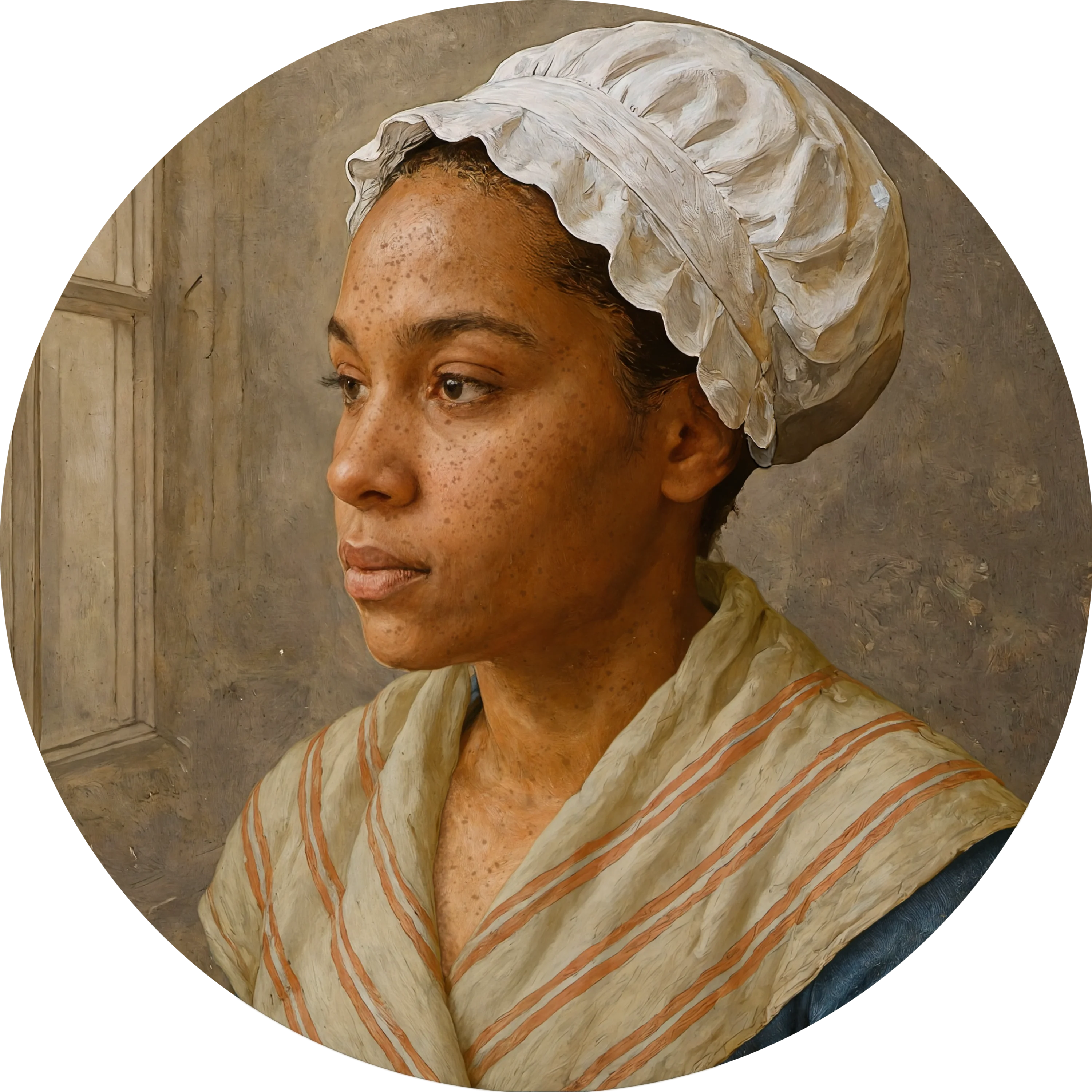
"Oney Judge," artist rendering with the support of historic sources and AI, 2025. Courtesy, League of the Descendants of the Enslaved at Mount Vernon & MVLA
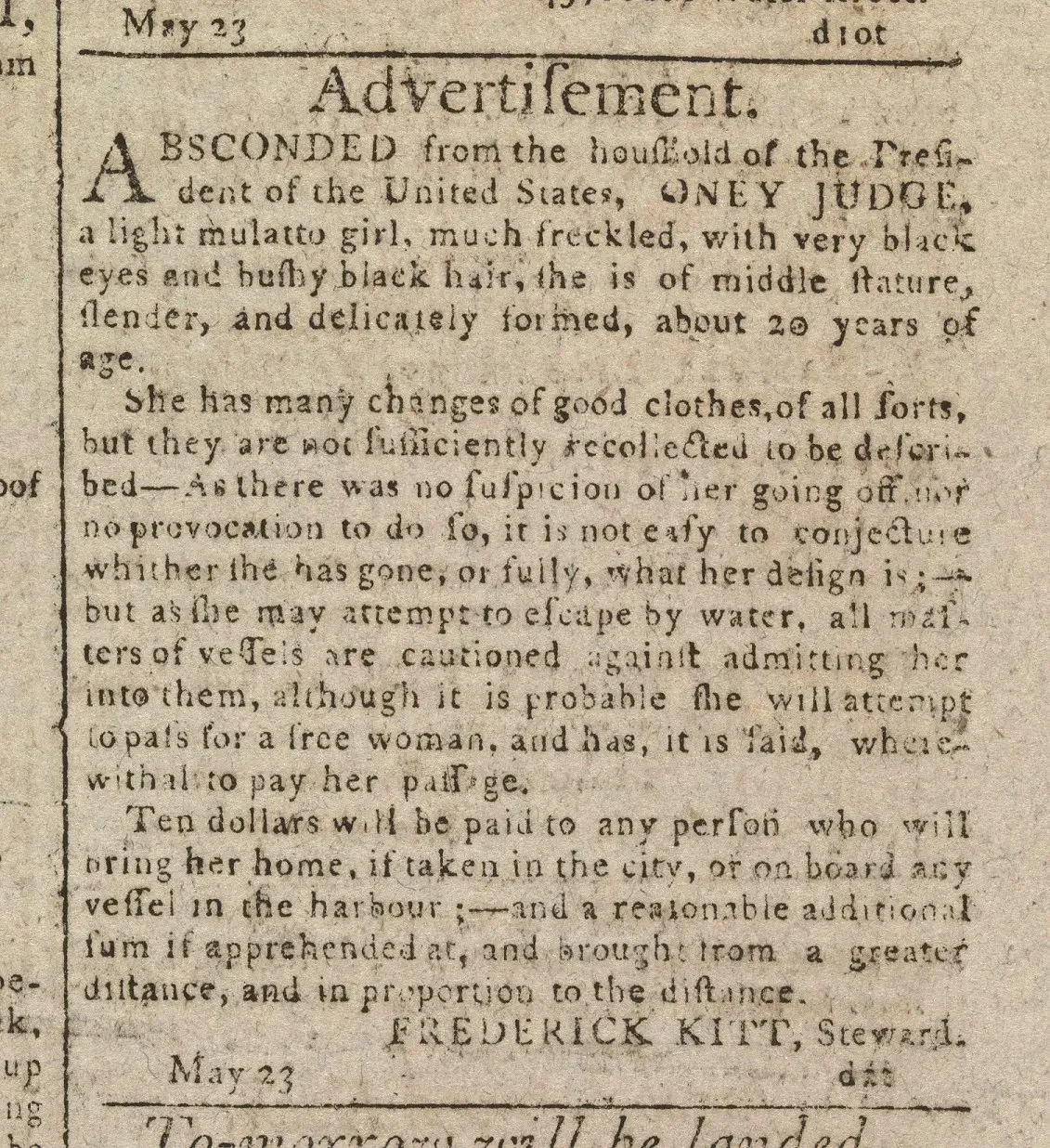
Advertisement for the return of Ona Judge, Pennsylvania Gazette, May 24, 1796 (DAMS 9594), Historical Society of Pennsylvania.
Peros
(c. 1721 – after 1771)
Peros (sometimes recorded as Parros, Paros, or Paris) was one of the enslaved men brought to Mount Vernon through the Custis estate after George Washington married Martha Dandridge Custis in 1759. He labored primarily at Dogue Run Farm, one of the five farms that made up Washington’s plantation system.
In August 1761, Peros and three other enslaved men—Jack, Neptune, and Cupid—attempted to escape from Dogue Run. Washington responded by placing a notice in the Maryland Gazette describing the men and offering a reward for their capture. Records suggest that Peros, Jack, and Cupid were recaptured by 1762, while Neptune remained at large for three more years.
Peros continues to appear in Mount Vernon records connected to Dogue Run Farm through 1764. It seems likely that he was the same Paros or Paris recorded as living on one of Washington’s dower plantations near Williamsburg in the 1770s, where he had also been enslaved earlier in his life. In 1770, he again resisted Washington’s authority by running away when Washington attempted to return him to Mount Vernon. By 1771, he was recorded at a Custis plantation in King William County. His life after that point is not documented.
Portrait
The portrait of Peros (pictured between Daphne and Doll) draws primarily from the detailed historical reference connected to him: Washington’s 1761 runaway advertisement published in the Maryland Gazette. Notices such as this often included careful physical descriptions to aid in recapture. In this case, Washington described Peros as 35–40 years old, about five feet eight inches tall, with a yellowish complexion, a full round face, and a full black beard, as well as a measured speaking style.
The advertisement also recorded the clothing Peros was wearing when he fled—a dark-colored cloth coat, a white linen waistcoat, white breeches, and white stockings. These details provided important guidance for reconstructing Peros’s style of dress.
Additional contextual information about clothing and material culture at Mount Vernon came from plantation records and contemporary advertisements for runaway enslaved people. For example, Mount Vernon account books note that enslaved men working at Dogue Run typically received garments such as jackets, breeches, shirts, stockings, and shoes, often made from durable fabrics such as osnaburg, a coarse linen widely used to clothe enslaved laborers.
Together, the physical description from the 1761 newspaper advertisement, references to 18th-century clothing issued to enslaved workers, and broader research into Mount Vernon’s agricultural workforce informed the visual reconstruction of Peros.
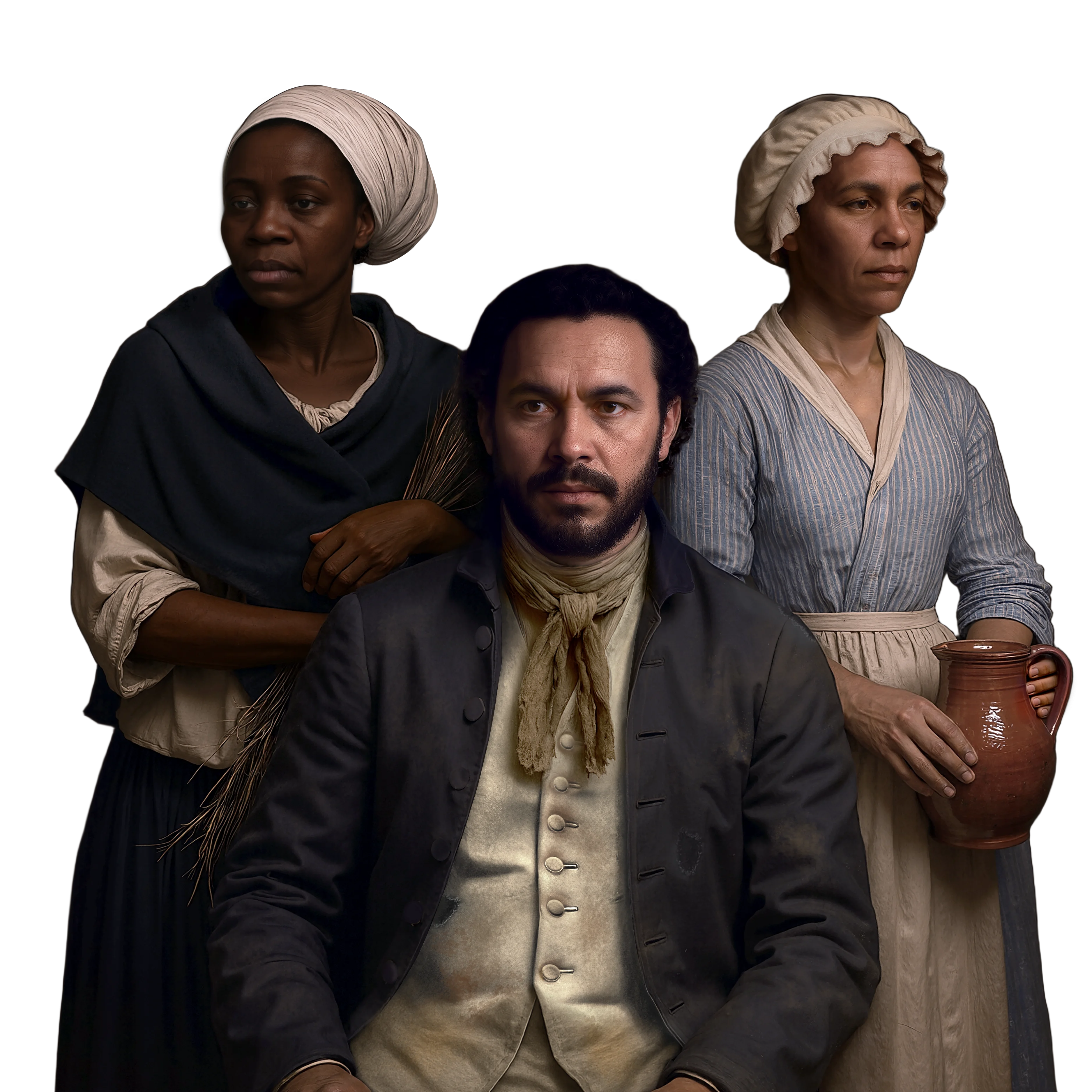
"Daphne, Peros, and Doll," artist rendering with the support of historic sources and AI, 2025. Courtesy, League of the Descendants of the Enslaved at Mount Vernon & MVLA
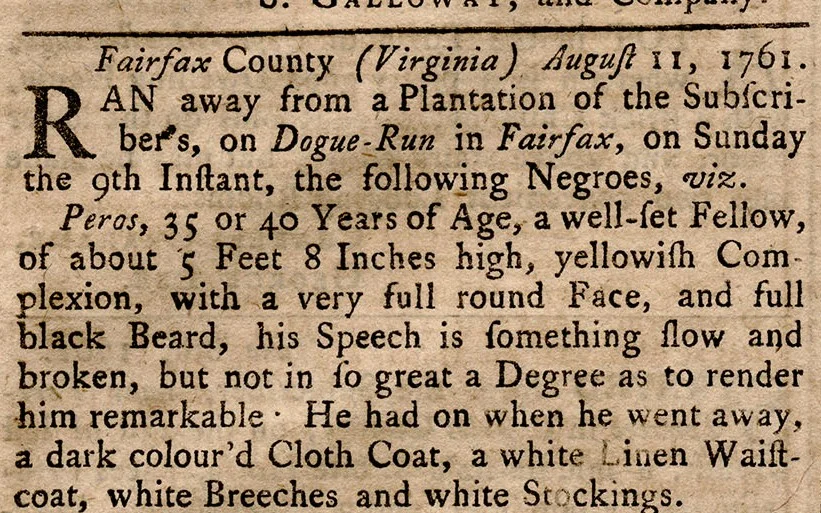
Runaway advertisement for Peros, Jack, Neptune, and Cupid, Maryland Gazette, August 1761. The advertisement recorded physical descriptions, clothing, and other identifying details that helped inform the reconstruction of Peros’s portrait. [RM-1211] (MVLA)
Sambo Anderson
(C. 1761 – 1845)
Captured as a child in West Africa, Sambo Anderson worked as a carpenter at Mount Vernon building wooden tools, structures, boats, and coffins. His intricate woodworking can still be seen in the Mansion today. He aided George Washington with experiments in sand casting, kept bees, sold honey to the Washingtons, and earned money hunting.
Sambo married Agnes in the 1780s and had seven children who lived at one of Washington’s outlying farms. After gaining his freedom through Washington’s will in 1801, Sambo continued to live on Washington’s land. With the money he earned hunting, he purchased the freedom of some of his children, grandchildren, and even great-grandchildren.
Portrait
To create Sambo Anderson’s portrait, Mount Vernon relied on one of the rare surviving descriptions of an enslaved individual from the estate. About 30 years after Anderson’s death, an anonymous author wrote in the Alexandria Gazette (1876) that Anderson was “of a bright mahogany color, with high cheek bones, and was stoutly made. His face was tattooed, and he wore in his ears rings which he informed me were made of real Guinea gold.” This vivid account provided crucial insight into Anderson’s appearance, including his skin tone, build, and cultural adornments.
Additional notes from the research files of Mary V. Thompson, Mount Vernon’s longtime research historian, recorded that Anderson’s face bore “two or three cuts on each side, high up on the cheeks.”
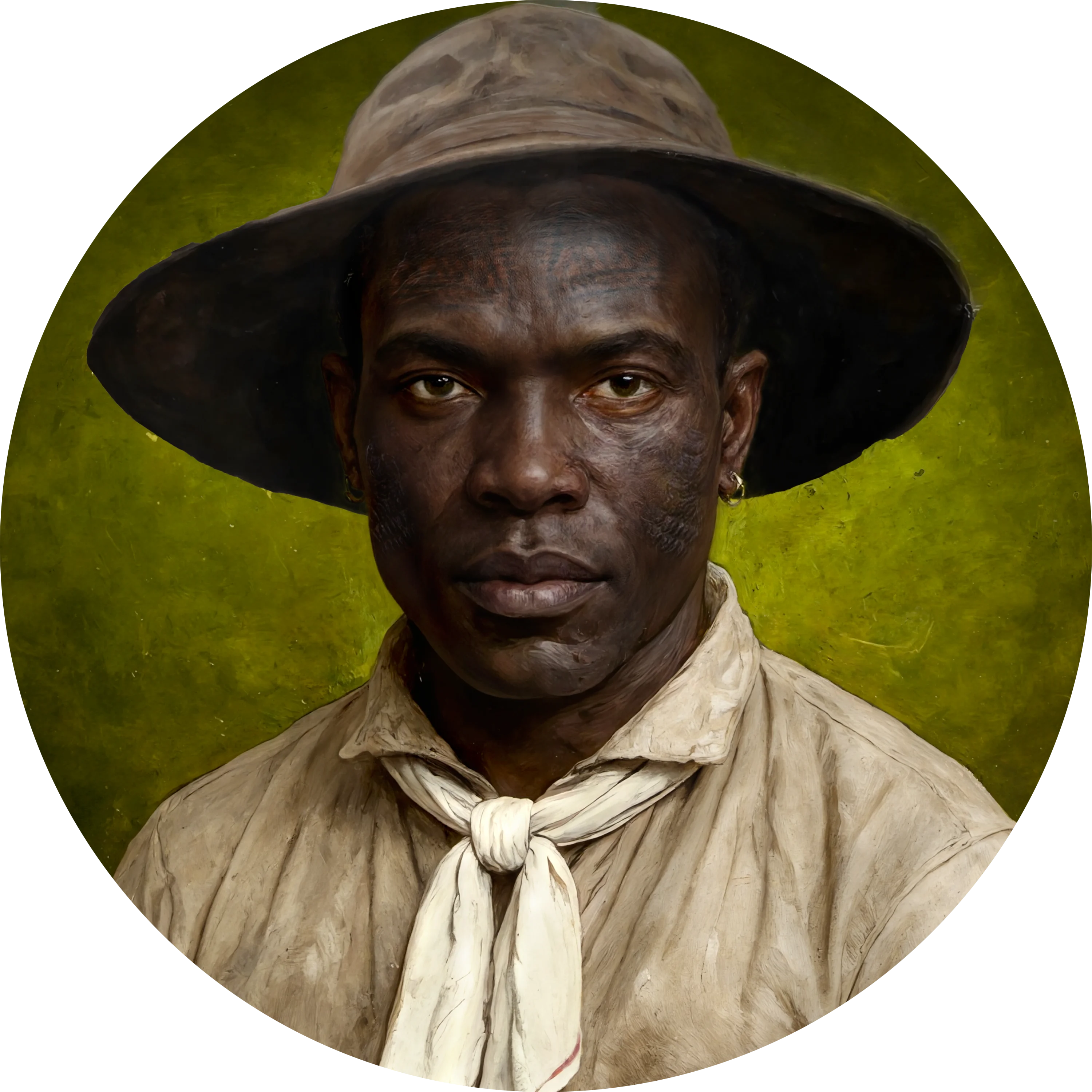
"Sambo Anderson," artist rendering with the support of historic sources and AI, 2025. Courtesy, League of the Descendants of the Enslaved at Mount Vernon & MVLA
Suckey Bay & Nancy Carter
(Suckey: C. 1753 – After 1799) (Nancy: C. 1787 – After 1835)
As an enslaved fieldworker, Suckey Bay lived and worked at River Farm, where she labored in the wheat fields from dawn to dusk. Along with other fieldworkers, she accomplished much of this work with the help of mules. Her day did not end when the sun set; she returned home to care for her family, including her daughter Nancy, who lived with her on River Farm.
Because Suckey belonged directly to George Washington, she and her children were freed in 1801 under the provisions of his will. As an adult, Nancy later married Charles Quander, a member of one of the oldest documented African American families in the United States.
Portraits
Two portraits interpret the life and legacy of Suckey Bay and her daughter Nancy Carter. One depicts Suckey as a field worker at River Farm, while the second portrays her holding her infant daughter Nancy.
Because no known historical descriptions of Suckey Bay survive, Mount Vernon worked closely with her descendants to guide the creation of both images. Family members emphasized her resilience, courage, endurance, and ingenuity, and described a woman whose dignity, strong family bonds, and work ethic left a lasting legacy. Descendants also shared family photographs that informed general inherited traits such as skin tone, brown eyes, black curly hair, and a nose with a wide base and broad nostrils.
The completed portrait present Suckey Bay not only as a laborer in the fields but also as a mother whose legacy continued through her daughter and future generations.
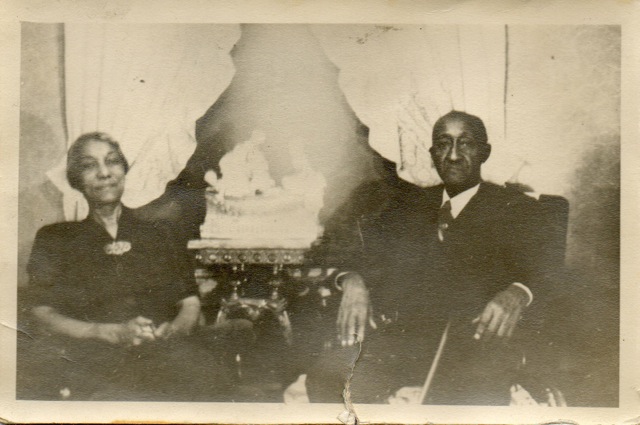
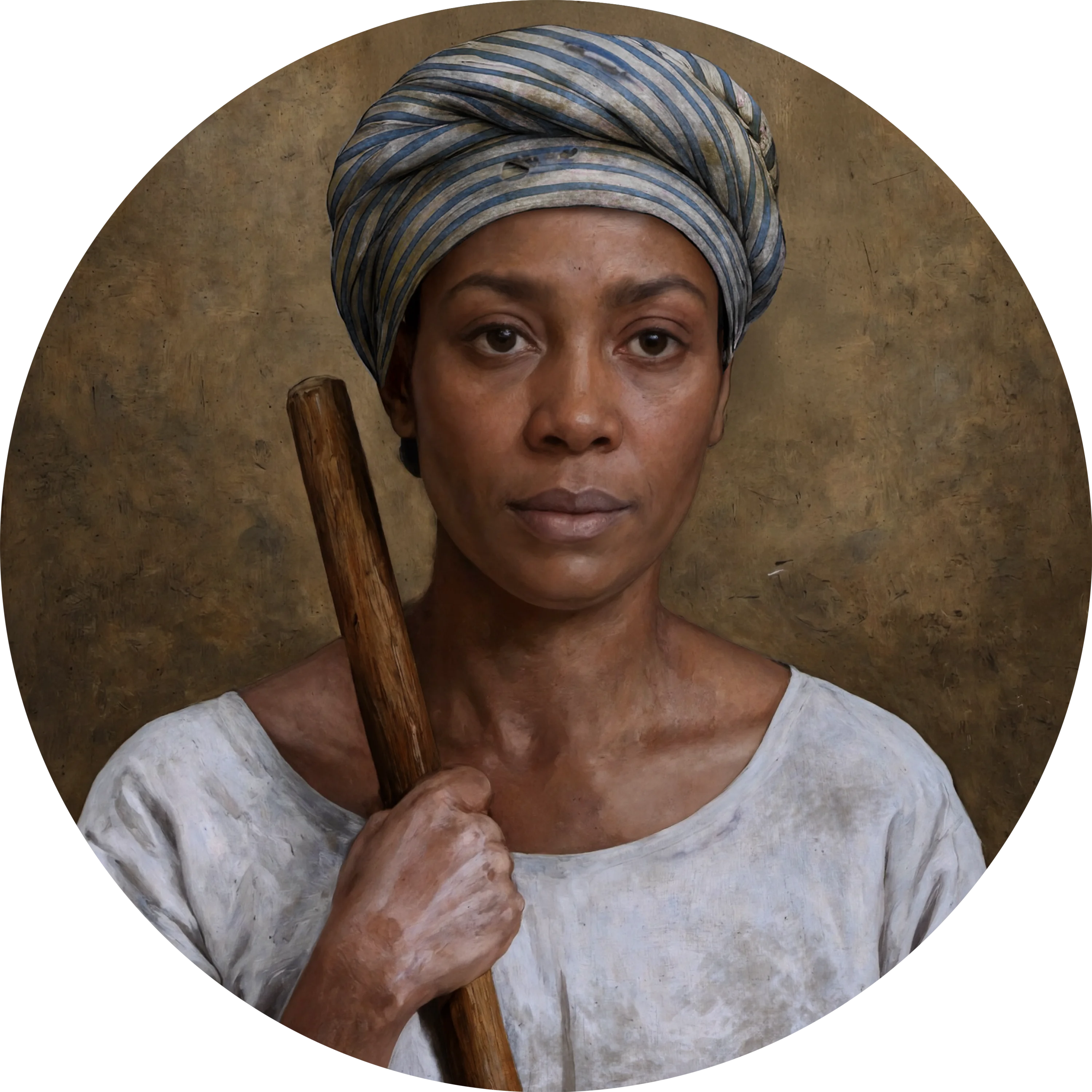
"Suckey Bay," artist rendering with the support of historic sources and AI, 2025. Courtesy, League of the Descendants of the Enslaved at Mount Vernon & MVLA
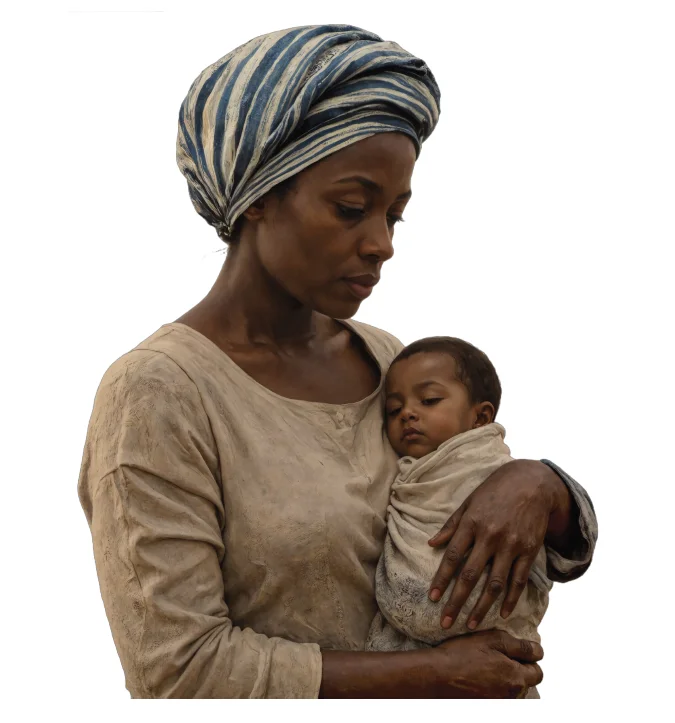
"Suckey Bay & Nancy Carter," artist rendering with the support of historic sources and AI, 2025. Courtesy, League of the Descendants of the Enslaved at Mount Vernon & MVLA
Tanacharison
(1700 – 1754)
Tanacharison lived with the Seneca Tribe, one of the five confederated nations of the Haudenosaunee or Iroquois Confederacy. He established himself as a leader among the Seneca, Cayuga, and other nations that migrated into the Ohio River Valley in the 18th century due to colonial encroachment in the east.
The British called him the “Half King,” due to their difficulty understanding Iroquois political structure. Tanacharison was one of the first Native leaders Washington met on his 1753 mission to demand the French vacate British lands. The next year, Tanacharison and Washington orchestrated a successful ambush of a French patrol.
Portrait
The portrait of Tanacharison was created in collaboration with members of the Seneca Nation to ensure cultural accuracy and respect. The foundational photograph was taken at Jumonville Glen, the site of the May 28, 1754, encounter that helped ignite the French and Indian War.
The image was developed with guidance from D.J. Huff, a Seneca Nation photographer and historian with deep ancestral ties to 18th-century Native leaders. Huff provided historical context, cultural direction, and on-site photography, intentionally selecting a model of Seneca ancestry and using the landscape itself to shape the tone of the portrait. Elmer John, a member of the Seneca Nation, portrayed Tanacharison. With experience in historical reenactment and film, he prepared through physical conditioning and careful assembly of historically accurate 18th-century clothing and adornment.
After the photograph was taken, Solid Light used AI-assisted techniques to transform the image into a painting-style portrait. The result reflects site-specific photography, Seneca cultural guidance, and historical research brought together through contemporary technology.
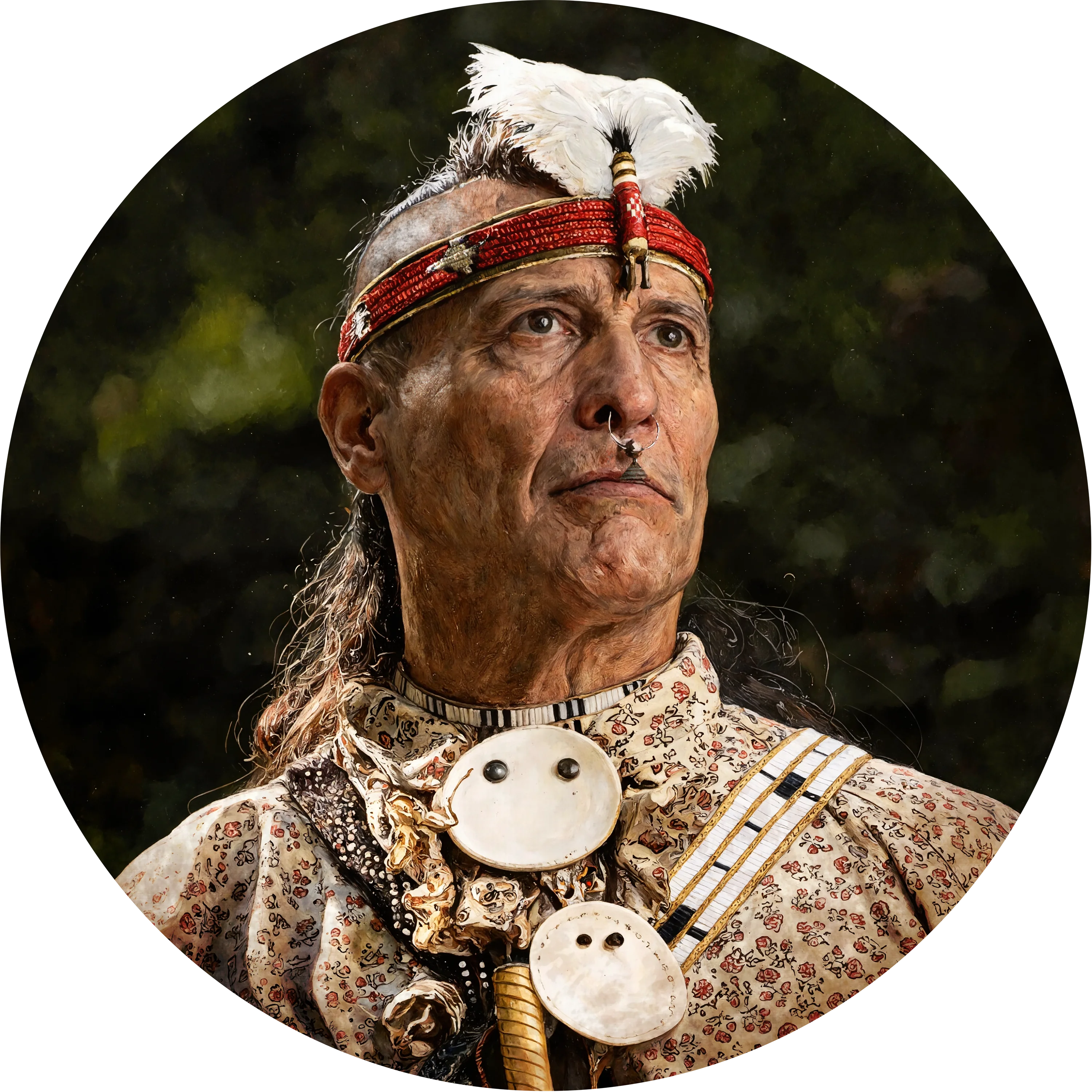
"Tanacharison," artist rendering with the support of historic sources and AI, 2025. Courtesy, D.J. Huff & MVLA
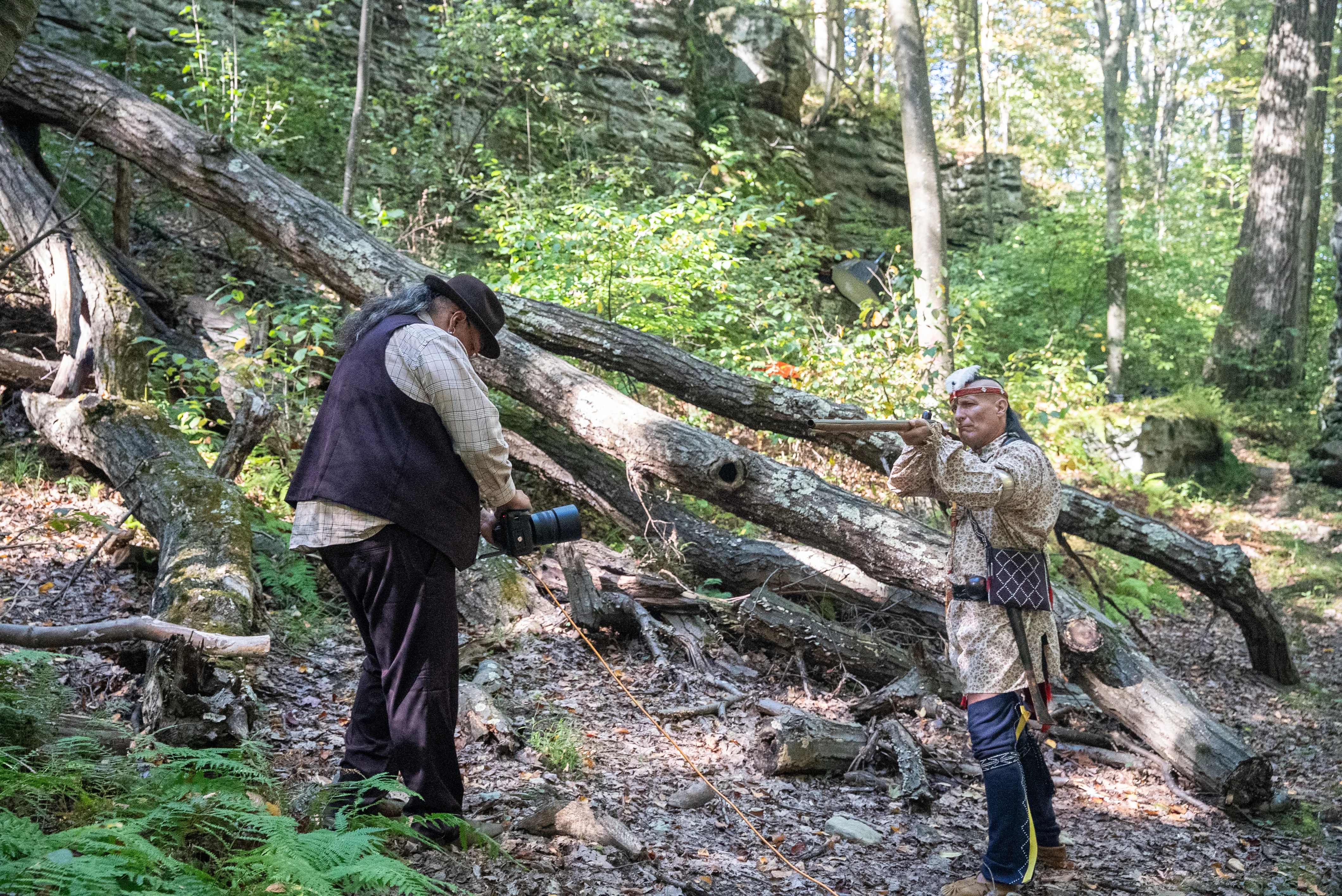
Seneca Nation photographer and historian D.J. Huff photographs Elmer John portraying Tanacharison at the site of the 1754 encounter that helped ignite the French and Indian War. (Vincent Seng / MVLA)
Thomas Fairfax
6th Lord Fairfax of Cameron (1693 – 1781)
Born in a castle in England, Lord Fairfax was the only noble and member of the House of Lords to live permanently in the American colonies.
He inherited 5 million acres (about the area of New Jersey) between the Potomac and Rappahannock Rivers and first visited his lands at age 42. Struck by the beauty of the area, he decided later to return to Virginia permanently. He settled near his family and George Washington.
Lord Fairfax, quietly loyal to Britain until his death, lived to see his protégé George Washington lead the Continental Army to victory at Yorktown and secure independence.
Portrait
No confirmed life portrait of Thomas Fairfax, 6th Lord Fairfax of Cameron, survives. To approximate his likeness, Mount Vernon studied portraits of close family members, including Bryan Fairfax (his son), and George William Fairfax (his cousin), to identify shared family features and complexion.
The portrait’s composition and styling were informed by mid-18th-century Virginia and British portrait conventions, particularly examples from the 1740s and 1750s. Period references for men’s hair, coats, waistcoats, and cravats were consulted to ensure accuracy in silhouette and grooming appropriate to a man of Fairfax’s rank and status. Comparable portraits from the era helped guide posture and presentation befitting a titled landowner and prominent figure in colonial Virginia.
Mount Vernon scholars, including Amanda Isaac, Curator of Fine and Decorative Arts, provided expertise and feedback throughout the portrait’s development to ensure historical accuracy in dress, material culture, and overall representation.
Together, family likeness, period portrait models, and curatorial review shaped a historically grounded interpretation of Lord Fairfax.
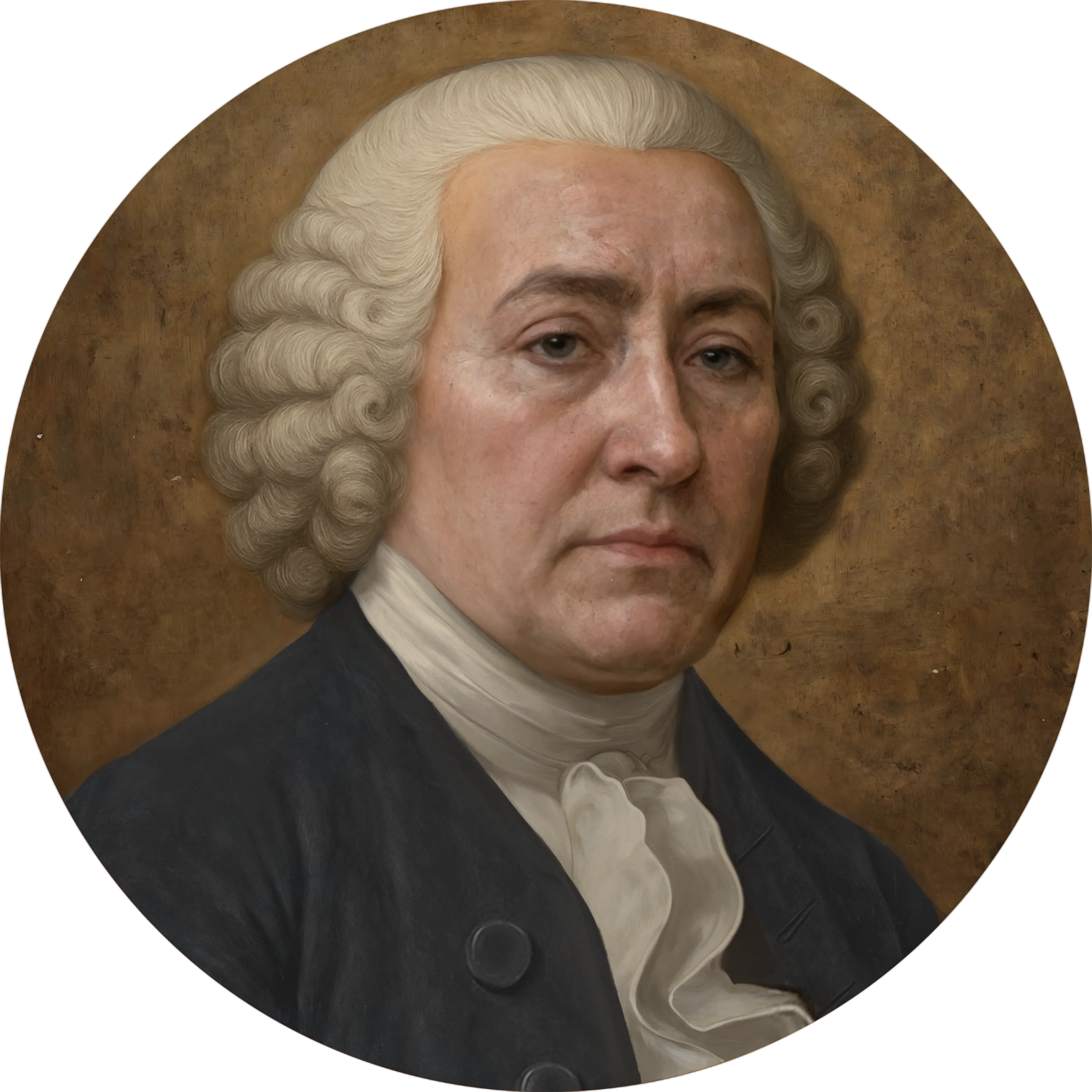
"Thomas Fairfax," artist rendering with the support of historic sources and AI, 2025. Courtesy, MVLA
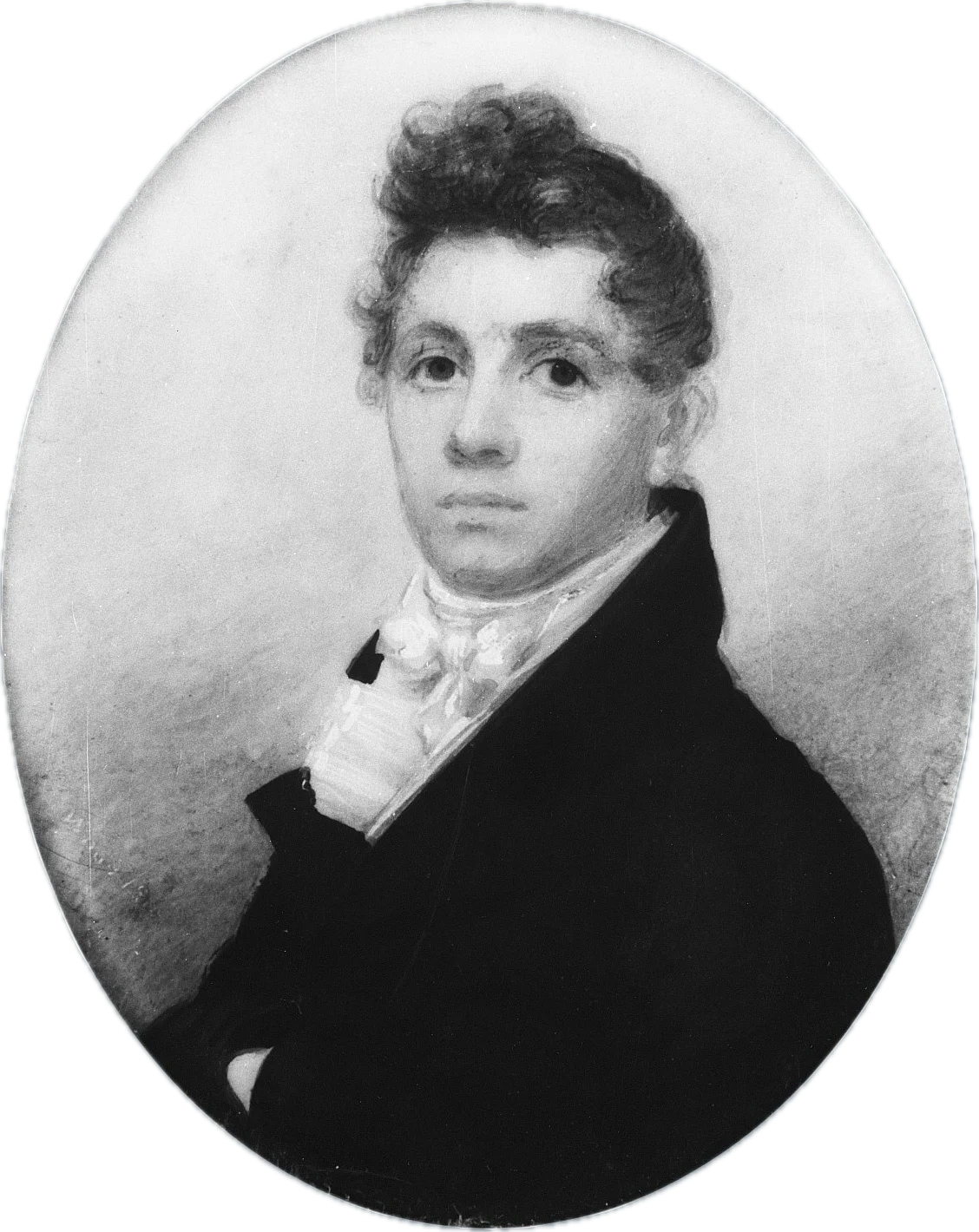
This portrait of George William Fairfax, cousin of Thomas Fairfax, was studied to help inform the likeness of Lord Fairfax. George William Fairfax, by Joseph Wood, 1816. (Metropolitan Museum of Art)
West Ford
(c. 1784–1863)
West Ford was born about 1784 at Bushfield Plantation in Westmoreland County, Virginia, where he lived with his mother, Venus, and grandparents Billy and Jenny. Bushfield belonged to John Augustine Washington, George Washington’s brother, and his wife, Hannah Bushrod Washington.
In her 1801 will, Hannah asked that West be trained in a trade and freed at age 21. When Bushrod Washington inherited Mount Vernon in 1802, he brought Ford to the estate. Ford was freed around 1805 but continued working for the Washington family, caring for William Lee, supervising enslaved workers, conducting business, and assisting visitors to George Washington’s estate and tomb.
In 1829, Bushrod Washington left Ford more than 100 acres in Fairfax County, Virginia. Ford later sold that land and purchased property that became the center of Gum Springs, a free Black community. West Ford eventually became the second wealthiest black man in Fairfax Country. He died in 1863 and is believed to be buried at the African American Burial Ground at Mount Vernon.
Portrait
The portrait of West Ford began with two historical images: a 19th-century pencil sketch said to depict Ford and an engraved image published in Benson J. Lossing’s The Home of Washington; or, Mount Vernon and Its Associations in 1871. The pencil sketch served as the primary visual reference, while the Lossing engraving provided additional guidance, especially for the chin and jawline. These images were then refined and expanded through descendant input, family photographs, and documentary records.
Descendant feedback played a critical role. Members of the Ford/Allen family emphasized that the historic sketch should take precedence, while selected features from family photographs provided by the Ford/Allen family—especially the face shape associated with Ford’s grandson, Major George William Ford (1847–1939)—helped guide the final likeness. Considering shared family traits, descendants requested a longer face, deeper-set blue-gray eyes, a stronger brow, a downturned nose, a more structured jaw, and a forward-projecting chin.
A valuable and rare source of information came from the 1839 Fairfax County “Register of Free Negroes,” which recorded physical descriptions of free Black residents. The register described Ford as about 54 years old, 5 feet 8 1/2 inches tall, with a “pleasant countenance,” a wrinkle resembling a scar on his left cheek, a crooked finger on his right hand, and a small scar near his upper lip.
The final portrait brings these sources together: the historic sketch, the Lossing engraving, family photographs, and written records. His clothing and hair were also refined to reflect the period, including a coat inspired by the original sketch and a subtle queue suggested by descendants as appropriate to the era.

"West Ford," artist rendering with the support of historic sources and AI, 2025. Created from the two known historical sketches of West Ford and informed by photographs of 10 direct descendants from the Ford/Allen family—including a photograph of his grandson, Major George William Ford (1847–1939)—the rendering represents the most historically informed approximation to date of West Ford's appearance as a young man. Courtesy, League of the Descendants of the Enslaved at Mount Vernon & MVLA
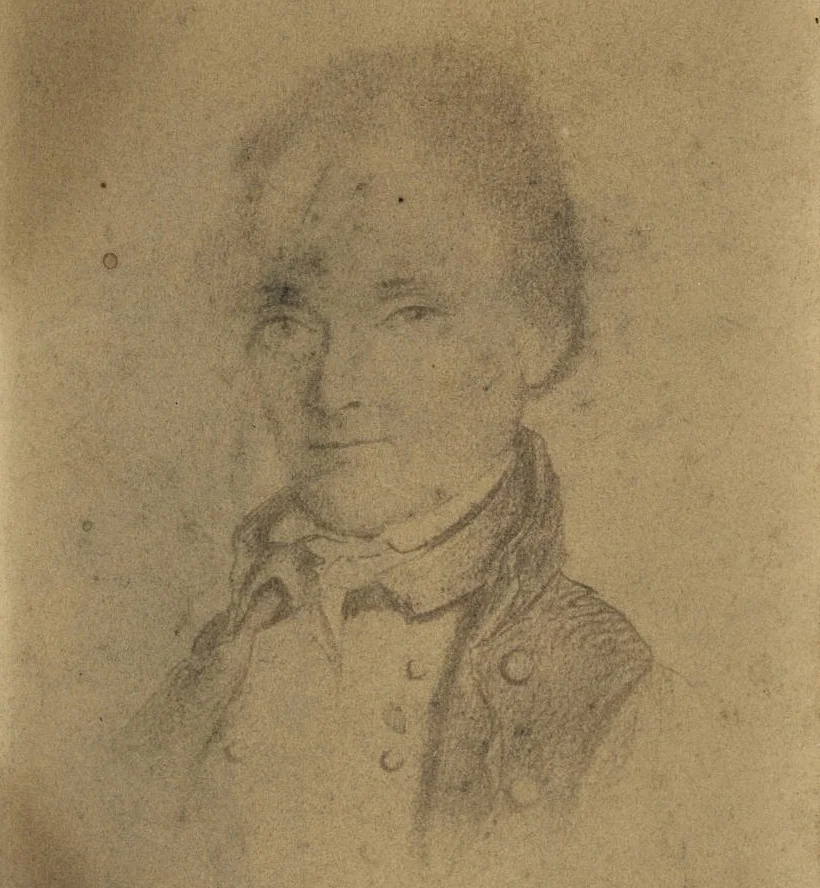
Cabinet card of West Ford, 19th century. This faded cabinet card (photograph pasted onto a cardboard backing) features a sketch of West Ford by an unknown artist. The original sketch was likely made in the early 19th century, when Ford was in his 20s or 30s. Gift of Mrs. John Beebe, 1985. (MVLA)

Engraved illustration of portrait of West Ford from Benson J. Lossing's, "The Home of Washington or Mount Vernon and Its Associations, Historical, Biographical, and Pictorial," 1871, Illustration 131, page 352.
William Costin
(1780–1842)
William Costin was born enslaved in 1780 and was likely the son of John Parke Custis and Nancy/Ann Holmes, an enslaved woman owned by the Custis family. He was manumitted in 1802, along with his mother, by Thomas Law, husband of Martha Washington’s granddaughter Eliza Parke Custis Law.
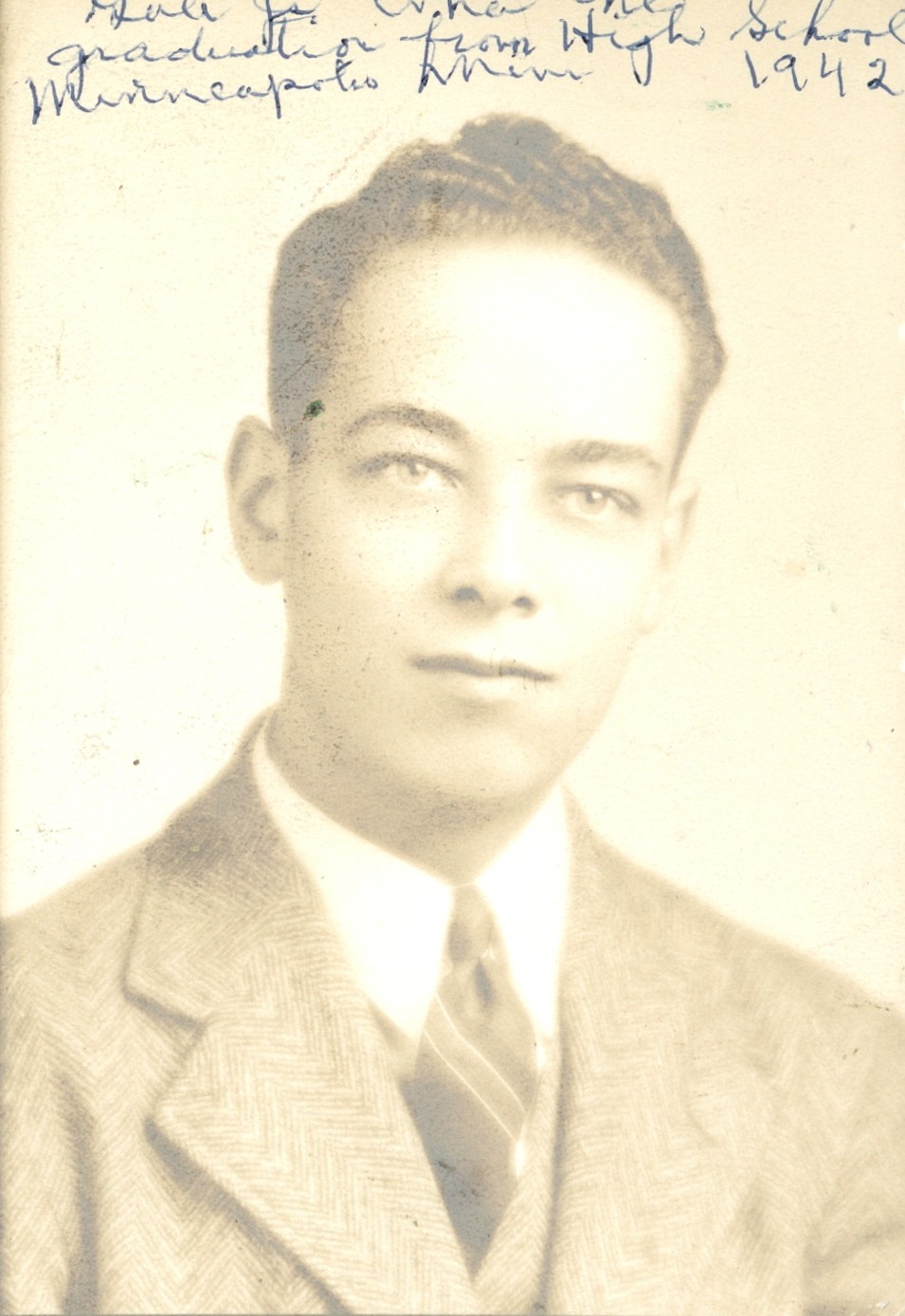
Costin became a respected member of Washington, D.C.’s free Black community, working for more than 20 years as a porter for the Bank of Washington and raising a large family on Capitol Hill. He and his wife, Delphy Judge Costin (sister of Ona Judge), had seven children, all of whom carried the middle name Parke, reflecting the family’s likely Custis connection.
Portrait
William Costin’s portrait was developed using a combination of historical imagery, descendant input, family photographs, and period visual references. A key source was the 1842 lithograph of Costin, titled A Tribute to Worth by His Friends, based on a painting by S.M. Charles and lithographed by Charles Fenderich. The final portrait drew from this engraving while also incorporating visual guidance from Hilyer family photographs, especially images of Gale P. Hilyer, a descendant of William Costin.
Descendant feedback helped refine Costin’s facial features, complexion, and posture. Family members noted the importance of a prominent forehead and hairline, lighter hair color, no freckles, and preferred eyes with very little white showing around the pupil.
Period portraits were also used to guide Costin’s clothing, ensuring that his garments reflected the style, status, and conventions of the early 19th century.

"William Costin," artist rendering with the support of historic sources and AI, 2026. Courtesy, League of the Descendants of the Enslaved at Mount Vernon & MVLA
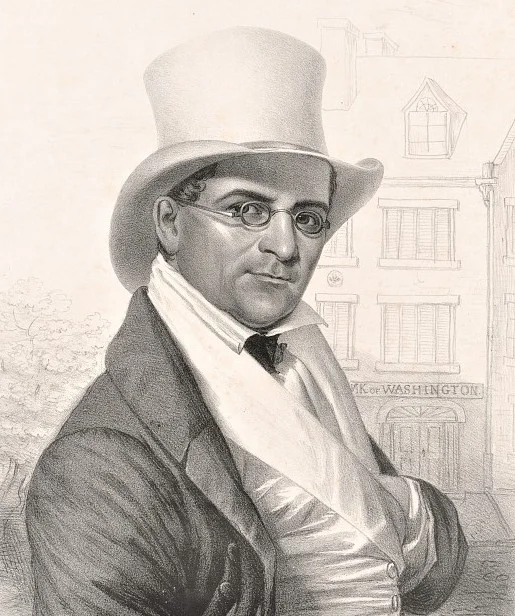
“William Costin. A tribute to worth by his friends," painted by S.M. Charles; lithogd. by Chas. Fenderich, 1842. (Public domain)
William Lee
(C. 1751 – After 1810)
For two decades, William Lee served as Washington’s enslaved manservant, accompanying Washington nearly everywhere. He organized Washington’s personal affairs and papers, delivered messages, prepared the General’s uniform, and helped him dress. Lee was well known throughout the army. After the war, Lee lived with knee injuries. He was assigned work as a shoemaker in a room by the greenhouse at Mount Vernon. Lee was freed at Washington’s death by the terms of his will.
Lee lived out his life as a free man at Mount Vernon, sharing stories to curious visitors about the General and the war. Lee is likely interred at Mount Vernon in the burial ground near Washington’s Tomb.
Portrait
To create the portrait of William Lee, Mount Vernon drew from firsthand descriptions written decades after the American Revolution, along with Washington’s own records. George Washington described Lee, his personal valet throughout the war, as “mulatto,” indicating mixed African and European ancestry. Lee was widely remembered for his strength, athletic build, and dignified bearing. Martha Washington’s grandson recalled him as a “stout active man,” with “a square muscular figure,” while another contemporary described him as moving “with great dignity.” In 1804, artist Charles Willson Peale referred to him as “a heavy man.”
These physical details, though recorded later in life, were used alongside contextual research about 18th-century clothing and grooming standards for enslaved house servants. Lee would have worn a white-and-red livery suit, buckled shoes, and a queue hairstyle, per Washington’s instructions. Without descendant photographs, Mount Vernon relied on these textual descriptions, supported by historical clothing documentation and interpretive research, to respectfully reconstruct Lee’s appearance as both a famous figure of the Revolution and a skilled, trusted member of Washington’s household.
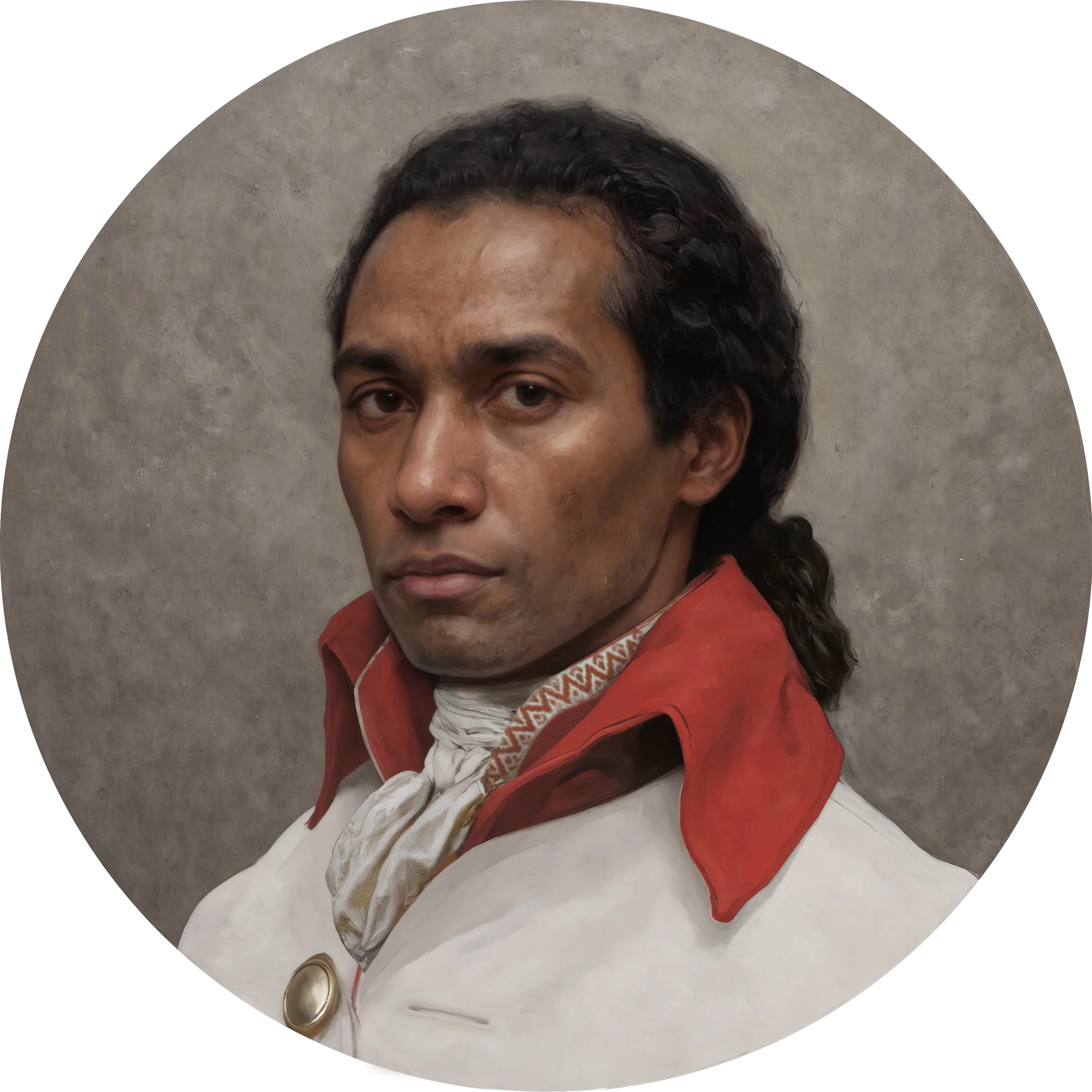
"William Lee," artist rendering with the support of historic sources and AI, 2025. Courtesy, League of the Descendants of the Enslaved at Mount Vernon & MVLA
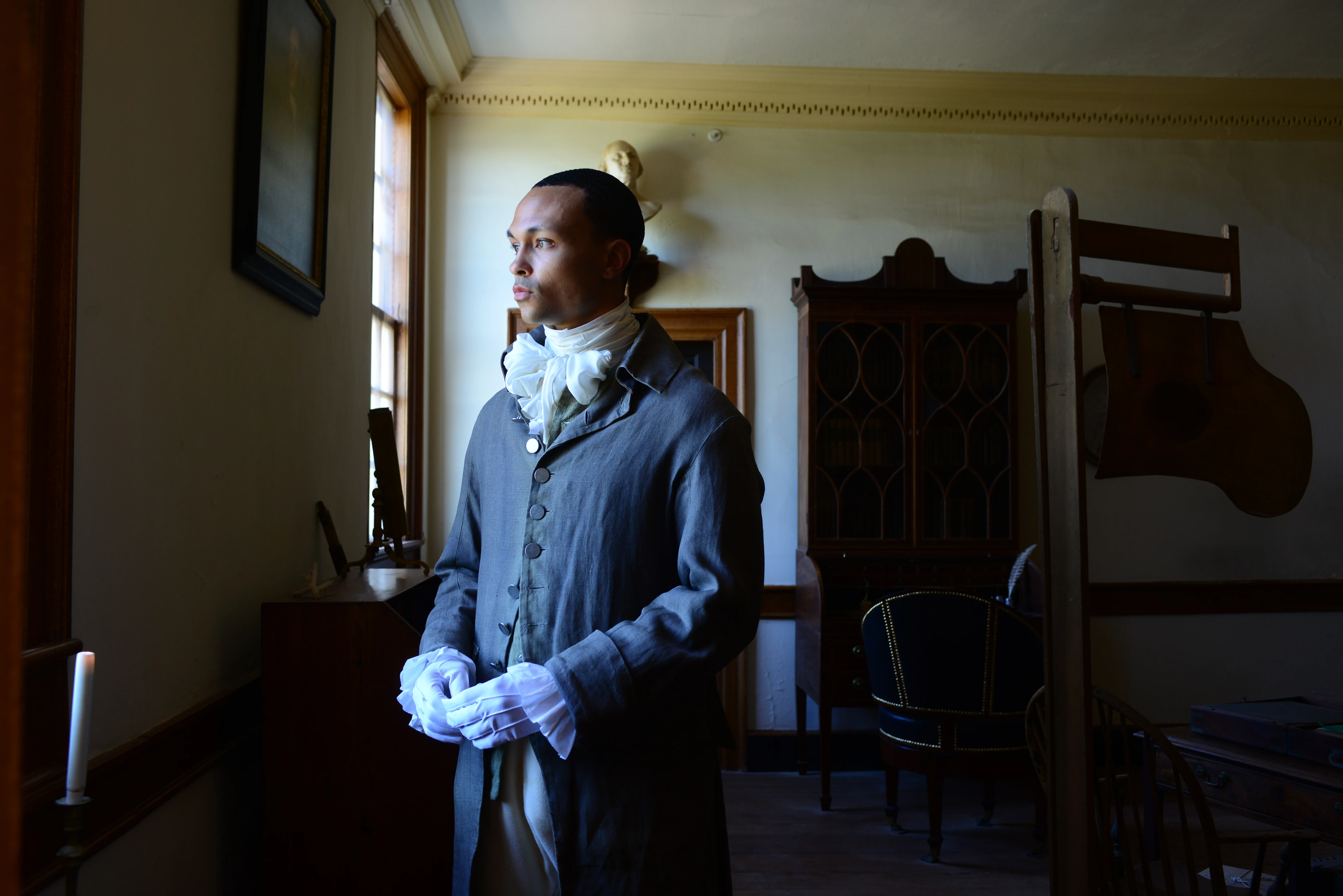
The base photo of a model portraying William Lee, from which the AI portrait was created. (Steven M. Cummings / MVLA)