
Learn what makes the view from Mount Vernon’s piazza one of the most beloved vistas in all of America.
1
Mount Vernon overlooks the Potomac River.
Mount Vernon is perched on the gentle slopes along the Virginia side of the Potomac River and affords a sweeping view across to the woodlands and wetlands on the Maryland shore.
It was a perennial favorite for visitors during Washington’s time, and remains so today. Washington himself was very pleased with the location of his estate, writing:
Read the LetterNo estate in United America is more pleasantly situated than this…
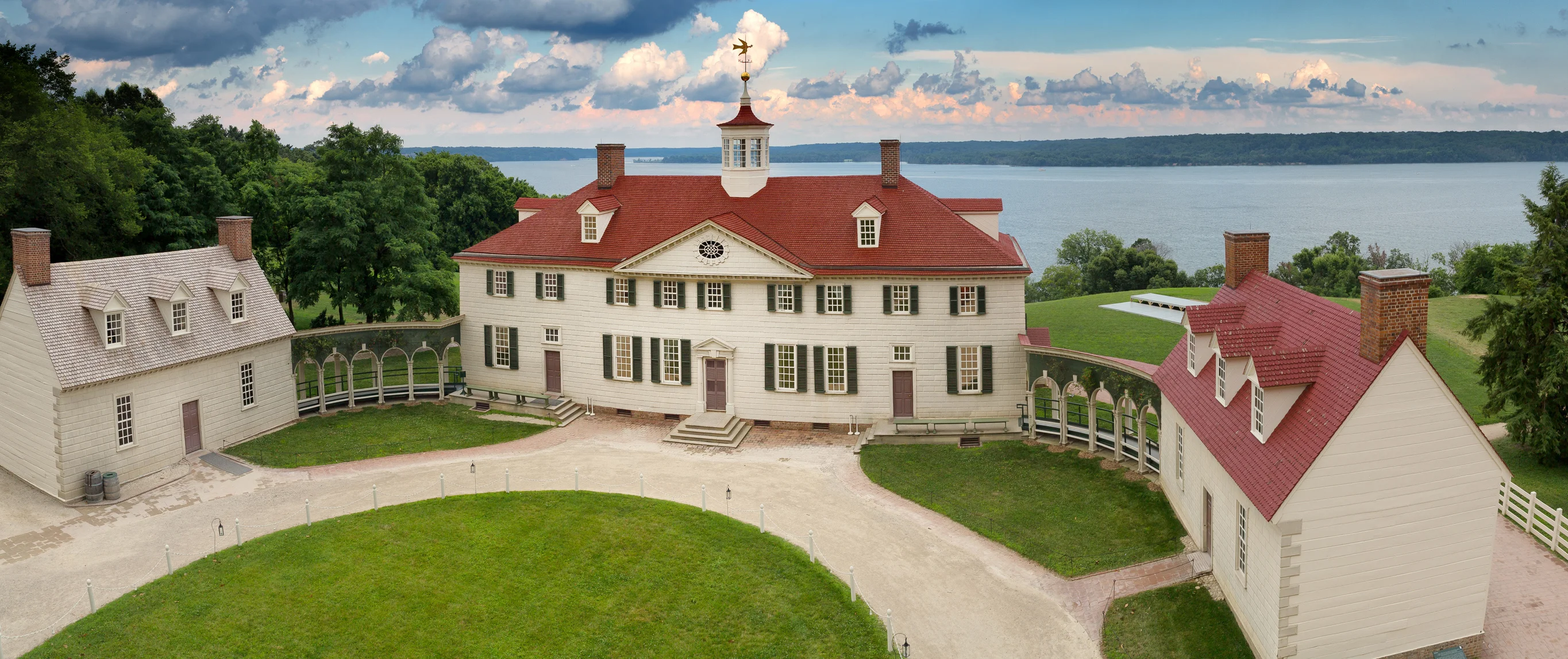
Mount Vernon overlooks the Potomac River. (MVLA)
2
The Mansion sits on a bluff carved by an ancient river.
This high ground was created by the power of the river over thousands of years. As the Potomac cut deep into the earth, it left behind old riverbeds in the form of high, flat terraces.
The bluff you see today shows where the water once flowed.
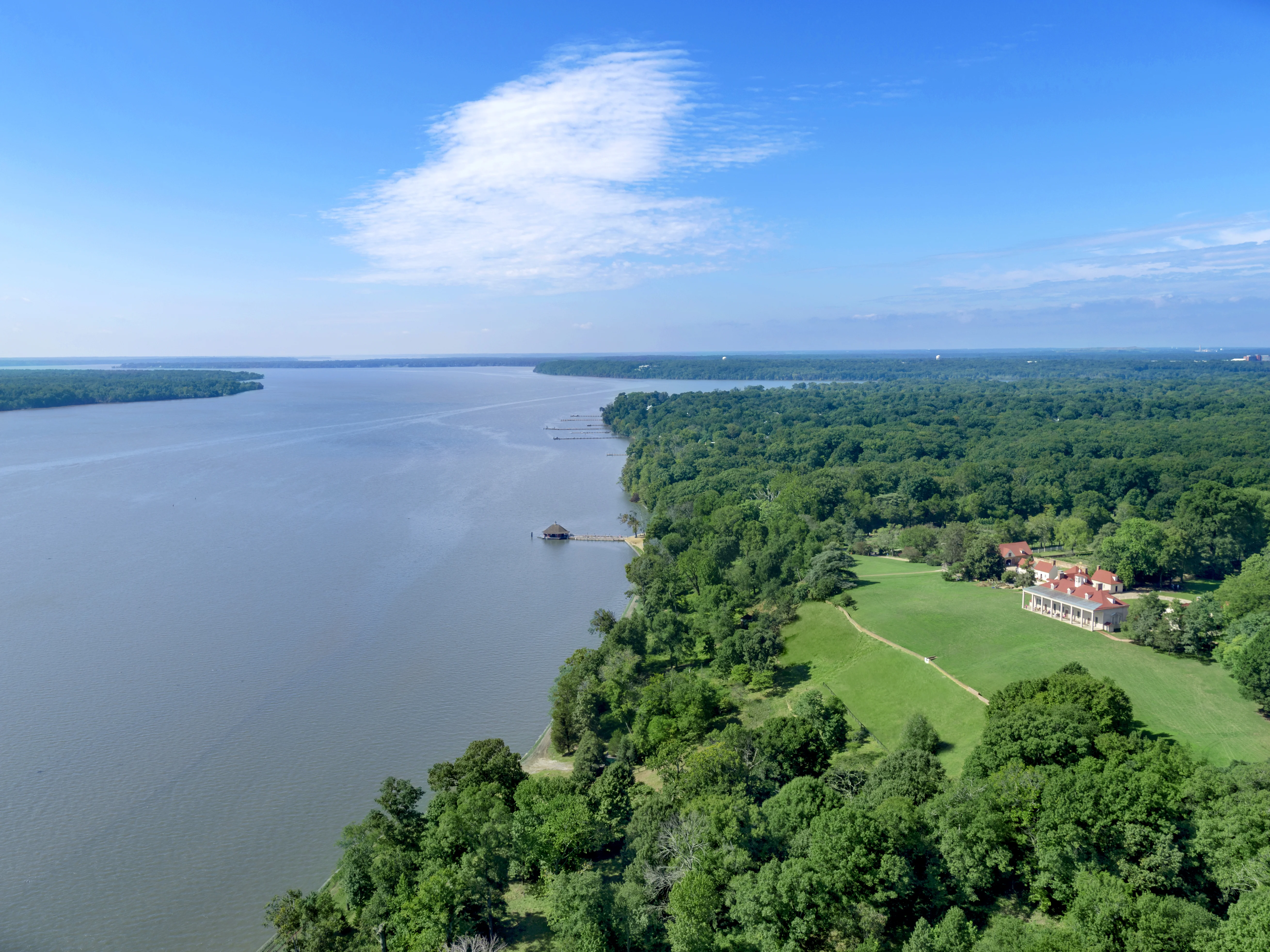
Mount Vernon sits on the shores of the Potomac River. (MVLA)
Definition
What is a Viewshed?
The Oxford English dictionary defines a “viewshed” as “the geographical area visible from a specific location, encompassing all points in line-of-sight.”
Explore
A History of Preservation
Inside the MVLA’s decadeslong quest to preserve George Washington's beloved view.
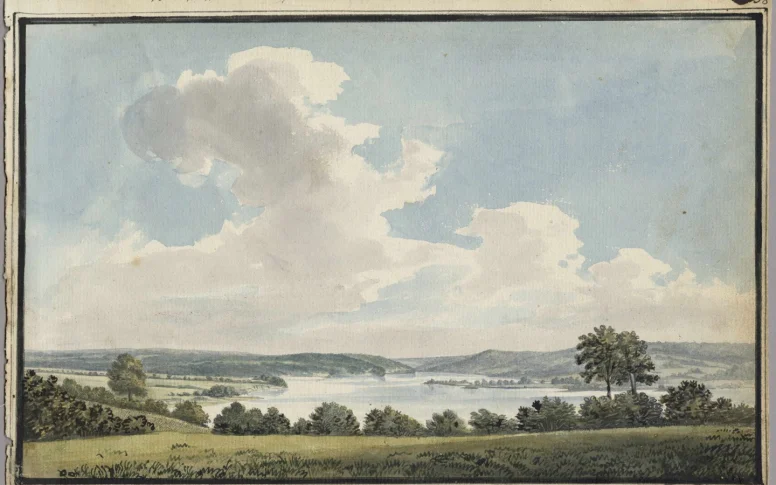
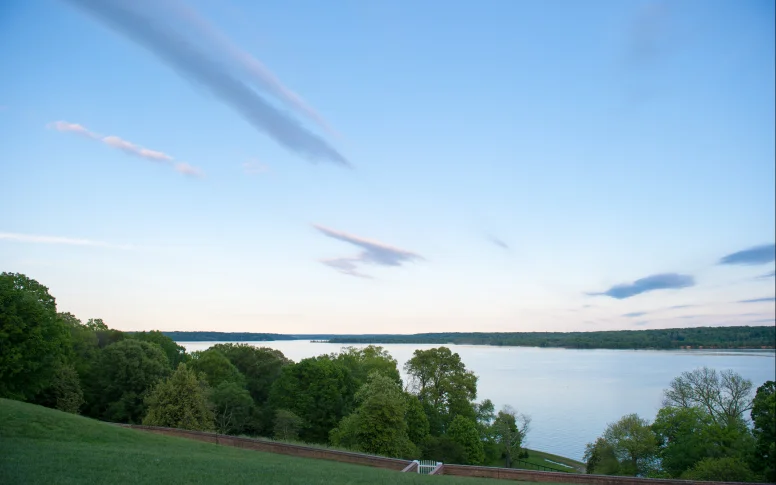
1792 2016
3
Washington’s viewing enjoyment wasn’t limited to the Maryland shore.
On his back porch, Washington enjoyed more than just his sweeping view of the Potomac; his appreciation spread to the smaller flora and fauna in his yard.
After Thomas Handasyd Perkins’ visit to Mount Vernon in the summer of 1796, he recounted Washington’s admiration of the nature in his lawn:
At the back of the house, overlooking the river, is a wide piazza, which was the general resort in the afternoon. On one occasion, when sitting there with the family, a toad passed near to where I sat conversing with Gen. Washington; which led him to ask me if I had ever observed this reptile swallow a fire-fly. Upon my answering in the negative, he told me that he had; and that, from the thinness of the skin of the toad, he had seen the light of the fire-fly after it had been swallowed. This was a new, and to me a surprising, fact in natural history.
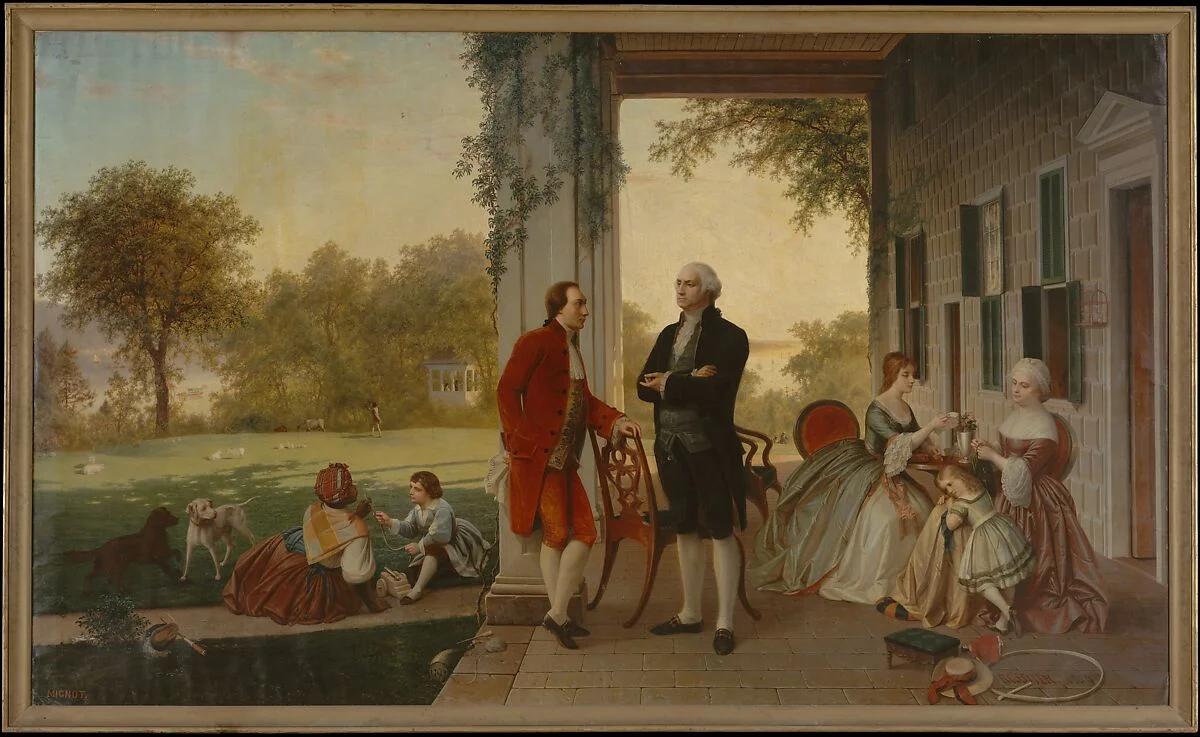
"Washington and Lafayette at Mount Vernon, 1784," by Thomas Pritchard Rossiter and Louis Remy Mignot, 1859. (The Metropolitan Museum of Art)
4
The Mount Vernon viewshed has consistently been threatened by infrastructure projects on the shores of Maryland.
In 1960, the Washington Suburban Sanitary Commission submitted a proposal to build a sewage treatment plant near Mockley Point, Maryland, a location not only within view of Mount Vernon but also an important archaeological site sacred to the Piscataway people, a native Algonquian tribe who lived there for thousands of years. Chief Turkey Tayac, a local leader who advocated for Native cultural reclamation, supported the establishment of a park.
The Mount Vernon Ladies’ Association (MVLA) teamed up with the National Park Service and other groups to publicly campaign against construction of the plant. The Association dubbed this effort “Operation Overview” and prioritized it above many other preservation issues.
In 1960, it began financially backing the Accokeek Foundation with an annual contribution of $10,000 toward its work to research best methods to preserve and use the land.
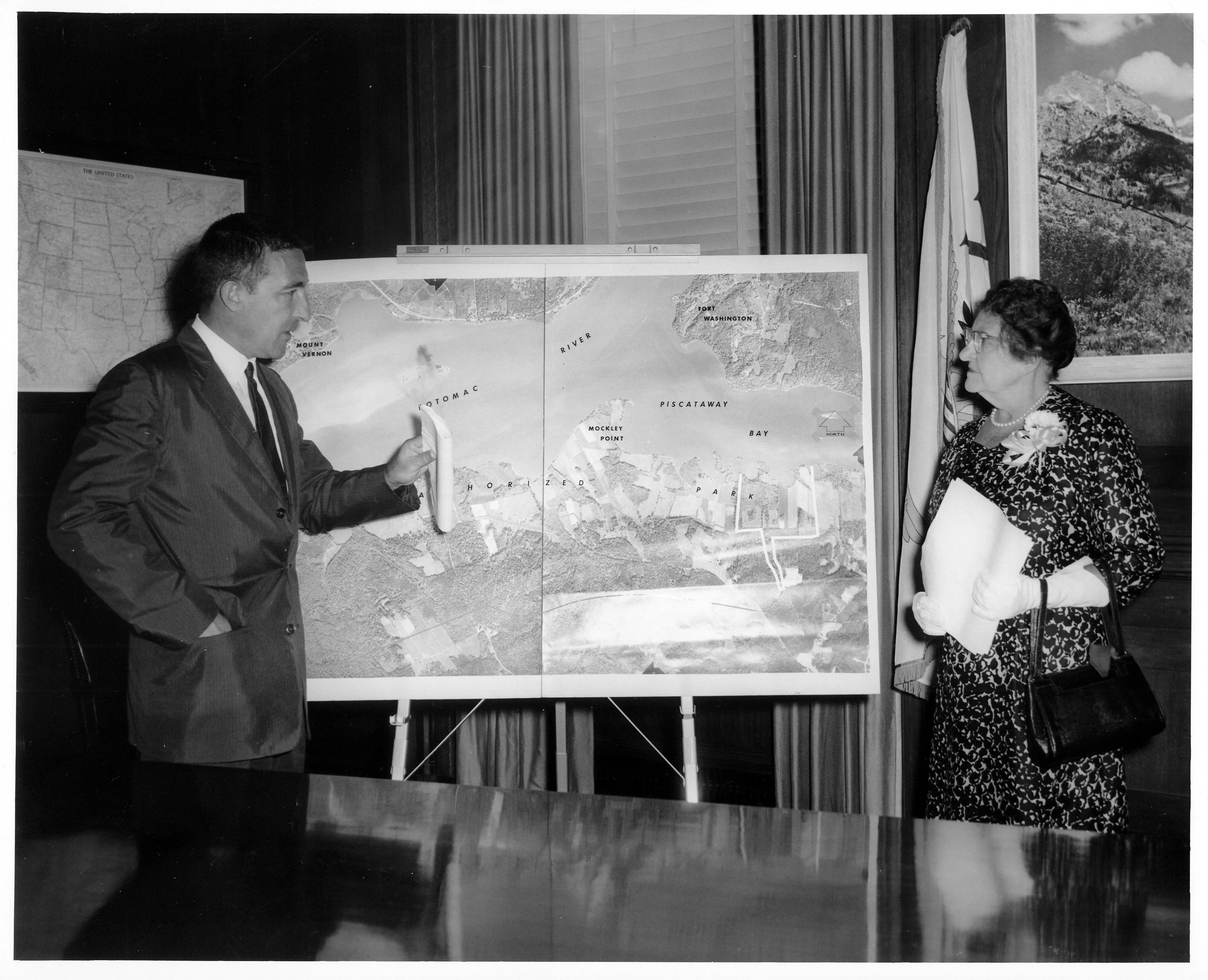
Vice Regent Frances Bolton looks at a map of Mount Vernon's viewshed with Stewart Udall, U.S. secretary of the interior. (MVLA)
5
A deer park used to stand between Washington’s Mansion and the Potomac River.
Following aristocratic practice, George Washington had enslaved carpenters build an 8.5-foot-tall paddock around 18 acres on the eastern slope, between the Mansion and the Potomac River, to serve as a deer park.
Originating in the Middle Ages, deer parks served as large hunting preserves for kings and nobles. While still a clear marker of elite status, Washington’s deer park served a more picturesque function, providing his guests with the delightful spectacle of seemingly wild deer roaming through parkland.
Washington's Deer Park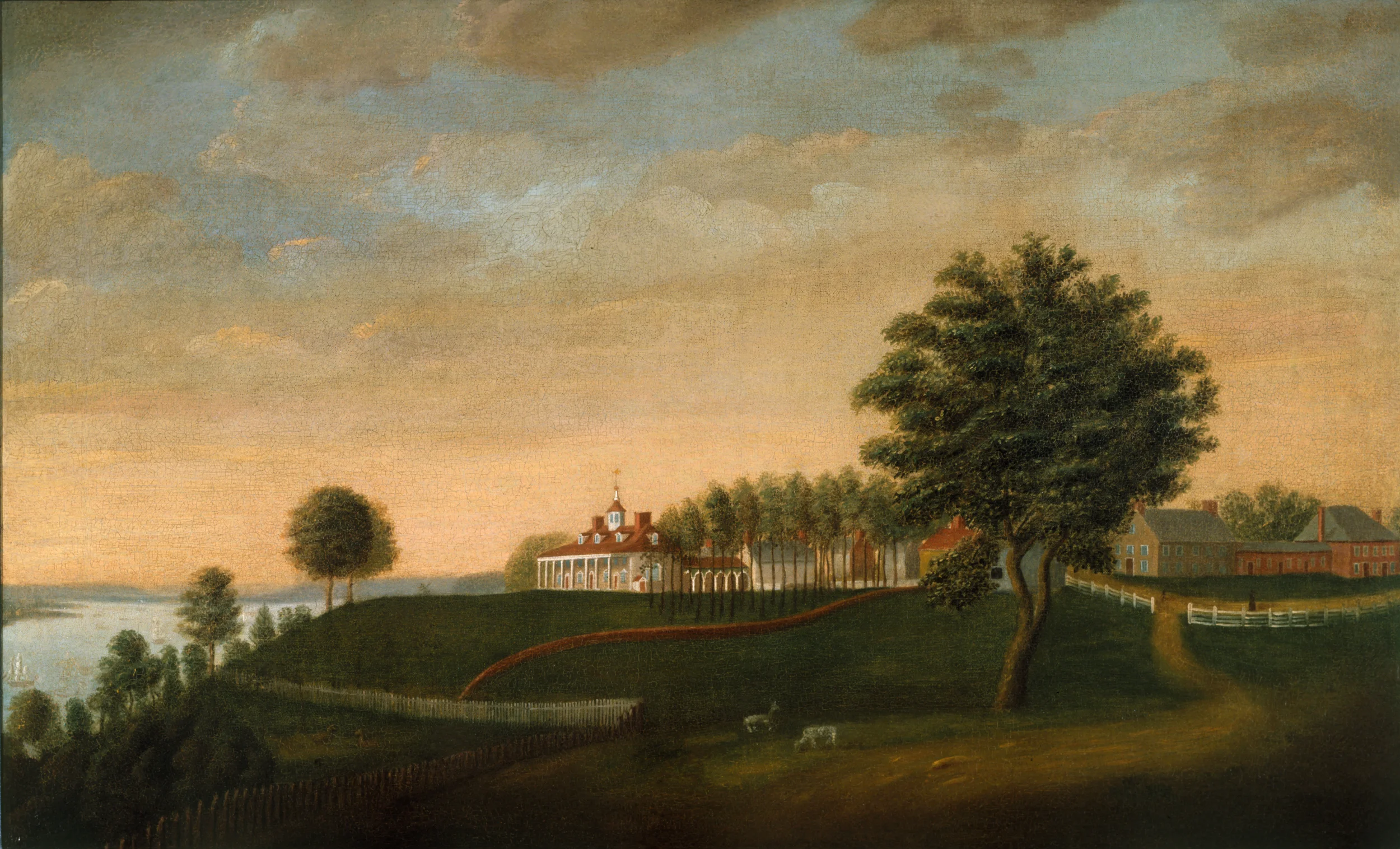
This painting, the earliest known view of Mount Vernon's east front, shows Washington's deer park at the bottom left. Painting by Edward Savage (American, 1761 - 1817), c. 1787-1792, oil on canvas, H-2445/A, Mount Vernon Ladies' Association, Bequest of Helen W. Thompson. (MVLA)
6
The MVLA’s Vice Regent for Ohio purchased land in Maryland to protect the viewshed.
Francis Payne Bolton purchased a 500-acre tract directly across from Mount Vernon at her own expense with the intention of “giving, selling, or bequeathing it” to the federal government or other entity that promised to keep it in its natural state.
Two years later, she helped found the Accokeek Foundation, donating her land toward its mission to create a wildlife refuge, educational farm, and nature preserve.
Following this first victory, the MVLA in 1956 formed a “Special Land Committee,” which would continue to monitor the buying, selling, and use of properties across the Potomac from Mount Vernon.
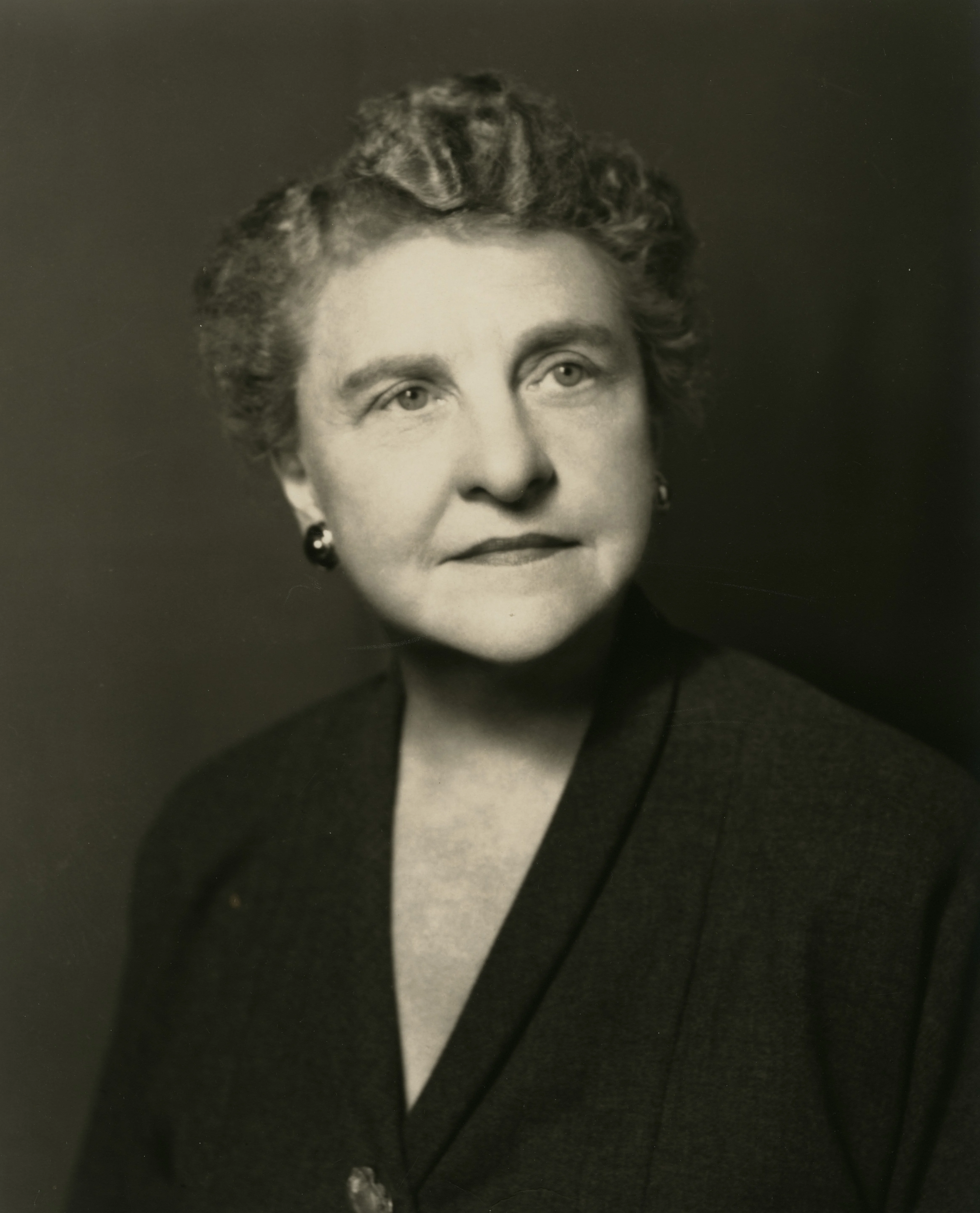
Francis Payne Bolton, Vice Regent and congressional representative for Ohio; she pioneered the preservation efforts of Mount Vernon's viewshed. (MVLA)
7
If you stood at Washington’s overlook in April 1781, you might’ve seen a British warship: the HMS Savage.
By April 1781, as war raged across the colonies, the HMS Savage—under the command of Captain Richard Graves—appeared in the Potomac near Mount Vernon.
The ship had already burned homes across the river in Maryland and now demanded provisions from the Washington estate. As it anchored near the plantation, several enslaved people made a bold and dangerous bid for freedom and boarded the ship.
The escapees, as recorded by Lund Washington, included: Lucy, Ester, Deborah, Peter, Lewis, Frank, Fredrick, Harry Washington, Tom, Sambo, Thomas, Peter, Stephen, James, Wally, Daniel, and Gunner.
HMS Savage
American Privateer Congress Captures HMS Savage, 6 September 1781. (Public domain)
8
Abraham Lincoln passed across Mount Vernon's view just five days before his assassination.
On Sunday afternoon, April 9, 1865, five days before his assassination, President Abraham Lincoln looked on Mount Vernon from the river—within sight of the piazza.
On the day of General Lee’s surrender at Appomattox, Lincoln steamed along the river toward Washington D.C. As described by French diplomat Marquis de Chambrun:
Passing before Mount Vernon, I could not help saying: ‘Mount Vernon, with its memories of Washington, and Springfield, with those of your own home –revolutionary and civil war– will be equally honored in America.’ As though awakened from a trace the President exclaimed: ‘Springfield, how happy I shall be four years hence to return there in peace and tranquility!

Portrait of Abraham Lincoln, November 8, 1863. (Public domain)
9
A state dinner hosted by the Kennedys helped boost awareness around the fight for the viewshed.
On July 11, 1961, President John F. Kennedy and his wife Jacqueline hosted a state dinner at Mount Vernon in honor of President Ayub Khan of Pakistan and his daughter, Naseem Akhtar Aurangzeb.
The dinner brought national attention to Mount Vernon's fight to preserve the viewshed. In the following months, the bills to create Piscataway Park passed both the House and Senate unanimously, and President John F. Kennedy signed Public Law 87-632 on October 4, 1961.
It was and remains the only park in the National Park system specifically designed to protect the viewshed from a historic property. The evening also marked the first state dinner held outside of Washington, D.C.
Learn More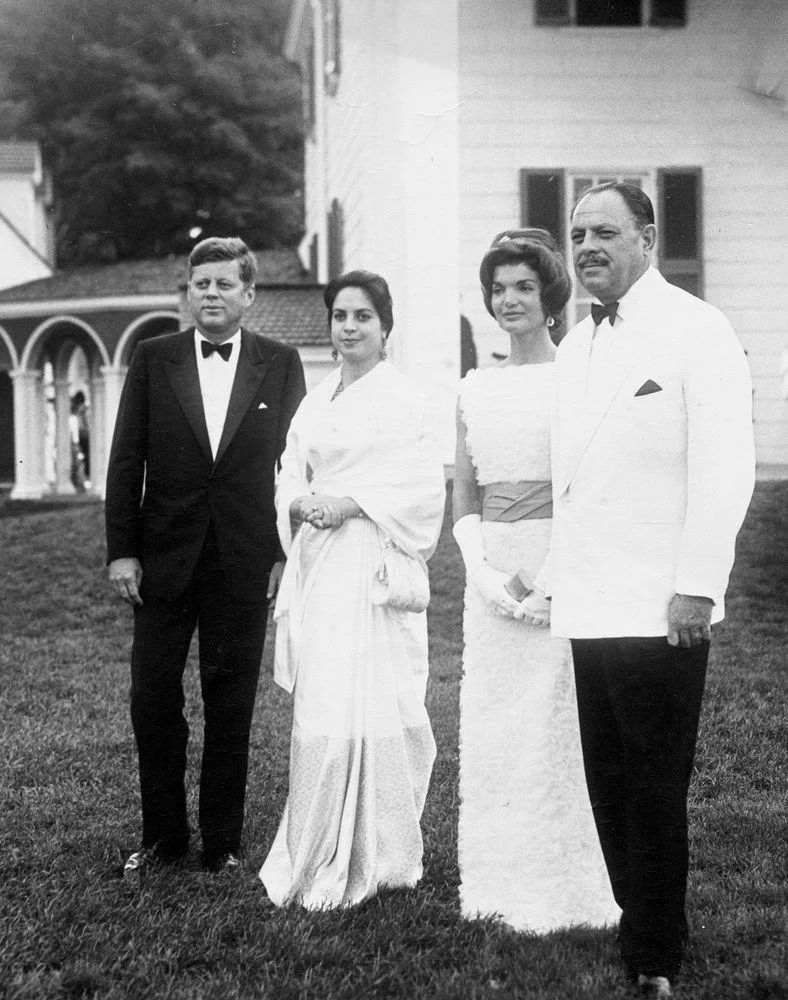
A 1961 state dinner hosted by the Kennedys at Mount Vernon. (John F. Kennedy Presidential Library)
10
Maryland owns the Potomac River up to the Virginia shore.
Maryland's ownership of the river stems from a royal charter that King Charles I of England granted to Cecilius Calvert, the second Lord Baltimore, in 1632.
The charter outlined the lands given to Maryland, crucially including the entire riverbed of the Potomac up to the high-water mark on the Virginia side.
If you put one foot into the Potomac River and one on the shore of Virginia, you would technically be in both states at once.
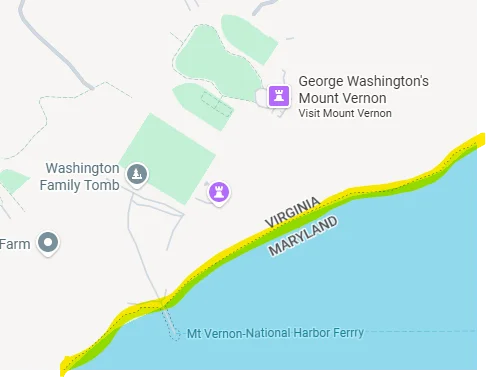
The border between Maryland and Virginia. (Google Maps)
11
Piscataway Park was dedicated on Washington’s birthday.
The national park was dedicated on Washington’s birthday, February 22, 1968. Frances Bolton; Stewart Udall, secretary of the interior; and Spiro Agnew, governor of Maryland, were in attendance.
The park includes the National Colonial Farm, a demonstration museum of colonial farming practices, and the Accokeek Creek Site, designated a National Historic landmark for the ancestral burial grounds and sites of the Piscataway people, reflecting more than 11,500 years of human history.
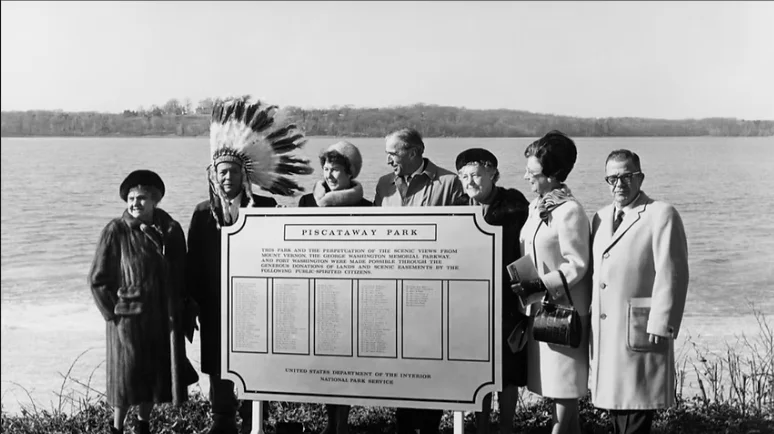
Frances Bolton and Rosamond Beirne of the MVLA, Chief Turkey Tayac, and other proponents at the dedication of Piscataway Park in 1968. (National Park Service)
12
You might spot a bald eagle.
The U.S national bird, once endangered, now soars between Virginia and Maryland.
The Potomac River is one of the best bald eagle habitats on the East Coast. Major conservation efforts, from DDT bans to river cleanups, have fueled a comeback, with an estimated 1,500 breeding pairs now nesting across Virginia's coastal plain.
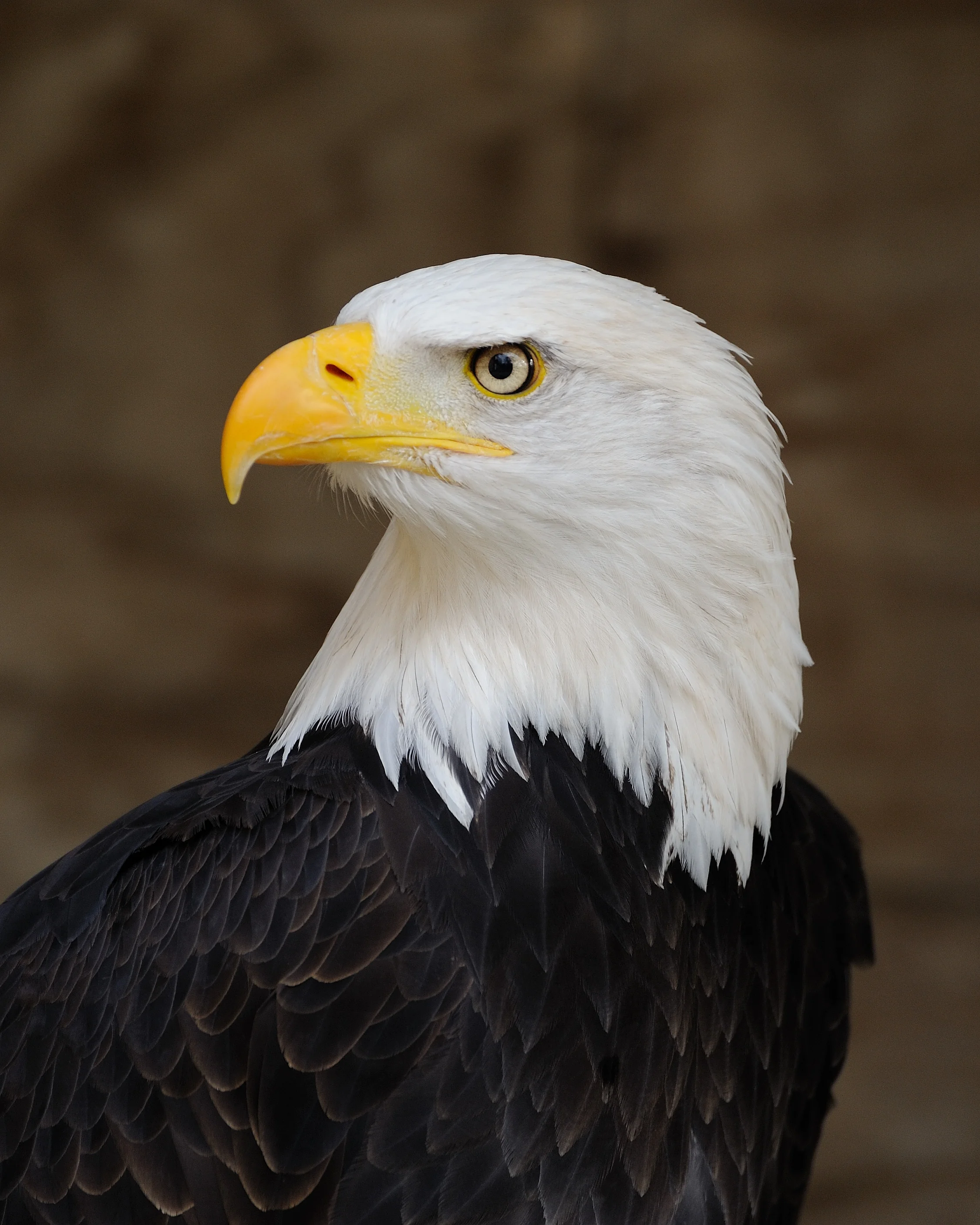
A bald eagle. (Public domain)
13
The MVLA shut down plans to build a gas compressor station in 2018.
When Dominion Energy came forward with plans to build a gas compressor station on land within the viewshed in 2017, the MVLA once again joined its allies to oppose construction. By the summer of 2018, a full-blown “Save the View” campaign was underway. Mount Vernon was put on the National Trust for Historic Preservation’s list of endangered places and a public hearing was held on the east lawn.
Ultimately, Dominion abandoned its plans for the station, but the close call was another reminder that George Washington’s sweeping and unimpeded view will likely continue to be threatened.
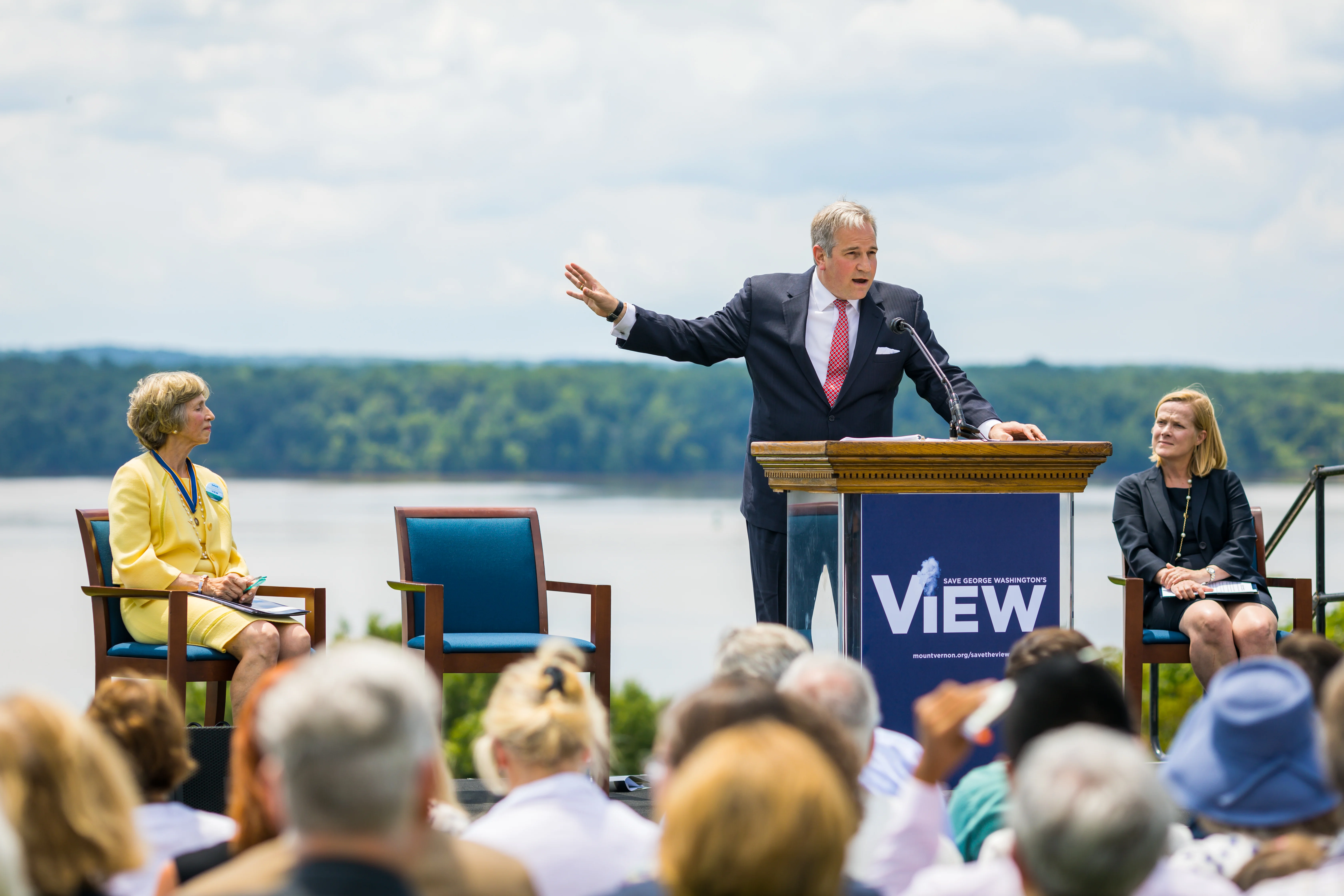
Doug Bradburn, president and CEO of Mount Vernon, speaks on the east lawn in support of the “Save the View” campaign. (MVLA)
14
Mount Vernon continues to protect the viewshed.
Donors have stepped up to establish a viewshed revolving fund, named in honor of Frances Payne Bolton, that enables Mount Vernon to respond to threats and continue to preserve the view.
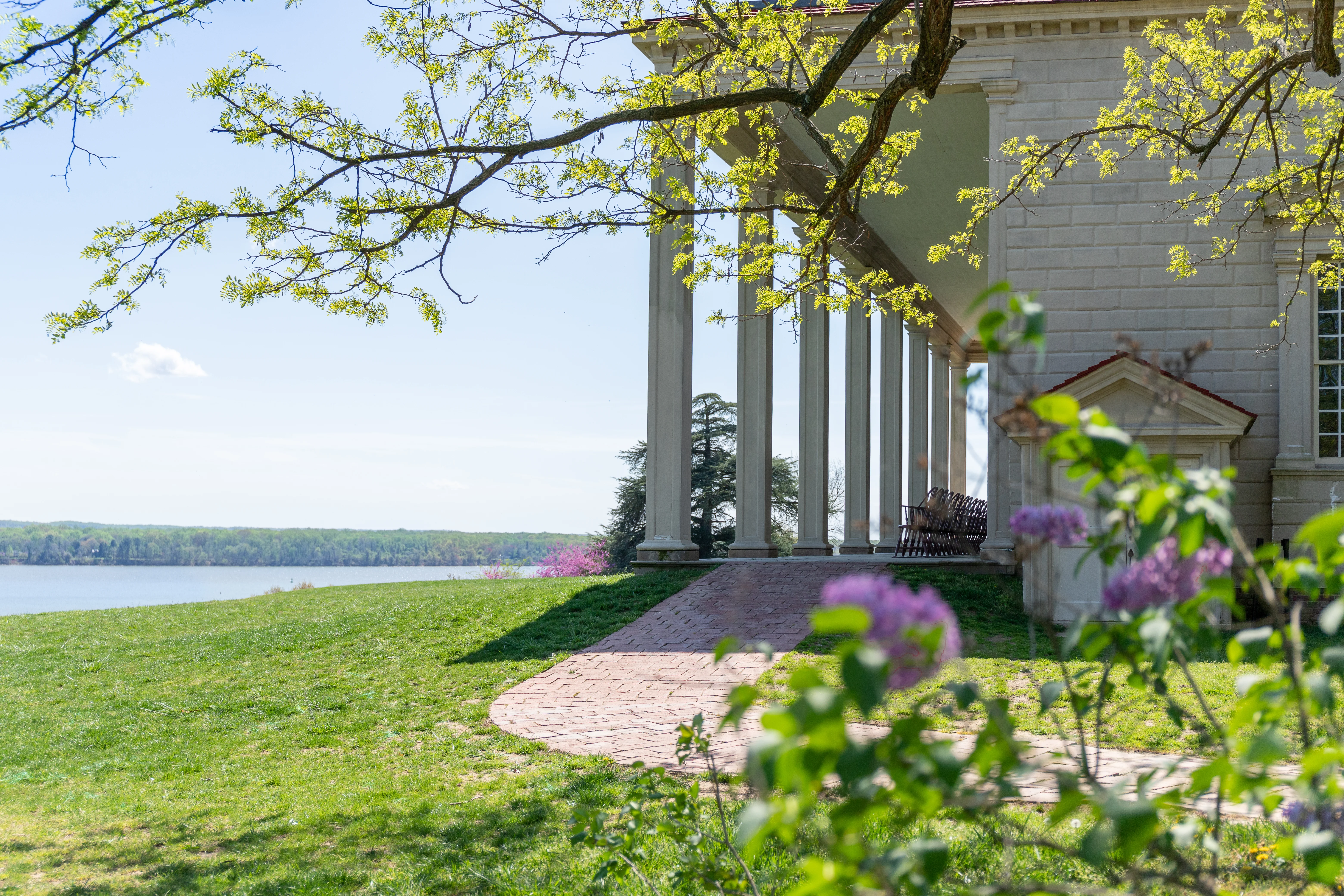
View of Mount Vernon’s east lawn and piazza in the springtime. (MVLA)