
Following aristocratic practice, George Washington had enslaved carpenters, including James and Tom, build an 8.5-foot-tall paddock around 18 acres on the eastern slope, between the Mansion and the Potomac River, to serve as a deer park.
Originating in the Middle Ages, deer parks served as large hunting preserves for kings and nobles. While still a clear marker of elite status, Washington’s deer park served a more picturesque function, providing his guests with the delightful spectacle of seemingly wild deer roaming through parkland.
Visual Evidence
In the earliest known view of Mount Vernon from the east, artist Edward Savage captured the short-lived deer park inside the picket fence in the left foreground.

Explore Mount Vernon

Plant Finder
Our integrated plant finder helps you identify the names and details behind the amazing array of flowers, plants, shrubs, vegetables, and trees found at Mount Vernon.
"A small park on the margin of the river, where the English fallow-deer and the American wild deer are seen through the thickets, alternately with the vessels as they are sailing along, add a romantic and picturesque appearance to the whole Scenery."
- Jedidiah Morse, a visitor to Mount Vernon in 1789
Documentary Evidence
In 1785, Washington wrote to friends both at home and abroad, seeking English deer for the park.
Washington's former neighbor, George William Fairfax, sent a "buck & doe of the best English deer" from York, England. William Fitzhugh sent Washington three English does from two of his Virginia plantations, Eagles Nest and Chatham. Washington also collected American deer for the park: "Of the Forest deer of this Country," he wrote, "I have … procured six, two bucks and four does."
Following the Revolutionary War, and before he anticipated returning to public life, George Washington wrote of Mount Vernon's deer park as part of his plans "to be a participator of the tranquillity and rural amusements."
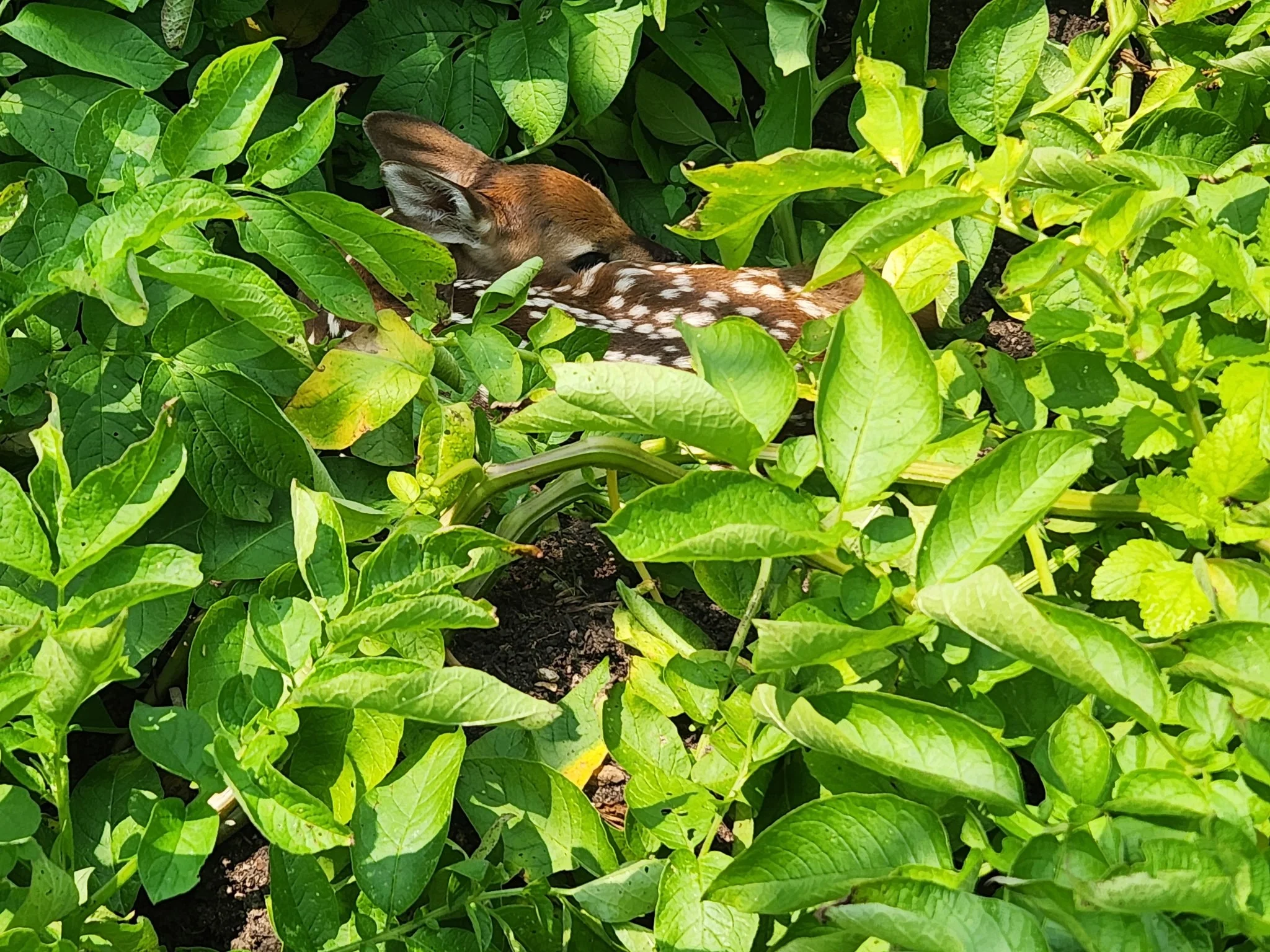
British landscape manuals advised paddock owners not to approach the deer, so that they would remain wild. However, one visitor to Mount Vernon remarked that the Washingtons' deer "are all extremely tame, come to be fed when they are called, and will suffer you to play with them." That did not mean that the deer were harmless, though. In November 1788, a young enslaved woman named Dolshy was "much wounded" by "One of the Bucks in the Paddock." Doctor Craik was sent for to treat her. Dolshy survived this incident, although it is unclear whether the effects of her injuries lingered.
The Fate of the Deer Park
The deer park declined while George Washington was away serving as President. In 1792, he wrote, "I have about a dozen deer (some of which are of the common sort) which are no longer confined in the Paddock which was made for them, but range all in my woods, & often pass my exterior fence." He had the deer park fence replaced with a ha-ha or walled ditch in 1792, drawn here in black. Not pleased with its appearance, Washington drew a new course for the ha-ha, represented by the dotted line following "the natural shape of the hill."

George Washington's drawing of the deer park wall at Mount Vernon. (MVLA)
Semi-tame deer continued to roam the estate as late as 1799. Writing in that year, Washington explained, “I had them once in a Paddock, but during my absence the fencing was neglected, and getting out, they have run at large ever since. The old ones are now partly wild, and partly tame; their descendants are more wild, but associate with them; and seldom go beyond the limits of my own woodland.”
Washington was very fond of the deer, admitting in a letter that he had given up his beloved pack of hounds because the deer were afraid of them. Over the years, Washington exchanged a number of letters with his neighbors, the Chichesters, forbidding them to hunt deer on his property because of his affection for the animals.
Washington's Deer Park
Learn more by visiting Mount Vernon's Digital Encyclopedia.