
The waterway shaped the first president’s ambitions for Mount Vernon, as well as his vision for the nation.
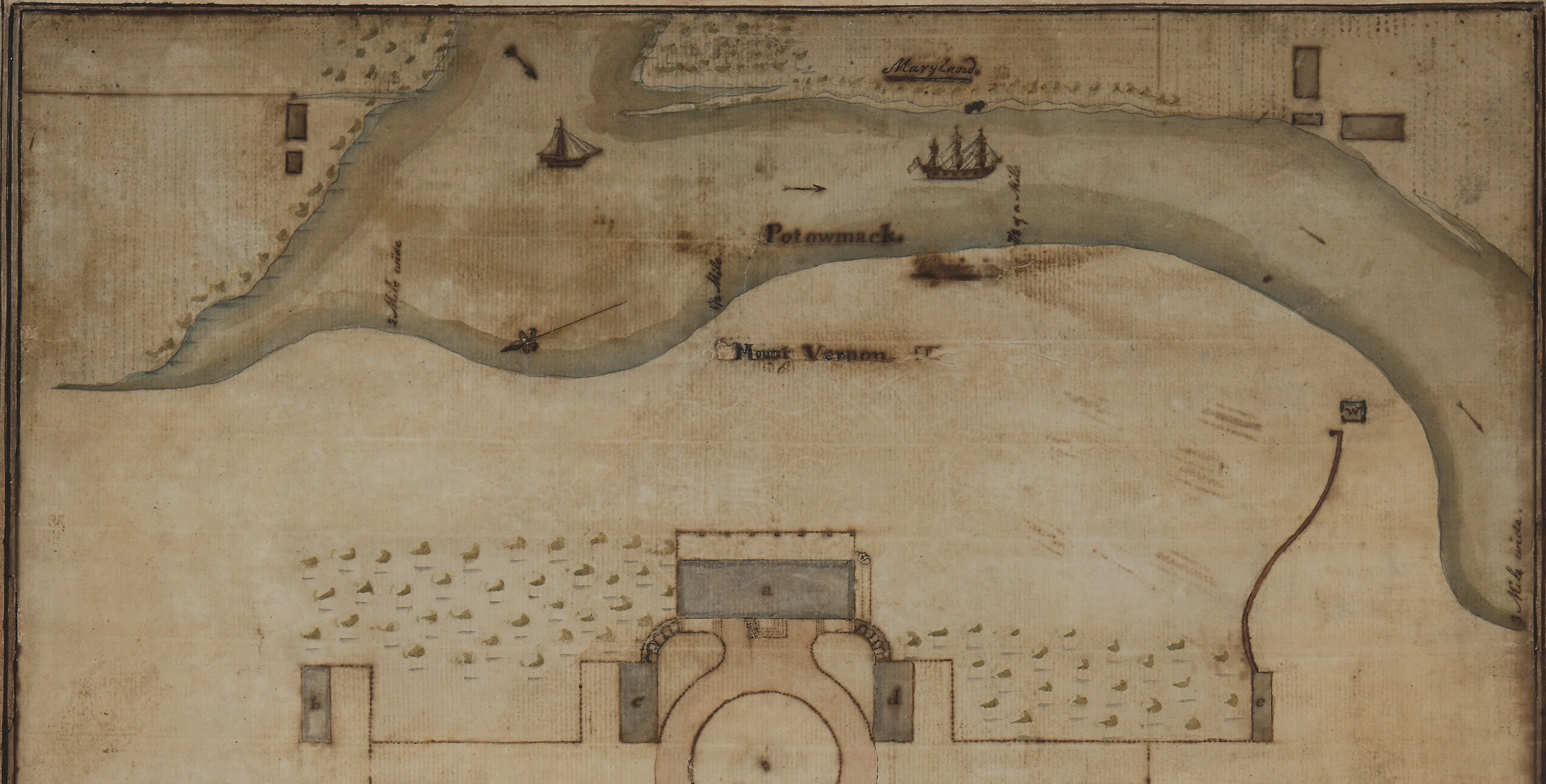
George Washington considered Mount Vernon’s greatest advantage to be its location on the Potomac River. Writing in December 1793, during his second term as president, he assured a prominent English correspondent that “No estate in United America is more pleasantly situated than this—It lyes in a high, dry & healthy country, 300 miles by water from the Sea—and … on one of the finest Rivers in the world.”
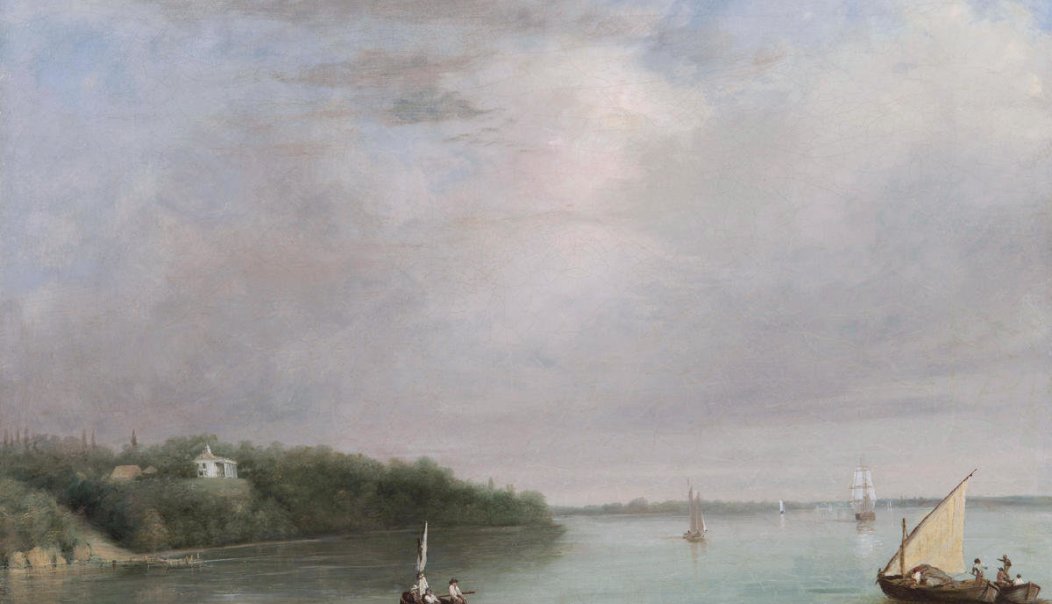
What Washington considered such a superlative river defined much about his life at Mount Vernon and framed many of his aspirations for the new nation. The Potomac was his path to independent trade throughout the Atlantic world and a gateway to the interior of North America. The incomparable panorama of the river from Mount Vernon became a central element in Washington’s design of the Mansion and the surrounding landscape.
Connected From the Start
From an early age, Washington knew the Potomac as the vital waterway that united the community of large plantation owners on the Northern Neck, the peninsula lying between that river and the Rappahannock to the south. He was born not far from the shore of the Potomac in Westmoreland County at his family’s home on Pope’s Creek.
As a young boy, he moved with his family farther up the Potomac to the site of the future Mount Vernon, where they lived for three years in a small house that would be the foundation of the Mansion. He visited again when his half brother Lawrence settled there in the 1740s and introduced Washington to the influential Fairfax family.
Washington began leasing Mount Vernon in 1754 and took possession following the death of Lawrence’s wife. From that time forward his own fortunes were in many ways shaped by the estate’s unique connection with the river.
Currents of Change
When Washington began his life as a planter at Mount Vernon, the Potomac provided access to the British tobacco markets that had long been the most important foundation of wealth for large landholders in Virginia. With his marriage to Martha Custis, he gained access to the leading London merchant firm that had profitably served the Custis family, but the disappointing prices for Washington’s annual shipments of tobacco soon revealed the drawbacks of his location along the Potomac. Of Virginia’s four main rivers, it was the farthest from the mouth of the Chesapeake Bay, and the added distance increased shipping prices and delayed the arrival of tobacco in England.
Moreover, the soil at Mount Vernon, like much of that along the Potomac shoreline, had never produced the quality of tobacco demanded by the premium markets of London. Within a few years, Washington was looking for new crops to cultivate, and with several other planters in the Northern Neck, he led the way in transitioning to the cultivation of wheat and other grains in demand in the Caribbean and southern Europe.
Again, the Potomac served as the channel to commercial markets, and Washington’s early ventures in the wheat and flour trade were in partnership with nearby Alexandria merchants who directly exported grains, unimpeded by the imperial restrictions imposed on tobacco.

A reconstructed batteau on the Potomac. (MVLA)
“No estate in United America is more pleasantly situated than this—It lyes in a high, dry & healthy country, 300 miles by water from the Sea—and … on one of the finest Rivers in the world.”
- George Washington
Fisheries
The river also provided Washington with economic opportunities essential to his increasingly varied enterprises. Each spring, the Potomac saw massive spawning runs of herring and shad, which were the basis of one of the most consistently profitable ventures at Mount Vernon. Dozens of enslaved field laborers would leave their agricultural work and haul seines into the river to collect vast numbers of herring, while other laborers salted and packed the fish, which Washington sold locally and shipped to the Caribbean, where sugar planters relied on the fish to provision enslaved laborers.
The salted fish also became a diet staple of the enslaved families at Mount Vernon. On at least one occasion, Washington agreed to the request of enslaved people to borrow a seine to fish for their own provisions on a Sunday, the only day of the week when they were not regularly laboring for Washington.

Fishing equipment on the riverbank. (MVLA)
18th-Century Highway
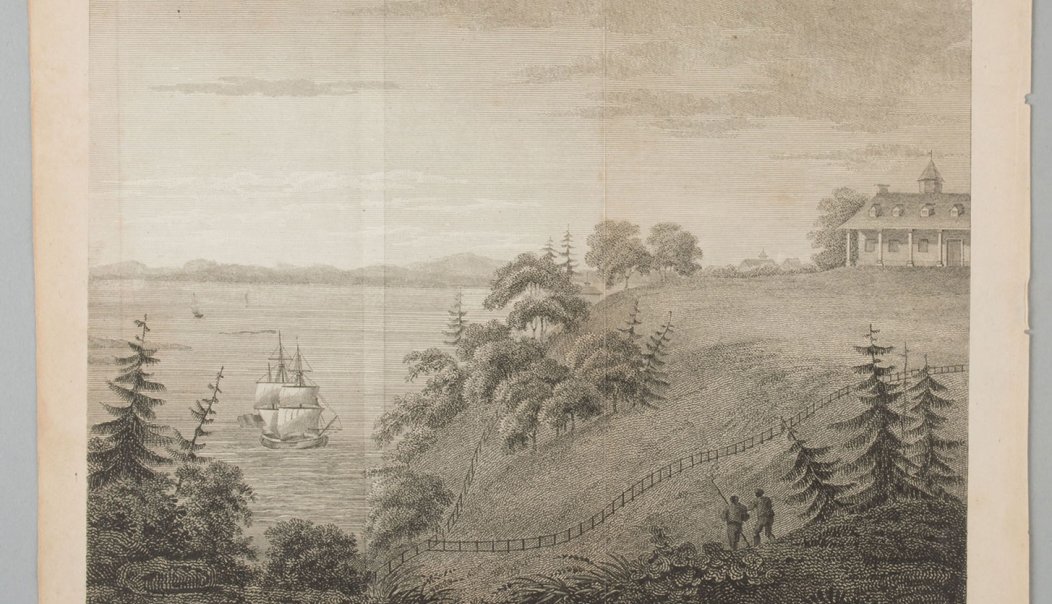
Visitors described the steady traffic of sailing vessels passing up and down the river, enlivening the striking natural view from the Mansion. Throughout Washington’s lifetime, the river was a scene of local trade and constant activity. Ferries carried passengers and livestock back and forth to the Maryland shore. Flatboats carried the flour from the gristmill constructed along Dogue Run to meet larger ships on the Potomac. A wide variety of watercraft—barges, whale boats, sloops—bore the produce of the estate to markets in Alexandria or farther down the Chesapeake Bay to flour traders in the port of Norfolk.
Washington regularly sent enslaved men to pilot a boat to Alexandria for supplies. He directed flat-bottomed scows into the middle of the river, where laborers gathered mud from the riverbed to spread on fields as a kind of fertilizer.
As late as the 1760s, ships from Africa and the West Indies brought enslaved people to be sold along the Potomac, and Washington crossed the river at least twice to attend large slave sales in Maryland.

Potomac Company paperwork. (MVLA)
A River Runs Through It
Dreams of a Highway to the West
The Potomac drew Washington’s attention upstream as well, toward regions long in the possession of Native nations, where he hoped Virginians would settle and introduce commercial farming that would promote mercantile development in the Tidewater.
When he was only 22 years old, he examined the Great Falls of the Potomac to report to a prominent Virginia political leader on the possibilities of clearing a way for navigation through the rocky cataracts. Convinced that his own interests and the future growth of Virginia depended on the settlement of the regions west of the mountains, he invested heavily in lands at the upper reaches of the Potomac and beyond to the Ohio River region.
In 1769, as a member of the House of Burgesses, Washington drafted a bill to support opening the river to trading vessels. He predicted that the Potomac, once open to its headwaters west of the Blue Ridge mountains, would become “the Channel of Commerce between Great Britain and that immense Tract of Country which is unfolding to our view.”

Plan of the city of Washington…, John Russell, London, 1795. (Library of Congress)
Throughout the rest of his life, he celebrated the prospect of the “rising Empire” that would grow from the establishment of the Potomac as a commercial route to the interior of the continent. When the Virginia Assembly authorized a company to open the Potomac to navigation as far as western Maryland, Washington took the lead in gathering support in Virginia and Maryland, and he helped finance a study of recently built canals in England, which were considered the most advanced technology. In 1774, Washington was one of the investors who approved the hire of 50 enslaved laborers to begin the work of clearing the river, but the Revolutionary War prevented any progress on the scheme.
Soon after he retired to his farms following his resignation as commander of the Continental Army, Washington reentered public life determined to revive his dream of opening the Potomac to navigation. In the fall of 1784, he met with legislators in Virginia and Maryland to build support for chartering a private company to direct the project, and he drafted the bills enacted by both states.

George Beck, Great Falls of the Potomac, 1797. (MVLA)
At the first meeting of the resulting “Potowmack Company” in May 1785, Washington was elected its president, and over the next four years he was involved in every aspect of the company’s efforts to improve navigation on the river. He attended to every detail—selecting the ground for digging canals, studying maps of trading networks extending as far as the Great Lakes, and even assessing the costs of draft animals to be used to tow canal barges.
Visitors reported that the project was Washington’s favorite topic of conversation, and James Madison, who worked closely with Washington to win legislative support for the company, confided to Thomas Jefferson that “The earnestness with which he espouses the undertaking is hardly to be described.”
Madison considered Washington’s leadership in the improvement of the new nation’s natural advantages a worthy project for the individual who had already secured the political rights of the country. For Washington, the political advantages of the Potomac waterway were equal to its commercial promise. Only a reliable transportation network to the territory beyond the Appalachian Mountains would secure the allegiance of settlers from the United States who otherwise might turn to the British or the Spanish to market their agricultural produce, and the Potomac, Washington insisted, offered the best chance of establishing shared commercial interests that would unite the nation.
Following retirement from the presidency in 1797, Washington resumed his work with the Potowmack Company, although navigable canals would not be completed until after his death.
Capital City by the River
The commercial potential of the Potomac was at the center of Washington’s hopes for the Federal City—the future Washington, D.C.—which would serve as the seat of government for the new United States.
He selected the site for the new city on the Maryland shore of the river, and he encouraged private investments, particularly in the Potomac navigation schemes, which he believed would determine the success of the city being built. Washington explained to a British friend that the establishment of the city at the point where the tidal river met the improved inland waterways would facilitate commercial transportation, “thereby making the Federal City the great emporium of the United States.”

Tackle Box, 1760-1800, gift of Camille E. Bryan, 1958. (MVLA)
“Pleasantly Situated”
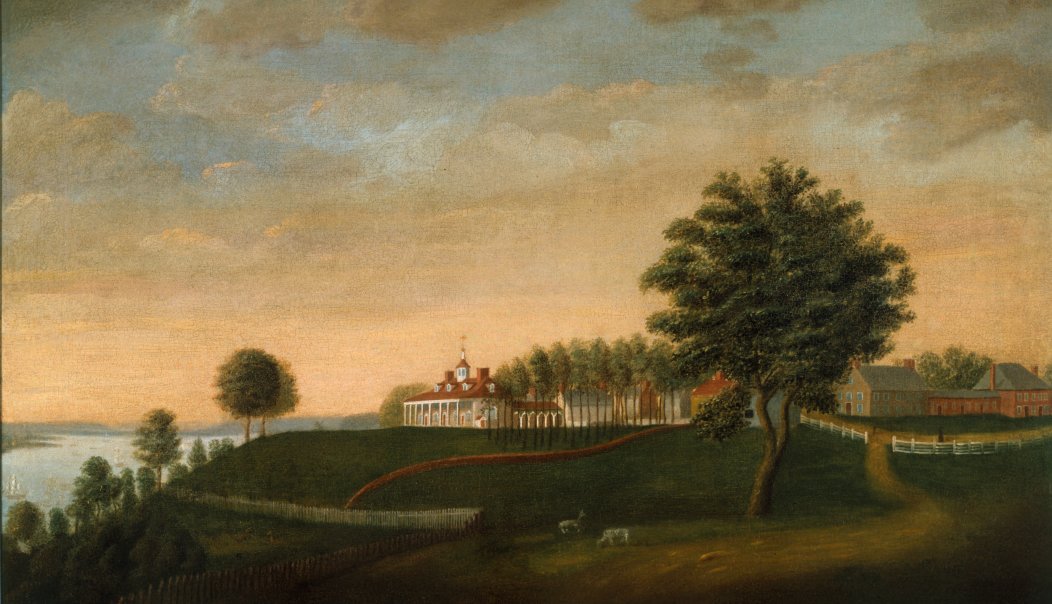
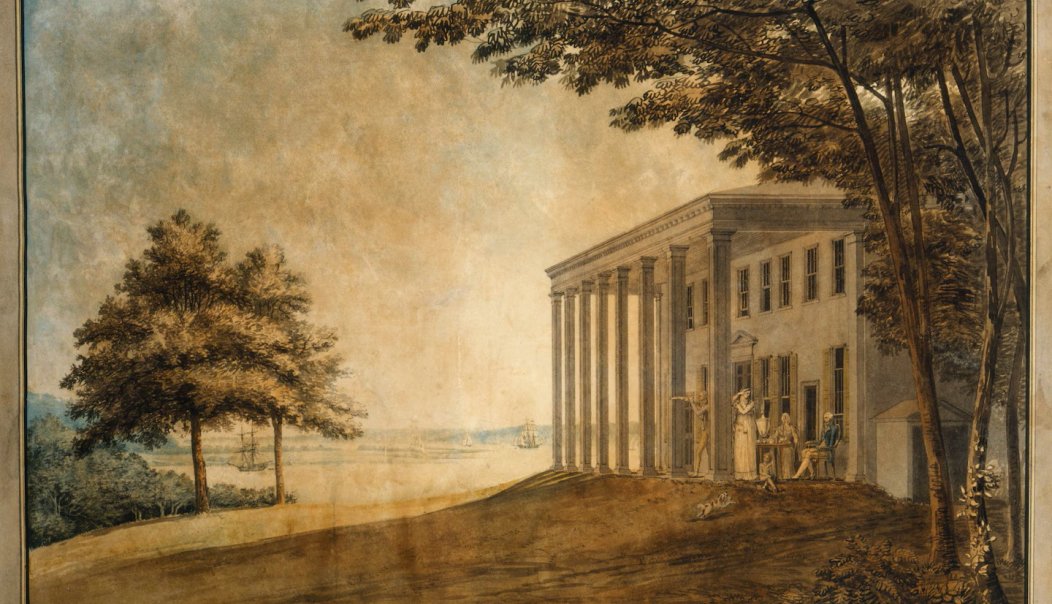
For the hundreds of people who came to Mount Vernon to meet Washington in the years following the Revolutionary War, the sight of the Potomac was unforgettable. A visitor from Europe proclaimed it “perhaps the most beautiful view in the world.” Guests frequently gathered with Washington and his family on the piazza, which he designed to face not the busy workshops or the agricultural experiments that sustained the estate but rather the river and the uninterrupted vista of the surrounding countryside.
To those sailing by on the Potomac, the piazza with its columned portico presented a scene unmatched by any of Virginia’s many riverfront mansions. Over the course of his lifetime, Washington deliberately crafted the many connections between the house and the river and left for visitors—in his own day and ours—a dramatic reminder of the breadth of his vision for the country
About the Author
Bruce A. Ragsdale won the George Washington Prize in 2022 for his book Washington at the Plow. He served as director of the Federal Judicial History Office at the Federal Judicial Center and was a fellow at the George Washington Presidential Library at Mount Vernon.