The Study is a private room in the Mount Vernon mansion where George Washington completed and oversaw his many daily tasks. It served many functions but primarily housed his book and map collections.
Development and Function
George Washington started construction of a south addition to the Mount Vernon mansion in the spring of 1774. This extension to the mansion included a large bedchamber for George and Martha Washington on the second floor and a personal study below. This created a suite of rooms for the Washingtons that could be a private space in a house filled with family members and visitors.1 This wing had its own staircase connecting the study and the bedroom. This could be closed off from the rest of the busy house and allowed Washington to move between the two rooms without encountering anyone.2
While George Washington's study had many purposes, it mainly served as his office and reading room. Washington rose each day at four or five in the morning and went down to this study where he lit a fire and dressed. It was from here that he managed his estate, keeping accounts of his expenses, recording the weather and planning farming techniques.3
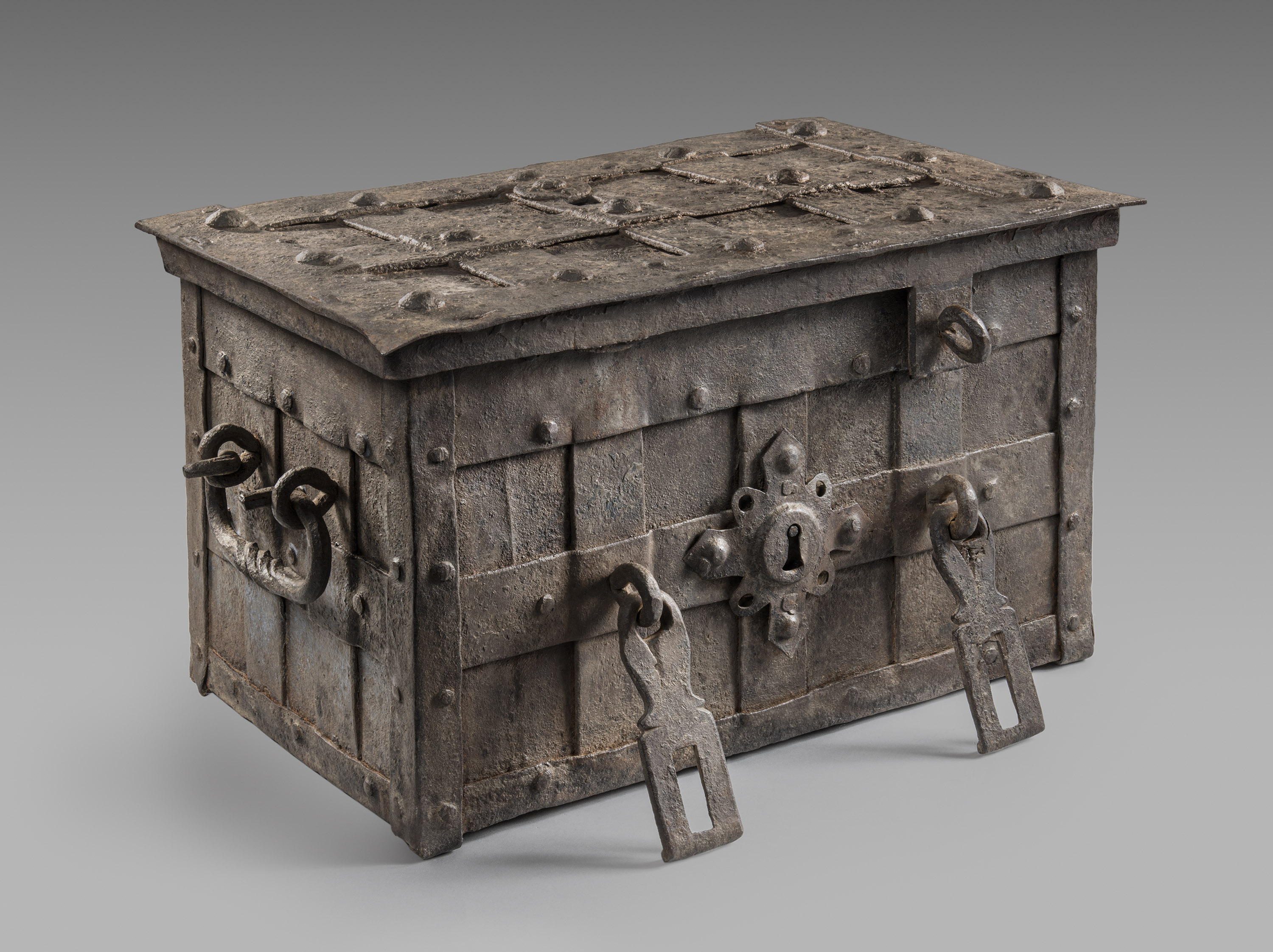
On June 16, 1786, Washington wrote in his diary: "Began about 10 o'clock to put up the Book press in my study."4 Together with his secretary bookcase, this large cabinet along the east wall of the room held the more than 1,200 rare books and pamphlets, as well as maps that made up his library. These covered many subjects from history and politics to agriculture, literature, and geography. The variety of titles on these shelves showed Washington's many interests and the many roles that he played in his life.
The study played an important role in military and political affairs. It was used as a military headquarters for Washington and General Rochambeau in 1781 on their way to Yorktown. Following the war, Washington corresponded with Alexander Hamilton, James Madison, and Henry Lee about his political vision for the new Republic in this room.5
This room was also a private place where Washington could escape from constantly entertaining family and guests. According to Martha’s grandson, George Washington Parke Custis, the study was “a place that none entered without orders.”6 Because the study was meant to be a private place for Washington, there are not many descriptions of it from his time. However, the study is mentioned in the journal of Samuel Powel, a friend of the Washingtons. He described the space in 1787 as "very handsome," and commented on its privacy in a home where "perpetual & elegant Hospitality exercised."7
Style and Decoration
The 1799 inventory taken and will executed after Washington's death, along with inventory taken in 1802 give important details about the contents of the study. The objects listed in the 1799 inventory included many items related to Washington’s military, agricultural, political, and scientific interests.
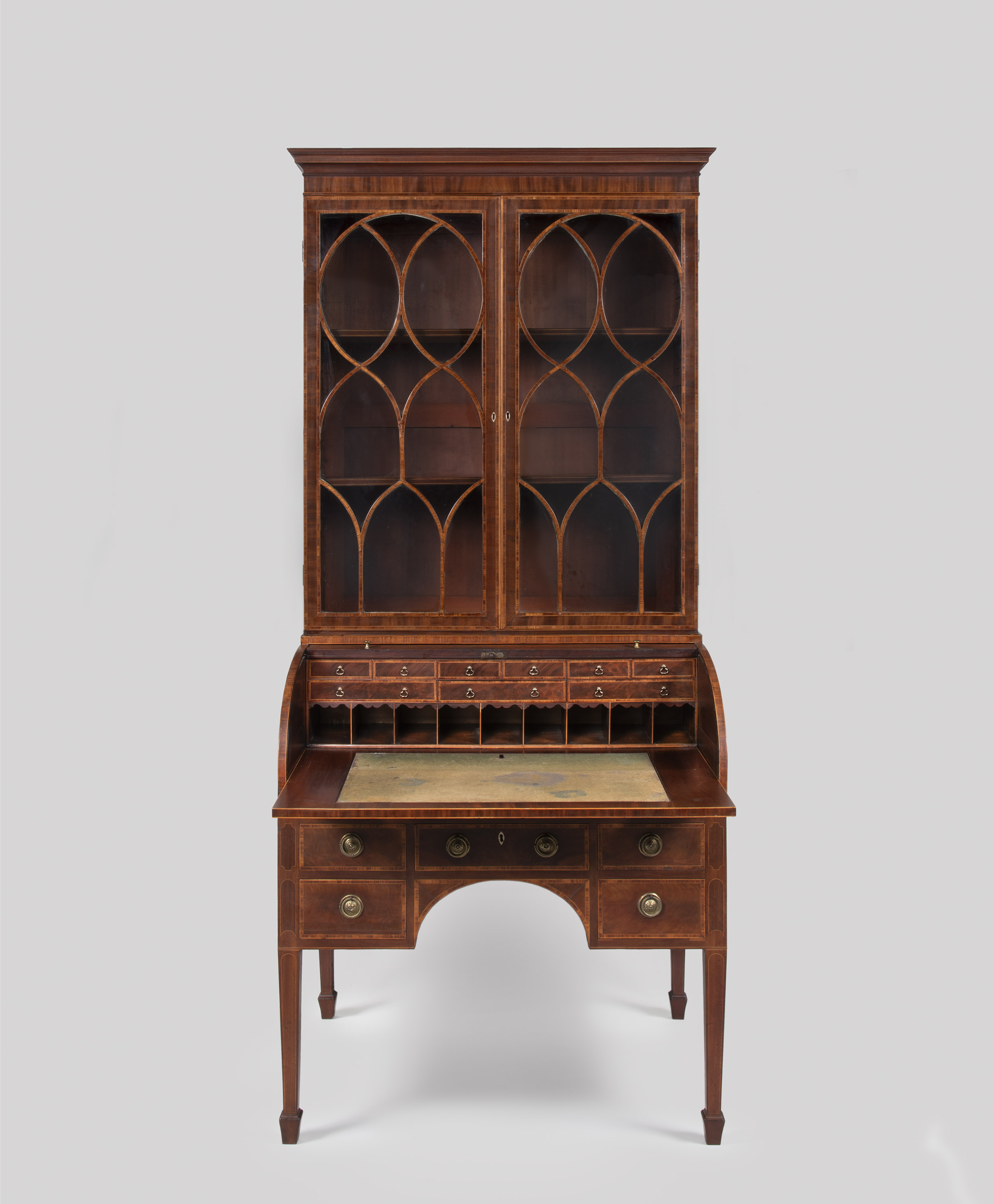
George Washington's secretary desk was an important part of the study's function. It was made by John Aitken in Philadelphia in 1797 for this study.8 In 1797 Washington wrote that every evening he went to "retire to my writing Table and acknowledge the letters I have received; but when the lights are brought, I feel tired, and disinclined to engage in this work, conceiving that the next night will do as well."9 Bushrod Washington, his nephew, remembered that "his table was generally covered with more [letters] received from many distinguished characters of other countries as well as his own."10
The room also featured a mahogany and leather armchair brought back from Washington’s Philadelphia house after his presidency. He called this his “uncommon” chair because of its unusual ability to rotate around 360 degrees. This chair was originally bought in 1790 from a retailer in New York named Thomas Burling.11
One of the most noticeable furnishings in George Washington's study is the “fan chair.” This is listed as "1 Fan Chair [$]1" in the 1799 inventory and was invented in 1786 by John Cram. This unique chair is made of a pasteboard fan that is attached to a Windsor chair, with pedals allowing the sitter to create a cooling breeze.12
On the wall hung an oil portrait of Lawrence Washington, George Washington's older half-brother. His career as planter and a military officer inspired his younger brother, and it was from him that Mount Vernon was inherited. Also in the room were two busts of John Paul Jones, a naval officer, and a 1785 likeness of Washington done by the artist Jean Antoine Houdon.13
Preservation
When the Mount Vernon Ladies’ Association began their restoration of Mount Vernon in the nineteenth century very little of the study’s original contents remained. The Houdon bust still remained but objects like the secretary, “uncommon” chair, and parts of the book collection eventually returned to Mount Vernon. Other contents were recreated, such as the bust of Jones that was lost 1871, but replaced by a replica in 1945. In 2008, a 1787 iron fireback was also recreated according to a historic model for the room. Also in 2008 several of the room’s objects underwent conservation including the secretary and the “uncommon” chair. At this same time the physical appearance and accuracy of the study were updated through touch-ups to the room’s wood panelling including repainting and varnishing and conducting repairs.14
Sarah Louise Huebschen
Notes:
1. Wendell Garrett, ed. 1998. George Washington’s Mount Vernon. (New York: The Monacelli Press, Inc.), 51.
2. Ellen McCallister Clark. 1989. “George Washington’s Study,” The Magazine Antiques: Mount Vernon. (New York: Magazine Antiques), 1989: 490-492.
3. Ibid. 492-493.
4. “June [1786],” Founders Online, National Archives.
5. Ellen McCallister Clark. “George Washington's Study,” (February 1989): 492.
6. George Washington Parke Custis. Recollections and Private Memoirs of Washington. (Philadelphia: J.W. Bradley, 1861).
7. Samuel Powel. Journal of Samuel Powel. (Philadelphia: Pennsylvania Historical Society).
8. Helen Maggs Fede, Washington Furniture at Mount Vernon, (The Mount Vernon Ladies' Association, 1966): 61.
9. “From George Washington to James McHenry, 29 May 1797,” Founders Online, National Archives.
10. Emily D. Shapiro. “A ‘Man of Method and Labor:’ Refurbishing George Washington’s Study,” The Annual Report of the Mount Vernon Ladies’ Association of the Union, 2008: 28.
11. Emily D. Shapiro. “A ‘Man of Method and Labor,” 25.
12. Christine Meadows. “The Furniture. Antiques: Mount Vernon,” (February 1989): 485.
13. Ellen McCallister Clark, “George Washington's Study,” 493.
14. Emily D. Shapiro, “A ‘Man of Method and Labor’”: 25-27, 31-32.
Bibliography:
Clark, Ellen McCallister. 1989. “George Washington’s Study,” The Magazine Antiques: Mount Vernon. New York: Magazine Antiques.
Custis, George Washington Parke. Recollections and Private Memoirs of Washington. Philadelphia: J.W. Bradley, 1861.
Fede, Helen Maggs. Washington Furniture at Mount Vernon, The Mount Vernon Ladies' Association, 1966: 61.
Garrett, Wendell. ed. 1998. George Washington’s Mount Vernon. New York: The Monacelli Press, Inc.
Powel, Samuel. Journal of Samuel Powel. Philadelphia: Pennsylvania Historical Society.
Shapiro, Emily D. “A ‘Man of Method and Labor:’ Refurbishing George Washington’s Study,” The Annual Report of the Mount Vernon Ladies’ Association of the Union, 2008: 28.