
Resigning Power...Upholding Commitment
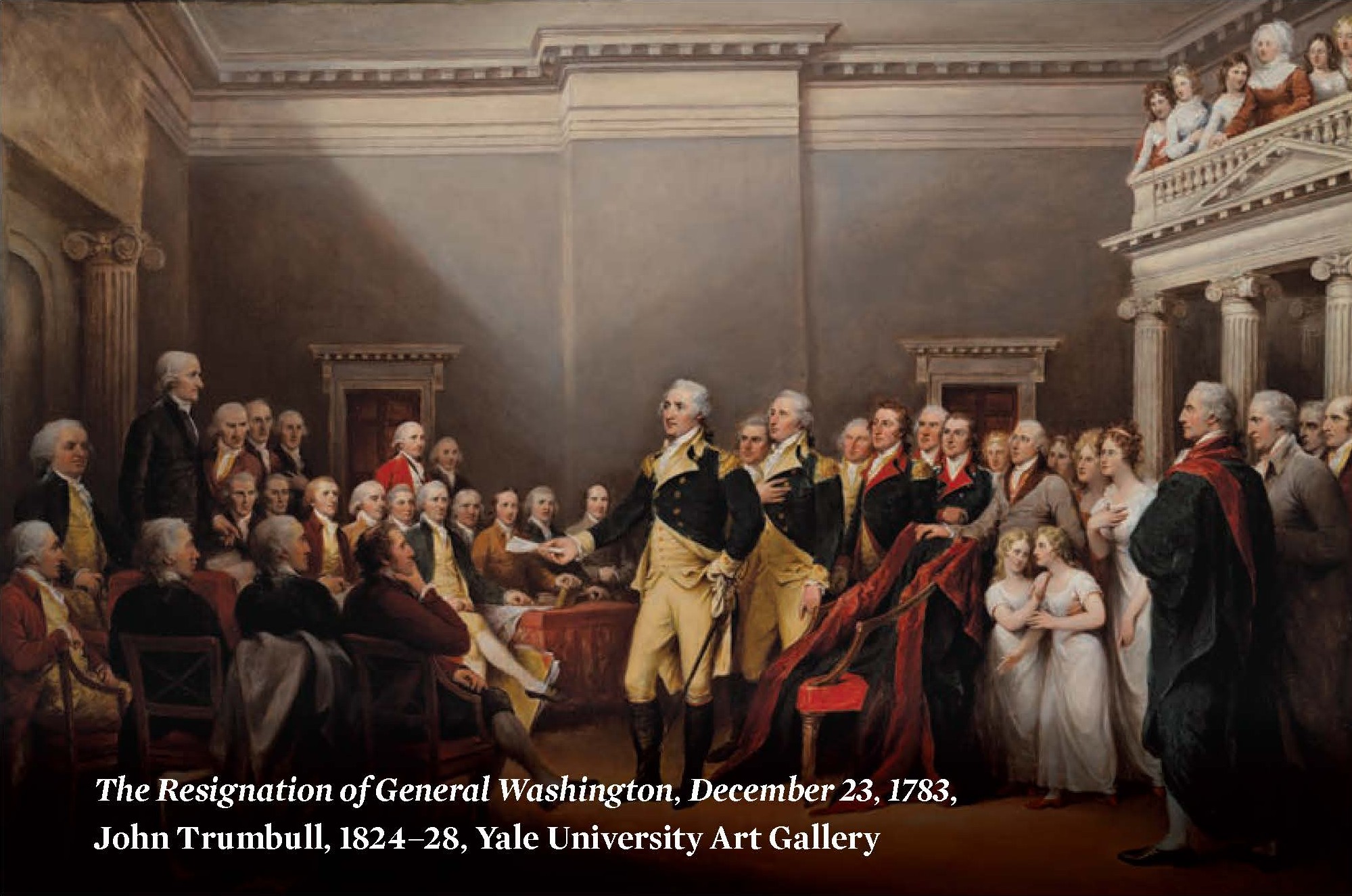 On December 23, 1783, General George Washington resigned his military commission after successfully winning the Revolutionary War and establishing peace with Great Britain. In his farewell address, he stated, “Having now finished the work assigned me, I retire from the great theatre of action, and bidding an affectionate farewell to this august body, under whose orders I have so long acted, I here offer my commission, and take my leave of all the employments of public life.”
News of his desire to resign and return to his beloved Mount Vernon traveled around the world.
American-born painter Benjamin West lived in England and knew King George III well, often painting him. During these sessions, the men would often discuss the War and the American cause.
West recalled one of these conversations in a letter to an artist friend of his, Joseph Farrington, who recorded it in his journal.
“He asked West what would Washington do were America to be declared independent. West said He believed He would retire to a private situation. The King said if He did He would be the greatest man in the world.”
By giving up what could have been absolute power, Washington showed his sincere respect and admiration for the American people and his faith in Congress. This commemorative year, Mount Vernon is dedicated to re-introducing Washington and his contributions to our nation's founding—most notably his peaceful transitions of power to the world.
George Washington: A Revolutionary Life
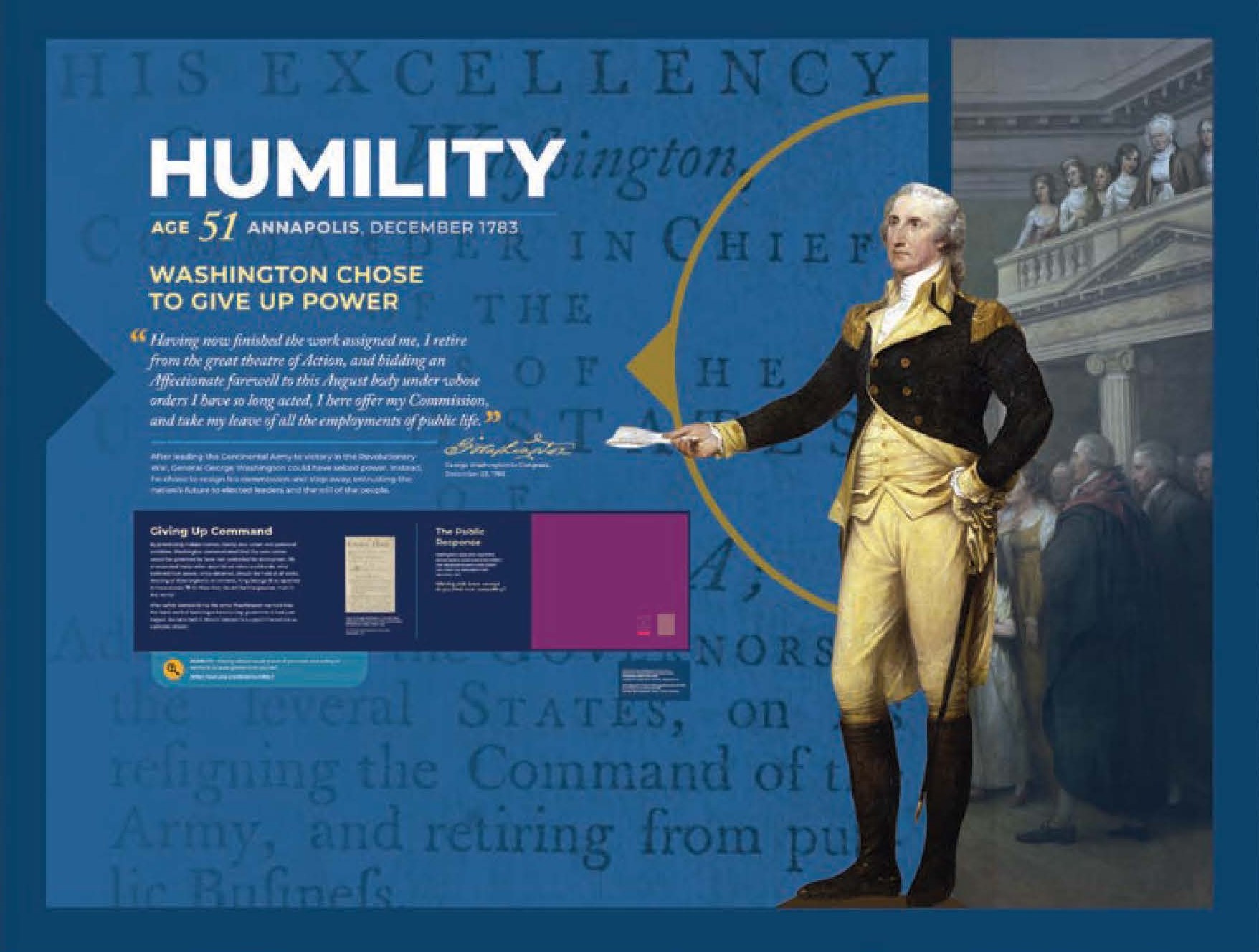
One way Mount Vernon educates and inspires is through our new George Washington: A Revolutionary Life exhibit , which, thanks to the generosity of patriots like you, is slated to open later this spring and will provide a more impactful and immersive visitor experience, offer improved navigation and access to popular features, and convey the most current scholarship.
Visitors will come to see themselves in Washington and feel a shared sense of civic belonging as the values Washington possessed as a leader and citizen come to life.
One of these galleries that is particularly fitting to our 250th celebration is the humility display, which will teach students of all ages how possessing humility means you place others’ needs ahead of your own, acting in service to a cause greater than yourself.
It poses the question to the visitor…When have you practiced humility? This immersive exchange between visitor and Washington allows the visitor to evaluate their own character and find similarities and differences between themselves and Washington—forming a deeper interest and respect for our nation’s first president. And, hopefully, igniting the curiosity to learn more.
To further delve into this key leadership moment, the display will highlight Washington’s resignation letter to Congress in December 1783, where he eloquently states,
“Happy in the confirmation of our Independence and Sovereignty, and pleased with the opportunity afforded the United States of becoming a respectable Nation, I resign with satisfaction the Appointment I accepted with diffidence—A diffidence in my abilities to accomplish so arduous a task, which however was superseded by a confidence in the rectitude of our Cause, the support of the Supreme Power of the Union, and the patronage of Heaven.”
As you can see, this new exhibit will utilize primary source materials, striking imagery, and innovative, thought-provoking questions to immerse students of all ages into the life, leadership, and legacy of George Washington.
Together, we will ensure Americans never forget this great man.
Powered by Patriots, Not The Government
We accept NO government funding, so it is thanks solely to the generosity of patriots, like you, that Mount Vernon can remain preserved, open, and thriving.
Other Ways To Give
Give with confidence, knowing your generosity is put to work where it can do the most good.