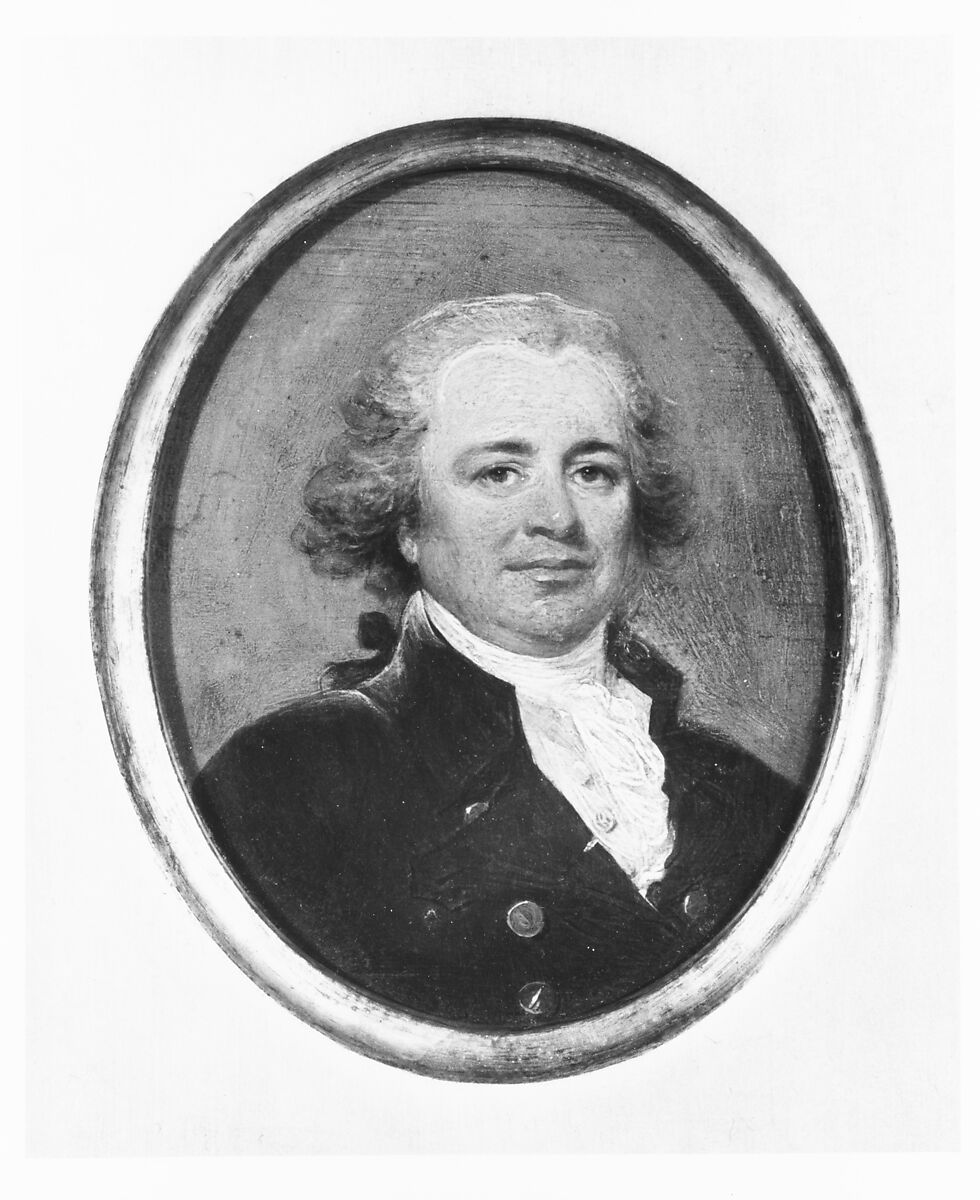
Thomas Mifflin was a distinguished merchant and politician from Pennsylvania. During the American Revolution, he served as a delegate and President of the Continental Congress. However, he left politics to serve in the Continental Army, rising to the rank of major general and serving as quartermaster general. Later, he was a delegate to the Constitutional Convention and first governor of the commonwealth of Pennsylvania. Despite, his accomplishments he became involved in scandals while serving as the Quartermaster General of the Continental Army, which tarnished his reputation and led to a falling out with George Washington.
Early Life
Mifflin was born in Philadelphia in 1744, the son of wealthy Quaker merchants. He attended the College of Philadelphia (the future University of Pennsylvania). Four years after graduating opened a trading shop in the city with his brother. By 1769, Mifflin became involved in the colonial resistance against British policies. In 1772, he was elected to serve in the Pennsylvania Provincial Assembly, where he advocated for revolt against Great Britain. In 1774 and again in 1775, he was chosen as a delegate to the Continental Congress and ultimately supported separation from Britain through independence.
Service in the Continental Army
Mifflin joined the Continental Army in April 1775, following the Battles of Lexington and Concord. On July 4, 1775, General George Washington announced in his General Orders he would serve as an aide-de- camp.1 Mifflin held the rank of Major and was mainly involved in writing messages, reports, and orders for Washington. After serving as an aide-de-camp for just over a month, Mifflin received Washington's appointment to become the Quartermaster General for the Continental Army.
Many soldiers and civilians praised the selection, including Richard Henry Lee, who wrote to Washington: "I think you could not possible have appointed a better Man to his present Office than Mr. Mifflin."2 Mifflin commanded the Quartermaster Department, overseeing the distribution of clothing and equipment to the soldiers of the Continental Army. He was promoted to the rank of Colonel on December 22, 1775, to Brigadier General on May 16, 1776, and to Major General on February 19, 1777.
However, during his time as Quartermaster General, Mifflin came under intense scrutiny for his poor handling of the Department, particularly its financial affairs. On March 7, 1776, Washington's secretary, Lieutenant Colonel Joseph Reed, wrote to his commander: "I ought to mention to you a Continuance of one of your principal Officers in a private Trade with which I remember you was much dissatisfied last Fall- you can be at no Loss to know who I mean [Mifflin]."3 This accusation was just one of many made by soldiers and civilians alike against Mifflin.
By the spring of 1777, Mifflin also began to disagree with Washington's war strategy. Mifflin temporarily resigned as Quartermaster General during the summer, but remained in the Army. He then became aligned with members of the Conway Cabal, a plot to replace Washington with Horatio Gates as commander-in-chief. Understandably, tensions between Washington and Mifflin emerged. Mifflin briefly returned to the post of Quartermaster later that year. However, on June 11, 1778, a letter from the President of the Continental Congress directed an inquiry into his conduct.4 Washington allowed Mifflin to leave the Army and attend to his defense. Mifflin continued to be inundated by allegations of his misconduct until finally resigning his commission in February 1779.
Political Life After the American Revolution
Mifflin returned to Pennsylvania following his military service. He served once again as a delegate to the Continental Congress and was elected its President in 1783. While in this position, he personally accepted Washington's resignation as commander-in-chief. Mifflin served as a member of the Constitutional Convention in 1787, and then as President of the Supreme Executive Council of Pennsylvania, which was a role similar to governor. In 1790, he was elected the first Governor of the Commonwealth. During his term, yellow fever struck parts of the state and the Whiskey Rebellion had to be quelled by the federal government under Washington’s presidency. Given his continued political involvement, Washington and Mifflin remained in contact throughout this period, but primarily to conduct official business. Mifflin served as governor for nine years, and shortly after his tenure he died in Lancaster on January 20, 1800.
Jared D. Johnson George Washington University
Notes:
1. “General Orders, 4 July 1775,” Founders Online, National Archives.
2. "Richard Henry Lee to George Washington, 26 September 1775," The Papers of George Washington Digital Edition. Charlottesville: University of Virginia Press, Rotunda, 2008. Revolutionary War Series (16 June 1775–31 December 1783 [in progress]), Volume 2 (16 September 1775–31 December 1775)
3. "Lieutenant Colonel Joseph Reed to George Washington, 7 March 1776," The Papers of George Washington Digital Edition. Charlottesville: University of Virginia Press, Rotunda, 2008. Revolutionary War Series (16 June 1775–31 December 1783 [in progress]), Volume 3 (1 January 1776–31 March 1776)
4. “Henry Laurens to George Washington, 11 June 1778,” Founders Online, National Archives.
Bibliography:
Headley, J.T. Washington and His Generals. 2 vols. New York, NY: Baker and Scribner, 1847.
Hubbard, Robert Ernest. Major General Thomas Mifflin: The Army’s First Quartermaster General and the First Governor of Pennsylvania. McFarland Incorporated Publishers, 2025.
Lender, Mark Edward. Cabal! The Plot Against George Washington, the Conway Cabal Reconsidered. Westholme Publishing, 2024.
Purcell, L. Edward. Who Was Who in the American Revolution. New York, NY: Facts on File, 1993.