

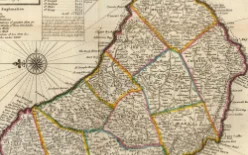
When George Washington travelled with his brother Lawrence Washington to Barbados in 1751, it was the only time he travelled outside of the American mainland. Barbados, a British colony, was an economic hub for sugar cultivated by thousands of enslaved people and indentured servants. Settled in 1627, Barbados became one of England’s most profitable colonies. Visitors noted how "all the Ilands that I have passed by and seen unto this day, not any pleaseth me soe well."1 Sugar was a popular export and used to make products such as molasses and rum. English enslavers in Barbados amassed great wealth, and as a result Bridgetown became one of the largest cities in the British Atlantic. Due to the city’s wealth, resources, and climate, George accompanied his step-brother there as he sought treatment for ongoing respiratory issues, and he kept a diary of his journey.
Motivations to Travel to Barbados
In 1749, George Washington's half-brother Lawrence Washington fell ill with a cough. By 1751 the illness matured into tuberculosis. Several unsuccessful trips to the hot springs at Berkeley, Virginia and the prospect of another winter at Mount Vernon pushed Lawrence to explore other options. After learning of Barbados and its reputation for treating lung diseases, Lawrence Washington began planning a trip to the island.
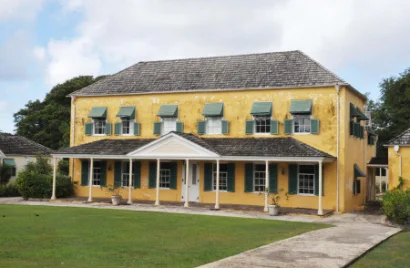
Lawrence, however, was unable to undertake the voyage with his wife Anne because of the recent birth of their fourth child. As a result, Lawrence turned to his brother for company. On November 2, 1751, the brigantine Success landed in Barbados after over a month at sea. While on his voyage, George Washington took careful notes of geographic coordinates, likely of interest to him given his training as a surveyor, and weather conditions. At their arrival, Washington brothers made their way to the city of Bridgetown. In the city they hoped to connect with prominent doctors such as William Hillary.
Time in Barbados
Initially, their destination brought new experiences to George Washington such as exotic foods, opportunities to socialize, and his first time visiting the theater.2 However, the trajectory of the trip would soon change. George and Lawrence spent nearly six disaster-filled weeks in Barbados. Lawrence found the oppressive heat miserable and the venture failed to improve his condition.
The situation worsened for George Washington, the brothers unaware that Bridgetown was known for its unhealthy situation on the landscape of the island. On November 17, 1751, George Washington was stricken with smallpox. Residents of Virginia had little exposure to smallpox and Washington did not have the opportunity to develop immunity to this disease in his youth. While afflicted, Washington was unable to record his activities or conditions in his dairy. Fortunately, George recovered quickly.
Eventually, George set sail home for Virginia in late December on board the Industry. Before leaving, he reflected on his time in Barbados, such as meeting its governor Henry Grenville. George cited Griffith Hughes’ work The Natural History of Barbados (1750) when considering his own experiences there.3 On his return trip, weather conditions were undesirable and he did not personally record extensive weather data like on his initial sea voyage, probably due to sea sickness. He remarked “The wind still violent as ever (with many hard Squals of Rain).”4 His brother proceeded to Bermuda in search of relief, but shortly thereafter returned to Virginia and died in July of 1752.
Influence of His Journey
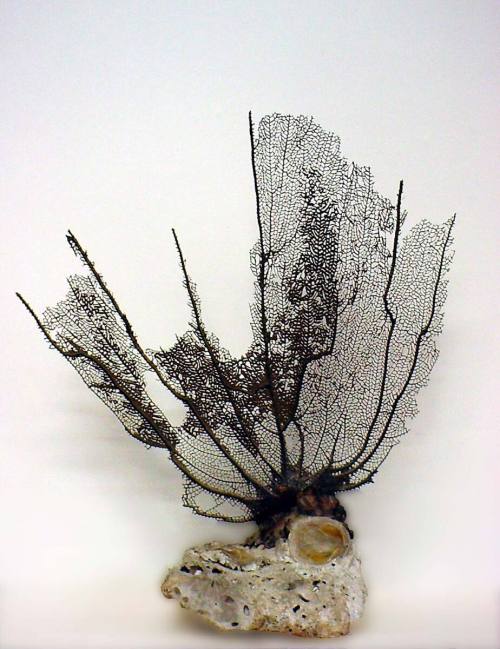
Washington's trip to Barbados had a significant impact on his life, and he took home various souvenirs like coral. While in Barbados he explored the economics of sugar cane and cultivation there, commenting, “The Earth in most parts is extreamely rich & as black as our richest Marsh.”5 He likely considered the role of Barbados in the Atlantic economy, no doubt influencing his approach to Mount Vernon. In an effort to control the growing numbers of unfree laborers, the planter elite in Barbados began turning to increasingly harsh measures to control those they enslaved. Enslavers such as Washington would use the threat of sale to places such as Barbados to curtail rebellious behavior or resistance.
Additionally, he explored the forts and military structures of the island, noting the number of guns and batteries on forts such as Charles Fort.6 When he returned to Virginia he placed a renewed emphasis on his role in the military. Washington unsuccessfully sought a commission in the regular British Army while engaging in evening conversations with high-ranking military officials. However, Washington received a commission as an officer in the Virginia militia and served in the Seven Years’ War in North America.
While this experience undoubtedly fostered his desire to enter the military, Washington's sojourn to Barbados had a greater impact, one with profound implications for the United States of America. During the Revolutionary War the colonial army was ravaged by smallpox. Thanks to his exposure to smallpox in Barbados, Washington was immune to further bouts with the disease and managed to avoid suffering from this illness like his troops. Additionally, it was under Washington's watch that his men were administered one of the earliest known inoculations against smallpox.
Peter Kotowski Loyola University Chicago, revised by Zoie Horecny, 8 July 2025
Notes:
1. Henrye Colt Knight, "The Voyage of Sir Henrye Colt Knight to the Islands of the Antillease," Colonising Expeditions of the West Indies and Guiana, 1623-1667, ed. Vincent Harlow (London: Hakluyt Society, 1925).
2. “[Diary Entry: 14 November 1751],” Alicia K. Anderson, Lynn A. Price, William M. Ferraro, eds., George Washington’s Barbados Diary, 1751-1752. University of Virginia Press, 2018, pg. 70.
3. “[Diary Entry: 22 December 1751],” Alicia K. Anderson, Lynn A. Price, William M. Ferraro, eds., George Washington’s Barbados Diary, 1751-1752. University of Virginia Press, 2018, pg. 77.
4. “[Diary Entry: 11 January 1752”], Alicia K. Anderson, Lynn A. Price, William M. Ferraro, eds., George Washington’s Barbados Diary, 1751-1752. University of Virginia Press, 2018, pg. 92.
5. “[Diary Entry: 22 December 1751],” Alicia K. Anderson, Lynn A. Price, William M. Ferraro, eds., George Washington’s Barbados Diary, 1751-1752. University of Virginia Press, 2018, pg. 77.
6. “[Diary Entry: 12 November 1751],” Alicia K. Anderson, Lynn A. Price, William M. Ferraro, eds., George Washington’s Barbados Diary, 1751-1752. University of Virginia Press, 2018, pg. 69.
Bibliography:
Block, Kristen. Ordinary Lives in the Early Caribbean: Religion, Colonial Competition, and the Politics of Profit. University of George Press, 2012.
Dunn, Richard. Sugar and Slaves: The Rise of the Planter Class in the English West Indies, 1624-1713. Chapel Hill: University of North Carolina Press, 1972.
Levy, Phillip. The Permanent Resident: Excavations and Explorations of George Washington’s Life. University of Virginia Press, 2012.
Lewis, Thomas. For King and Country: The Maturing of George Washington, 1748-1760. New York: HarperCollins Publishers, Inc., 1993.
Anderson, Alicia K., Lynn A. Price, William M. Ferraro, eds., George Washington’s Barbados Diary, 1751-1752. University of Virginia Press, 2018.
For further reading on Washington’s time in Barbados:
Alicia K. Anderson, Lynn A. Price, William M. Ferraro, eds., George Washington’s Barbados Diary, 1751-1752. University of Virginia Press, 2018.
Also available through The Papers of George Washington Digital Edition, The University of Virginia Press. Original Source: Diaries, George Washington’s Barbados Diary, 1751–52.

Explore Further
A Visit to Barbados
Washington left the North American mainland only once, when he sailed to Barbados with his half-brother Lawrence in 1751.