
A Missing Lid
Thursday, May 02, 2024
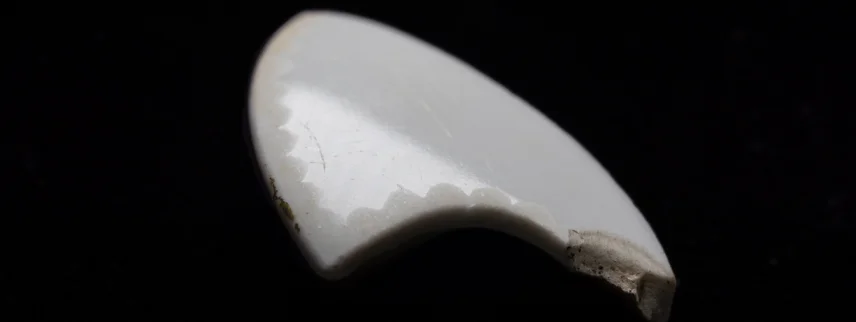
In the world of archaeology, every artifact has a story to tell. Ahead of the Mansion Revitalization Project, Mount Vernon archaeologists excavated the area north of the Mansion. While examining a ceramic fragment excavated near the north end of the piazza, archaeological lab analysts Angela Bailey and Alice Keith identified it as a lid from the...
Read more
Processing Artifacts
Thursday, April 25, 2024

Archaeological Laboratory Analyst Angela Bailey catalogs artifacts recovered by the Archaeology team during the Mansion Revitalization Project. (MVLA) While the Archaeology field crew excavates in the cellar (as part of the Mansion Revitalization Project), the lab crew facilitates the processing, researching, and cataloging of the artifacts bein...
Read more
Ductwork Removal from the Cellar
Wednesday, April 17, 2024
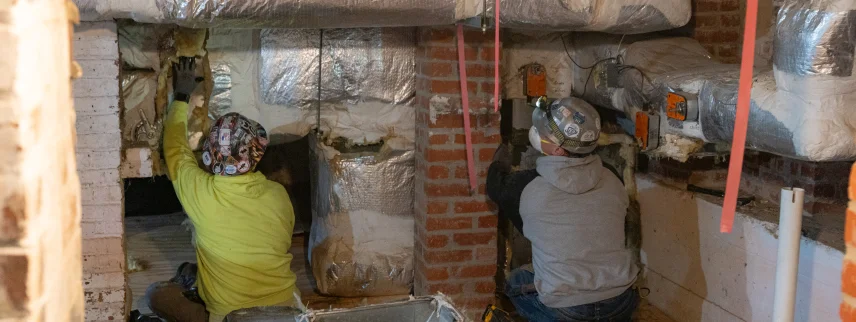
The Preservation and Project Management teams reached an important milestone by overseeing the removal of the existing ductwork in the Mansion cellar. The removal of this ductwork will make way for its replacement with a more efficient HVAC (heating/ventilation/air conditioning) system, which will provide climate control in the cellar for the fi...
Read more
Protecting the Vaughan Mantelpiece
Friday, April 05, 2024
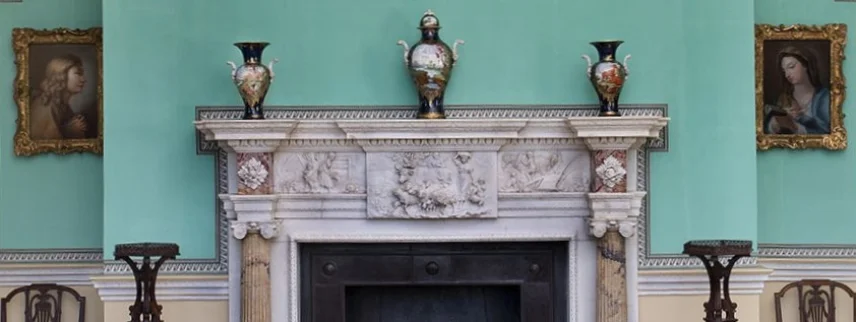
In 1784, George Washington wrote to family and friends in search of a marble surround suitable for his "New Room." In response, Samuel Vaughan, a recent émigré, presented this mantelpiece depicting pastoral life that originated from his home in Essex, England. Ever since Washington installed the mantelpiece in 1786, it has served as the centerpi...
Read more
Custis Wine Bottle Seal
Wednesday, March 20, 2024
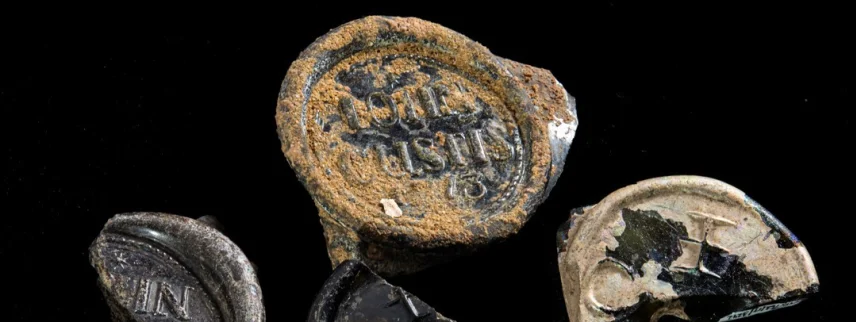
Archaeologists excavating in the Mansion cellar discovered a wine bottle seal stamped “IOHN CUSTIS 1713”—the third such seal to be discovered in the cellar. John Custis was the father of Daniel Parke Custis, Martha Washington’s first husband. Learn More About the Custis Family Mount Vernon archaeologists have now excavated a total of five of t...
Read more
Evidence of a Dry Well Hoist
Wednesday, March 13, 2024
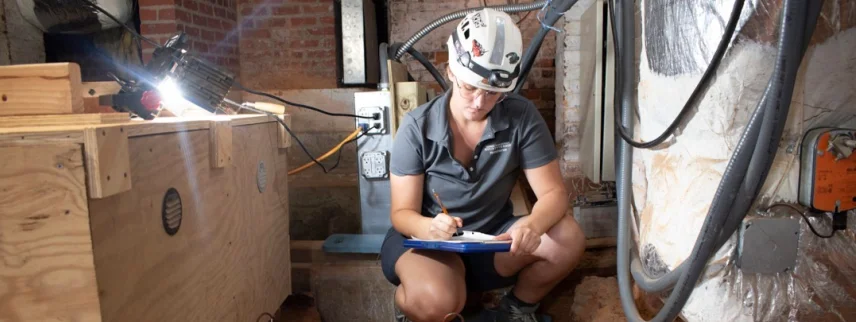
While performing excavations in the Mansion cellar, the Archaeological team uncovered evidence of two historic postholes, found in proximity to the dry well located directly beneath the New Room. A large cylindrical pit, the 22-foot-deep dry well was built to maintain a consistent temperature throughout the year, allowing for the storage of ice ...
Read more
Archaeology in the Cellar
Wednesday, March 06, 2024
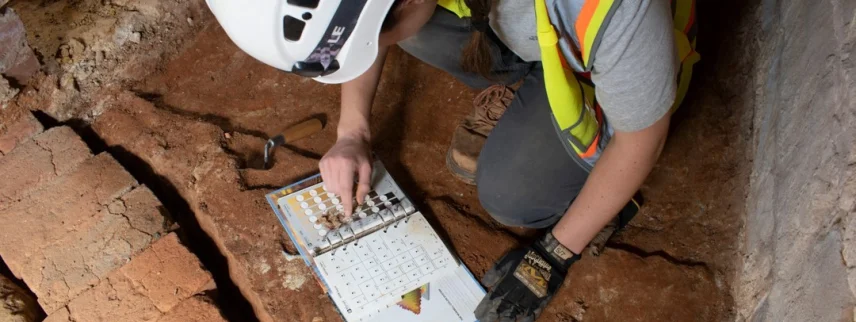
Archaeology Technician Grace S. uses a Munsell Color book to document the colors of the soil in the Mansion cellar. The late-1770s drain is visible on the left. If you haven’t seen the Archaeology team outside recently, that’s because they have moved inside! As part of the ongoing multi-year Mansion Revitalization Project, the team is currentl...
Read more
The Copper and Slate Puzzle
Tuesday, March 05, 2024
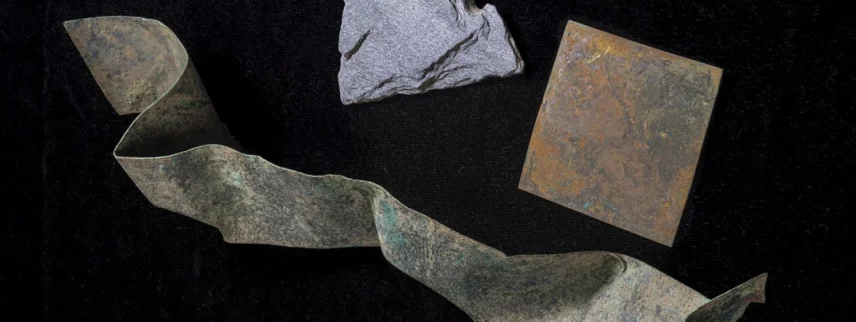
At Mount Vernon, the Architecture and Archaeology teams often work together to solve puzzles. While excavating the North Grove (in preparation for the Mansion Revitalization Project), archaeologists found a significant number of copper sheets and slate fragments. The slate fragment pictured above has a nail hole, which is characteristic of roofi...
Read more
Layers of History
Monday, March 04, 2024
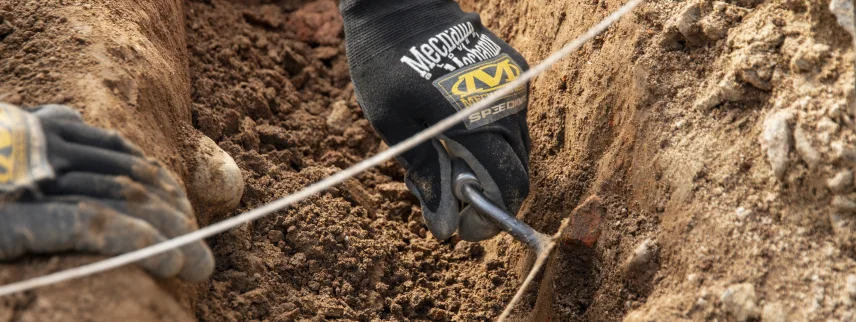
As the Archaeology team continued excavations north of the piazza (in preparation for the Mansion Revitalization Project), they uncovered a fascinating record of the Mansion’s evolution over time. This “stratigraphic sequence” (seen below) details the construction history of the Mansion and adjacent landscape—including the addition of the New Ro...
Read more
Dry Well Assessment
Monday, February 19, 2024
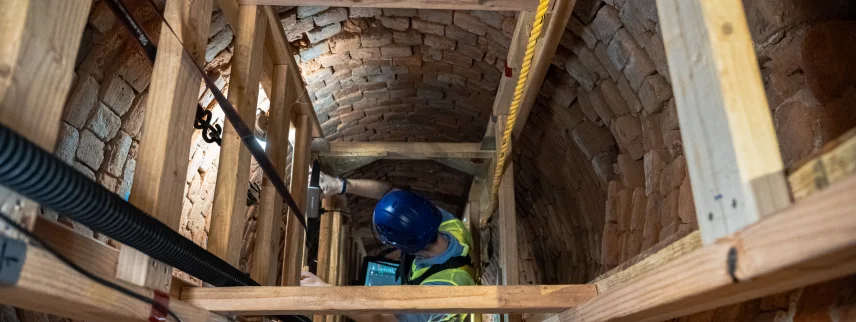
In 1785, George Washington had a dry well built in the Mansion cellar. A large cylindrical pit, the 22-foot-deep dry well was intended to maintain a consistent temperature throughout the year to allow for the storage of ice harvested from the Potomac River by enslaved workers.This dry well, however, ultimately proved unsatisfactory to Washington...
Read more
Preservation
Mansion Revitalization Project
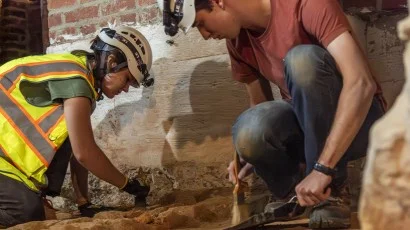
Mount Vernon has embarked on a landmark preservation project to ensure the Mansion's structural integrity for generations to come.