The Study: An Interim Installation

Interim Study

A glimpse into George Washington’s private workspace, 1799

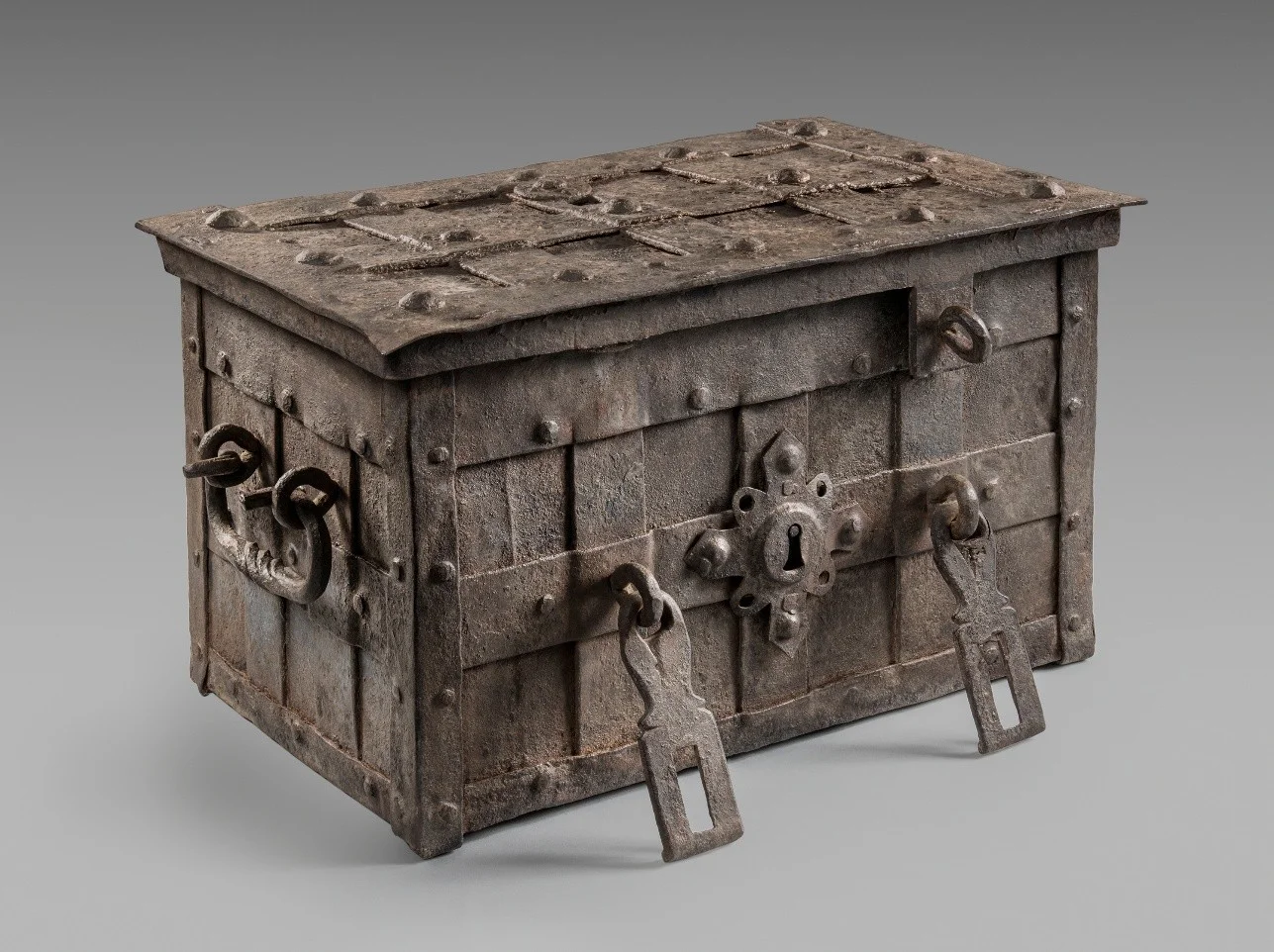
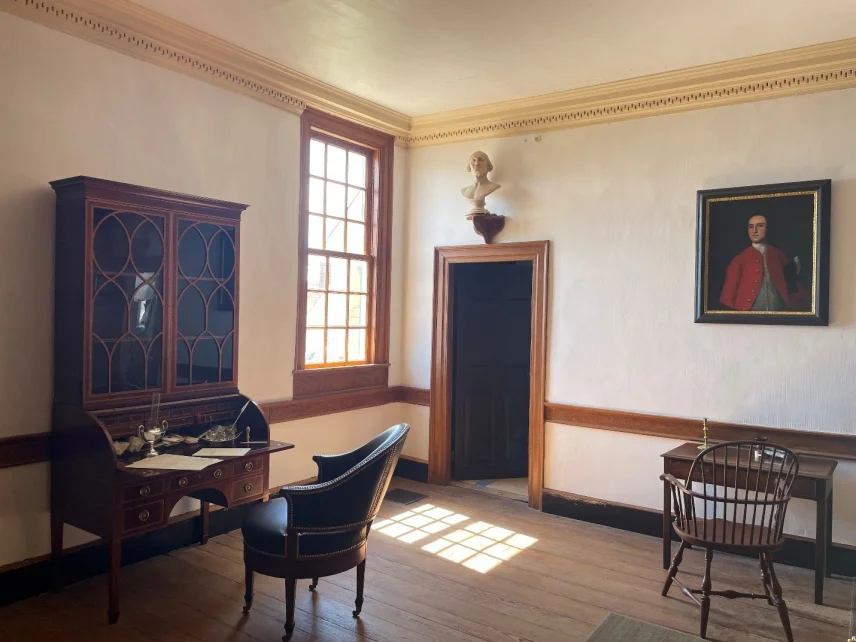
Following the completion of the Preservation team’s work in the Study, Mount Vernon’s Collections team has installed a select number of objects to give guests a look at how this room appeared in 1799. This interim display includes two original objects—a silverplate Argand lamp and an iron chest—and centers on one of the most significant moments of Washington’s life: his decision to emancipate the 123 people he enslaved.

While the Mansion Revitalization Project continues, many items on view are reproductions or period examples. Once the project and environmental stabilization are complete, the Study will be fully reinstalled with Washington’s original furnishings and objects.
Washington at His Desk

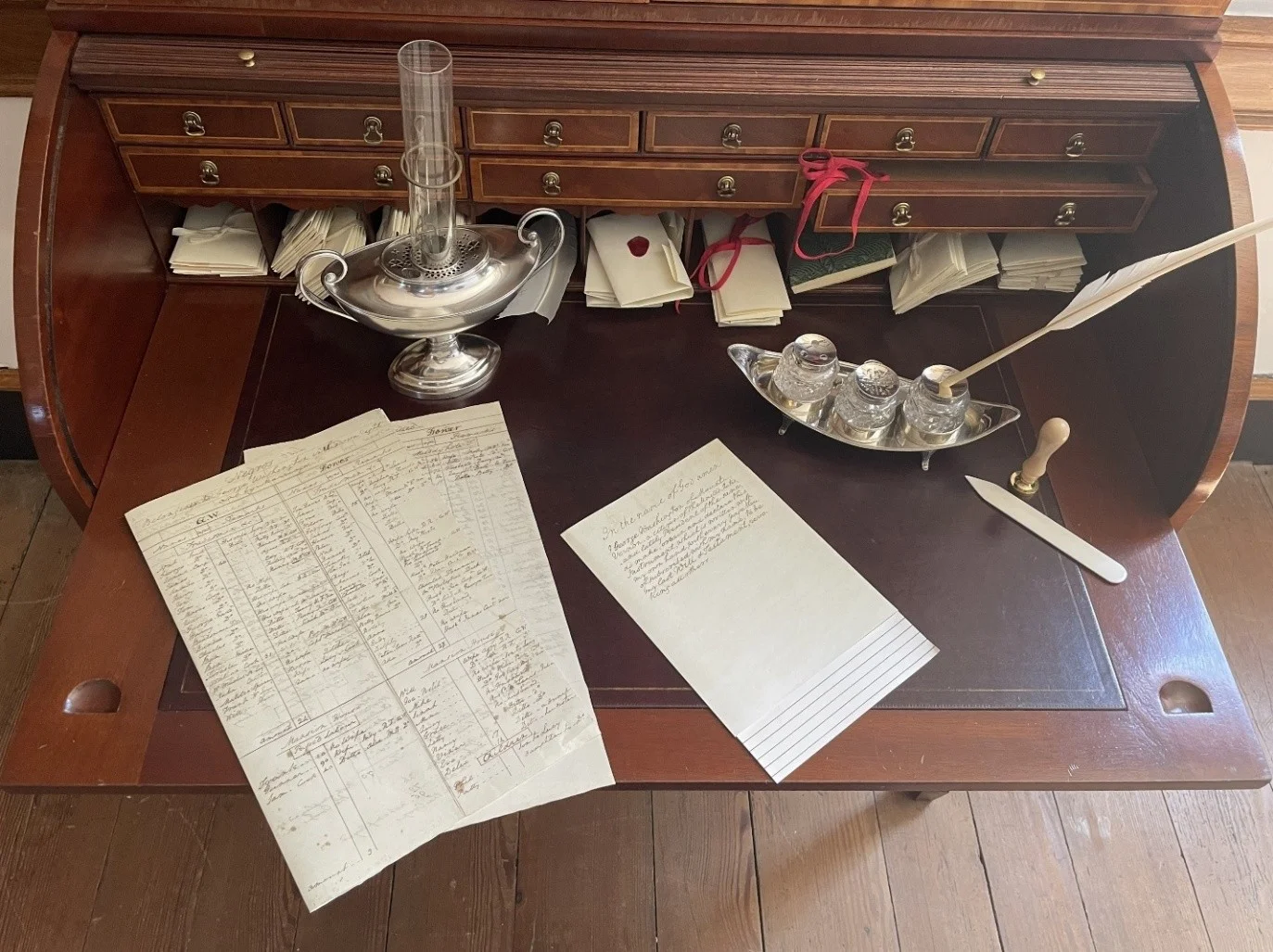
In July 1799, Washington composed his Last Will and Testament, a 29-page document that would ultimately grant freedom to the people he enslaved. In this installation, visitors see Washington’s desk as it might have appeared at this moment, amid this defining act of conscience.

On the reproduction tambour desk, facsimiles of the first page of Washington’s will and his 1799 list of enslaved people at Mount Vernon are displayed alongside the kinds of writing tools he would have used: a quill, bone folder, sealing wax, and red twill tape—the original “red tape.” These objects represent both the intellectual labor and the moral gravity behind his last written directives.

Desk
Washington has momentarily stepped away from his desk amidst one of the most momentous acts of his life: his decision to emancipate the 123 people he enslaved. (MVLA)

Original Objects on View

Silverplate Argand Lamp

The silver-plated Argand lamp on the desk cleverly presented a new technology in a sleek classical form. François-Pierre Aimé Argand (1750-1803) first patented the "air burner" lamp in France in 1783. The base of the lamp functioned as the fuel reservoir into which a removable burner was inserted or "dropped." The burner consisted of an arrangement of tubes that directed a vertical current of air, in addition to a rack-and-pinion mechanism that held the tubular wick in place. When Washington learned of the patent lamps that “consume their own smoke – do no injury to furniture – give more light – and are cheaper than candles,” he ordered 14 of them from London to outfit his household.

Iron Chest

The iron chest or strongbox was designed to safeguard securities, and it is one of the oldest objects in the collection, dating to 1650-1750. Martha Washington brought it with her to Mount Vernon from the Custis estate. The chest is constructed entirely out of wrought iron sheets, has false key escutcheons and fittings for two additional padlocks, and can even be bolted to the floor. The probate inventory taken after Washington’s death recorded that it held stocks and $254.70 in cash. Today, the chest is empty, but it stands as a testimony to the weighty business of protecting wealth in the 18th century.

This iron chest was originally owned by Daniel Parke Custis, Martha Washington's first husband. Purchase, 1954. (MVLA)

Reproductions and Furnishings

The Study also features reproductions and period furnishings that evoke the appearance of Washington’s workspace in 1799:

  • Tambour Secretary Desk – Reproduction of the 1797 original Washington purchased from Philadelphia cabinetmaker Robert Aitken.
  • “Uncommon” Chair – Reproduction of Washington’s 1790 purchase from Thomas Burling in New York, used throughout his presidency and retirement, and now on display in Mount Vernon’s Museum.
  • Writing Tables – In addition to Washington’s secretary desk, there were several writing tables in the room that expanded the usable work space. Washington’s nephew, Lawrence Lewis, acted as Washington’s secretary from 1797–1799, and regularly used the Study to draft correspondence, copy letters, and attend to other tasks for his uncle.
  • Portrait of Lawrence Washington (1718–1752) – This reproduction shows George Washington’s older half-brother and mentor in silver-trimmed attire, revealed through recent conservation of the original that removed aged varnish and overpaint.
  • Bust of George Washington – Reproduction of the 1785 original sculpted at Mount Vernon by Jean-Antoine Houdon, gifted to Washington at that time.
  • Bust of John Paul Jones (1747–1792) – Reproduction of the bust once owned by Washington and destroyed in an 1871 fire.

Though temporary, this installation offers an intimate view of the Study as a place of intellect, decision, and legacy, where the first president of the United States undertook one of the most profound acts of his life.
 

Mansion Revitalization Blog

Follow along as we post updates and discoveries from the landmark Mansion Revitalization Project.

Learn More