Engineering Support: Installing Steel Trusses

Steel truss

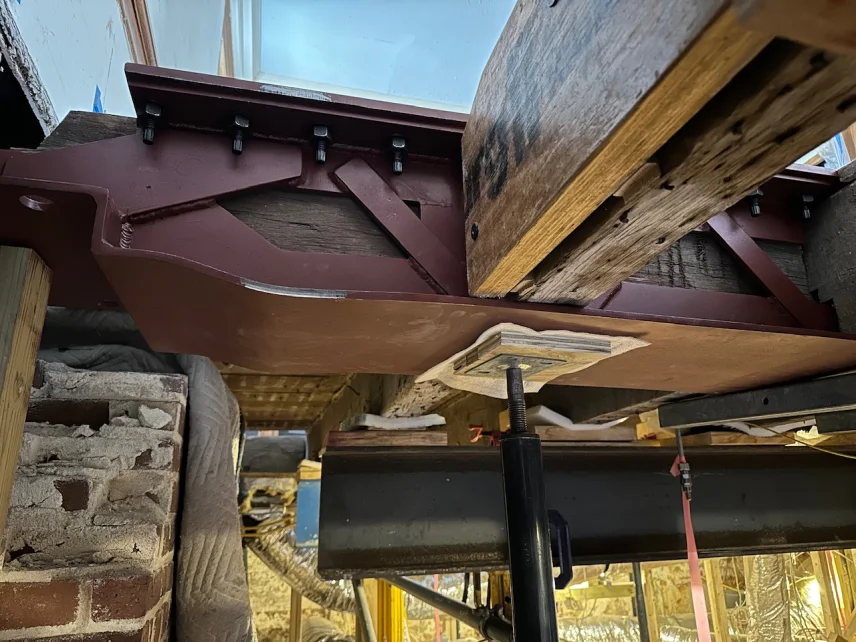
Above: Rather than welding—ruled out due to fire risk—the team opted for a bolted connection, allowing for safer, more controlled assembly on-site. (MVLA)

When the Mansion Revitalization Project set out to return Washington’s cellar to its 18th-century appearance, a critical challenge emerged: how to support the Study’s original summer beams—two massive horizontal timbers that hold up the floors above—without the cellar’s modern brick piers that had been added in the 1930s for structural support. Then, as now, Mount Vernon faced the same structural dilemma: how to discreetly reinforce the Mansion’s framework while accommodating the wear and weight of an enormous number of annual visitors.

The answer came in the form of custom-fabricated steel trusses, designed to bolster the original summer beams while remaining invisible to visitors. The trusses were carefully shaped to fit around the unique curves and twists of the 18th-century timbers—warping that occurred over time as the original beams, likely installed partially seasoned, dried unevenly.
What is a Truss?

A truss is a structural framework—usually made of metal or wood—designed to support weight by distributing loads across interconnected elements. At Mount Vernon, custom steel trusses were engineered to brace the Mansion’s original summer beams without altering their historic fabric, providing modern support while remaining entirely hidden from view.

Installation

Truss installation
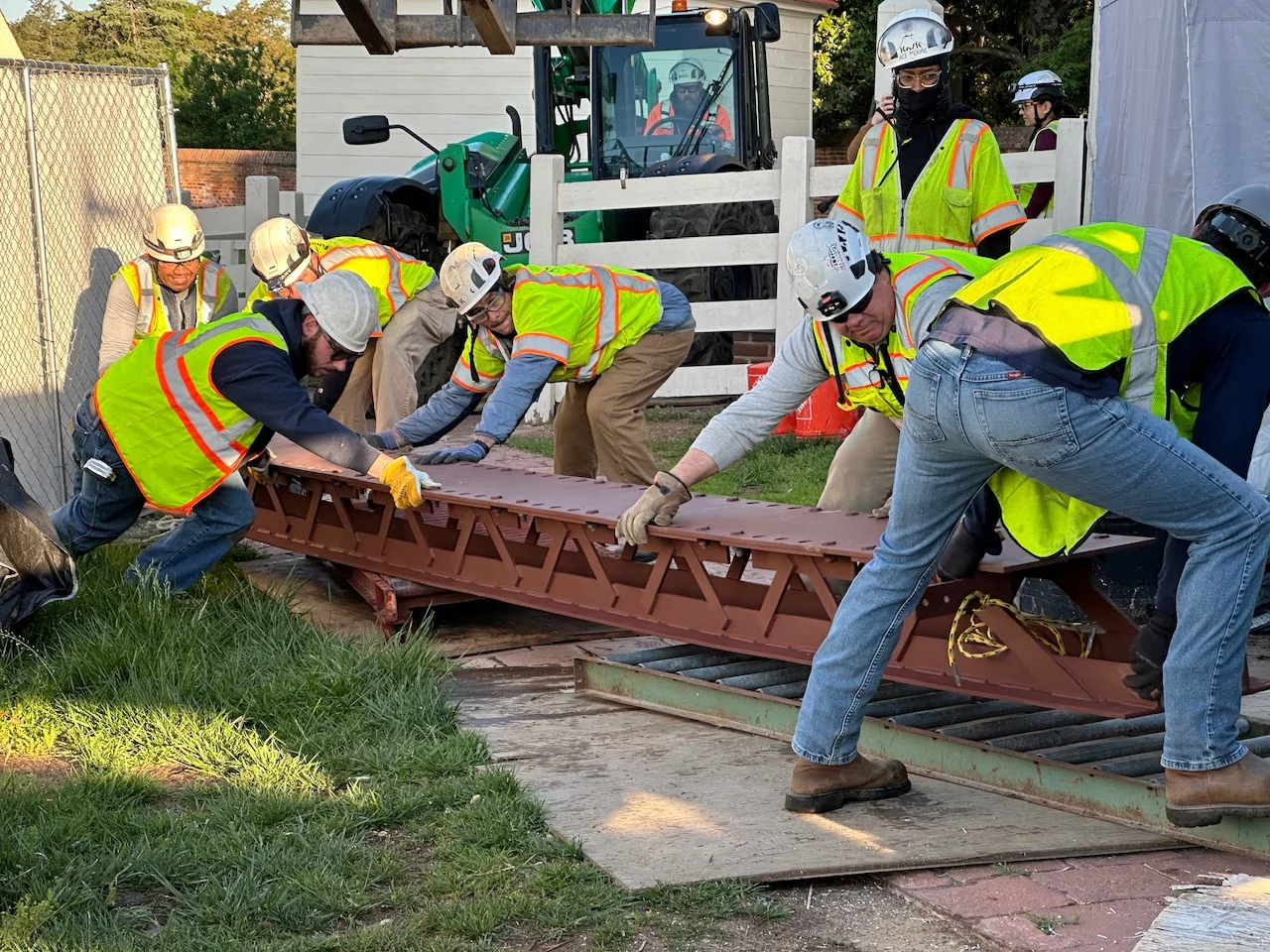
Using rollers, a steel truss is carefully guided into the cellar through a window opening. (MVLA)

The installation of the two steel trusses was a painstaking process that required precise coordination and craftsmanship. After being custom-fabricated off-site by expert blacksmith Pat Morningstar, the trusses were carefully brought into the Mansion on rollers through the cellar’s south window openings. Using powerful hand-cranked hydraulic jacks, the team slowly maneuvered each heavy steel piece into position around the historic summer beams. The ends of the trusses rest securely on masonry—one side on the chimney mass, the other on the Mansion’s exterior brick wall—transferring structural loads through the brick and down into the ground.

Once the cellar’s restoration is complete, the entire truss system will be concealed behind a traditional plaster ceiling, preserving the period appearance of the space. Thanks to this innovative teamwork, the cellar is on its way to appearing just as it did in Washington’s time—free of modern columns, yet fully supported by hidden 21st-century engineering.

Mansion Revitalization Blog

Follow along as we post updates and discoveries from the landmark Mansion Revitalization Project.

Learn More