
American Plum
Prunus americana
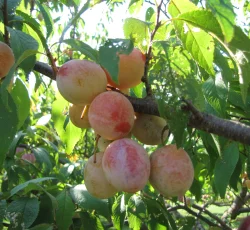
This native plum has a sprawling habit, which showcases the beautiful white flowers in spring and the unique pink plums in midsummer. The plants become scaly with age and are somewhat disease prone.
EXPLORE THIS PLANT
This native plum has a sprawling habit, which showcases the beautiful white flowers in spring and the unique pink plums in midsummer. The plants become scaly with age and are somewhat disease prone.
EXPLORE THIS PLANT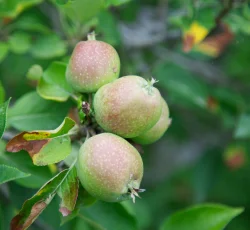
Apples are ideally planted in multiples of different varieties for optimal fruit production, and many also benefit from pollinators to increase the effectiveness of cross-pollination. Most apple trees are grown from scionwood grafted to rootstock, and the kind of rootstock will determine the ultimate height and disease resistance of the tree. Dwarf and some semi-dwarf trees, with their smaller root systems, must be staked or trained to a wall or fence, much like the espaliered trees at Mount Vernon. The health and fruit yields of most trees depends on proper pruning and treatment of pests and disease.
EXPLORE THIS PLANT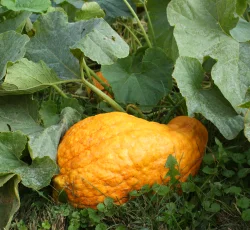
Boston Marrows are large, bright orange squashes that can weigh anywhere between 10 and 50 lbs., although 25 lbs. is more common. They are an excellent eating squash and can be turned into soups or pies.
EXPLORE THIS PLANT
Boxwood are the quintessential southern garden hedge plant. They are popular for use in knot gardens, parterres, edging, and as topiaries. While the historic English boxwood (Buxus suffruiticosa) are especially susceptible to a devastating and widespread blight caused by the fungus Cylindrocladium buxicola, there are new varieties that have been bred to offer various levels of resistance. Several varieties of boxwood grow in the Mount Vernon gardens including: Buxus sempervirens (American), Buxus microphylla var. japonica 'Green Beauty', and 'Morris Dwarf.'
EXPLORE THIS PLANT
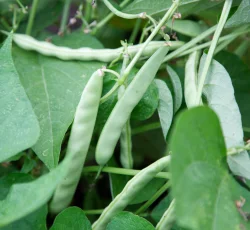
Bush beans are compact, low growing plants that produce large crops of beans. They can be used for fresh eating or as dry beans.
EXPLORE THIS PLANT
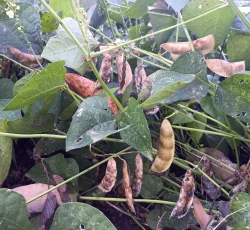
Bush lima beans are vigorous, productive plants. Their smaller size makes them easy to grow in the home garden and they still provide a bounteous harvest. They can be used dry or fresh.
EXPLORE THIS PLANT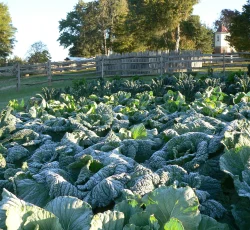
Cabbage is a cool season annual that was a staple crop in the colonial period and continues to be so today.
EXPLORE THIS PLANT
This rambling evergreen vine sports masses of fragrant tubular yellow flowers in late winter and early spring. It is well-suited for use on arbors and fences.
EXPLORE THIS PLANT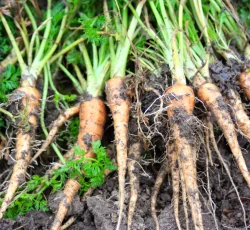
Carrots are a root crop which comes in a wide variety of colors. They can be yellow, orange, or purple. While the purple colored varieties are some of the oldest types, orange varieties of carrots were popular by the mid-1700s. They can be served fresh in salads, or cooked.
EXPLORE THIS PLANT
The name "cowpea" was probably coined for their use as a fodder crop for cows, and while grown for their edible bean, the leaves and pods can also be consumed. Black-eyed peas can be harvested as a snap bean, or dried, and are the main ingredient in Hoppin' John, a traditional Southern dish ritually served on New Year's Day.
EXPLORE THIS PLANT