
No place at Mount Vernon better shows off the secret George Washington—his desire to be self-sufficient, his curiosity, and his determined optimism, undeterred by considerable failure—than his botanical garden.

Tucked between the upper garden and the north lane, in the shelter of the salt house and the spinning house, lies the little enclosed piece of ground Washington called "my Little garden," or "my Botanick garden."
This was an experimental space where George Washington and his gardens could test plants that were new to Mount Vernon; what kind of care did they need? Would they grow in Virginia? Plants that succeeded were then transplanted to other parts of the plantation. Learn more about gardeners at Mount Vernon.
The first clear documentation of the botanical garden is from George Washington’s diary. On June 13, 1785, he instructed gardeners to "Sow the following Nuts and Seeds, in the inclosure I had prepared for a Nursery, viz." He then listed ten different experimental plantings. All were methodically "planted and sowed in Drills 12 inches apart."
They included plants intended to be transplanted into Mount Vernon’s formal gardens and landscapes, such as common privet (Ligustrum vulgare) and “635 Acorns of the live oak.”

He had seeds of the brightly colored tropical "flower fence” (Caesalpina pulcherrima) planted in the botanical garden. The “Barbados Flower Fence,” also known as the “Pride of Barbados,” is Barbados’s national flower. Washington noted that it was "used in the West Indies ... as an inclosure to Gardens." Indeed, the plant’s prickly stems and branches make it useful for hedges and borders. Washington might also have been remembering the two months he spent in Barbados with his half-brother, Lawrence, in 1751. During that trip, Washington wrote effusively about " ... the beautiful prospects which on every side presented to our view The fields of Cain, Corn, Fruit Trees &ca. in a delightful Green."
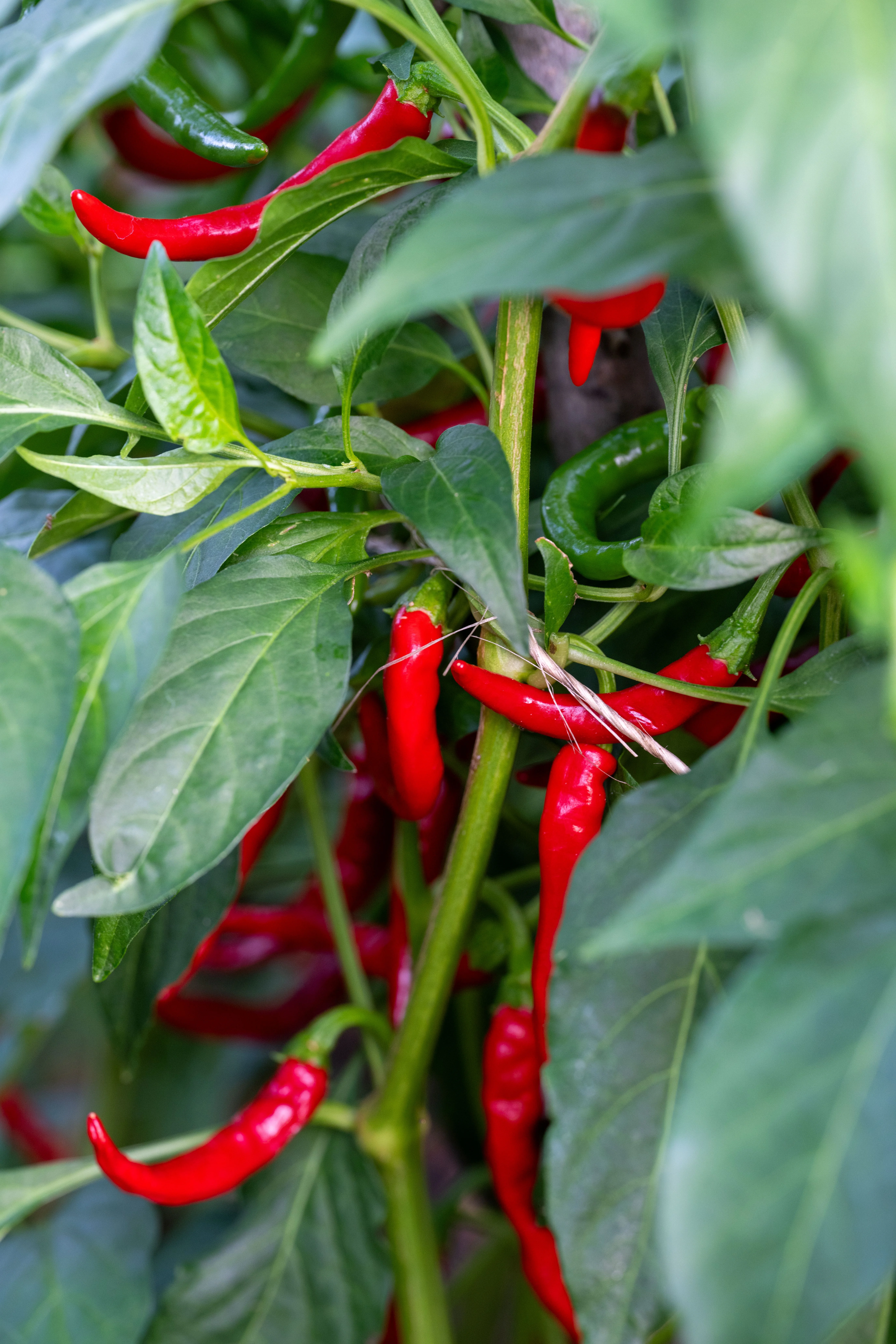
New garden and field crops were also tested in the botanical garden. Previously, Washington had ordered dried cayenne pepper from English merchants. But in 1785, he tried growing what he called "Cayan pepper" (Capsicum sp.) in the botanical garden. Washington eagerly tracked the progress of guinea grass (Megathyrsus maximus) – a fodder crop. Putting it to trial, Washington had half of the guinea grass covered during the winter of 1785-1786, but left six rows uncovered, “to try the effect of the Winters frosts & snows upon it.”
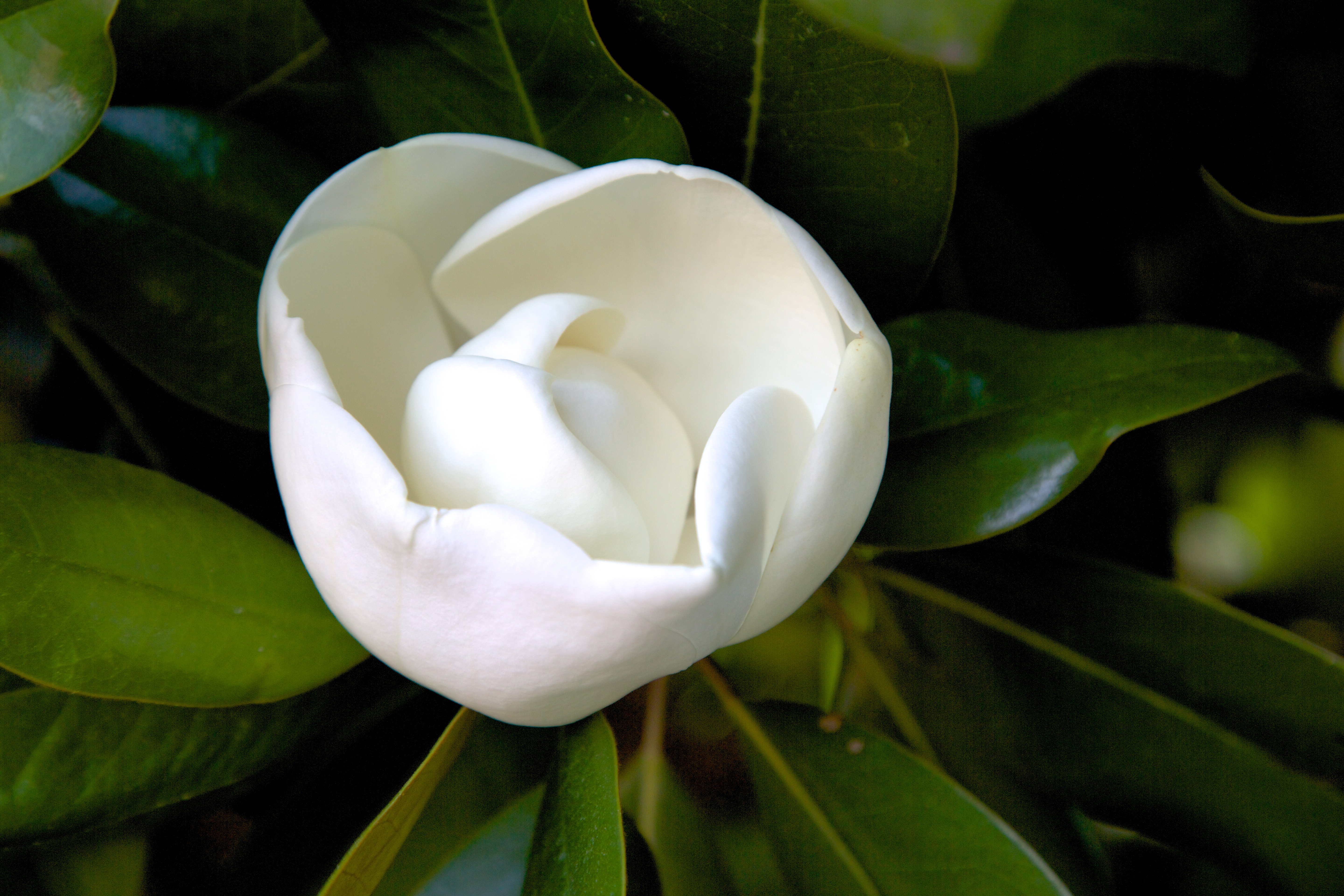
Foreign governments, friends, admirers, and even strangers supplied George Washington with a steady stream of seeds, slips, bulbs, and cuttings from all over the world. André Michaux, botanist to King Louis XVI of France, sent seeds and plants of the pyramidal cypress and other evergreens. William Washington, a relative living in South Carolina, sent southern magnolia that adapted beautifully to Mount Vernon.
When he was home, Washington paid close attention to the work happening in the botanical garden. He had free and enslaved gardeners mark planting locations, often with notched sticks as substitutes for labels (number of notches duly noted in his diary for translation), and he kept track on paper of the successes and failures, as he did for all his projects.
In his long absences, whether as commander in chief or president, his correspondence with his farm managers was filled with anxious directives and queries, including, "Tell the Gardener he must plant the hiccory nuts in drills" and "Does the last, and present years planting of Honey locust seed come up well, and is there any appearance of the Cedar berries, Furze seed, Lucern, &ca., &ca., coming up, and answering expectation?"
In February 1793, writing from the presidential residence in Philadelphia, George Washington expressed frustration that the botanical garden was not being properly attended to in his absence:
These [plants] which are intended for experiments ... shd. never be put in fields or meadows ... for there (if not forgot) they are neglected. ... This has been the case of the Choricum (from Mr.Young) and a grass which sold for two Guineas a quart in England .... And the same, or some other fate equally as bad has attended a great many curious seeds which have been given to, and sent home by me at different times but of which I have heard nothing more; either from the inattention which was given to them in the first instance; neglect in the cultivation; or not watching the period of their seeding, and gathering them without waste.
Explore Mount Vernon
Plant Finder
Our integrated plant finder helps you identify the names and details behind the amazing array of flowers, plants, shrubs, vegetables, and trees found at Mount Vernon.
Specialty Tours
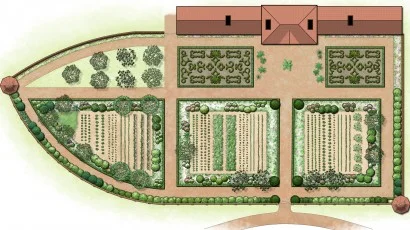
Gardens and Landscapes Tour
This one-hour guided tour examines Washington's brilliant design for the grounds and gardens at Mount Vernon.
“I am once more seated under my own Vine and Fig-tree, and hope to spend the remainder of my days ... in peaceful retirement, making political pursuits yield to the more rational amusement of cultivating the earth.”
George Washington to Dr. James Anderson, April 7, 1797
An Expert, According to Jefferson
Washington's interest in growing better crops was not unique in his day, though he was renowned as a great farmer and many sought his advice. He traded seed constantly with his neighbors and with friends all over the eastern seaboard.
In 1811, years after Washington's death, Thomas Jefferson wrote,
With respect to field culture of vegetables for cattle ... we find the Jerusalem artichoke best for winter & the Succory [chicory, Clzichorium iHtybus] for Summer use. This last was brought over from France to England by Arthur Young, as you will see in his travels thro' France [ a book by Young], & some of the seed sent by him to Genl. Washington, who spared me a part of it.
In fact, the "Choricum" that Washington laments losing in 1793 is probably this same "Succory," so some of it did survive, though perhaps in Jefferson's fields, not Washington's.

Thomas Jefferson by Rembrandt Peale (Wikimedia)
A Gardener and a Reader
George Washington's dozens of agricultural books helped him do research for the botanical garden experiments. The first work he bought on the subject was Thomas Hale's A Compleat Body of Husbandry, in four volumes.
He possessed all the works of the standard authors, as well as many publications of the British Board of Agriculture, but in the 1780s and 1790s he relied chiefly for advice on his correspondence with Arthur Young, the English agronomist, who sent him not only chicory and other seeds, but also sent him his works as the volumes appeared. The back and forth of their correspondence is descriptive of customs in both their countries and analytical in the best vein of "the new husbandry," as Enlightenment agriculture came to be called.
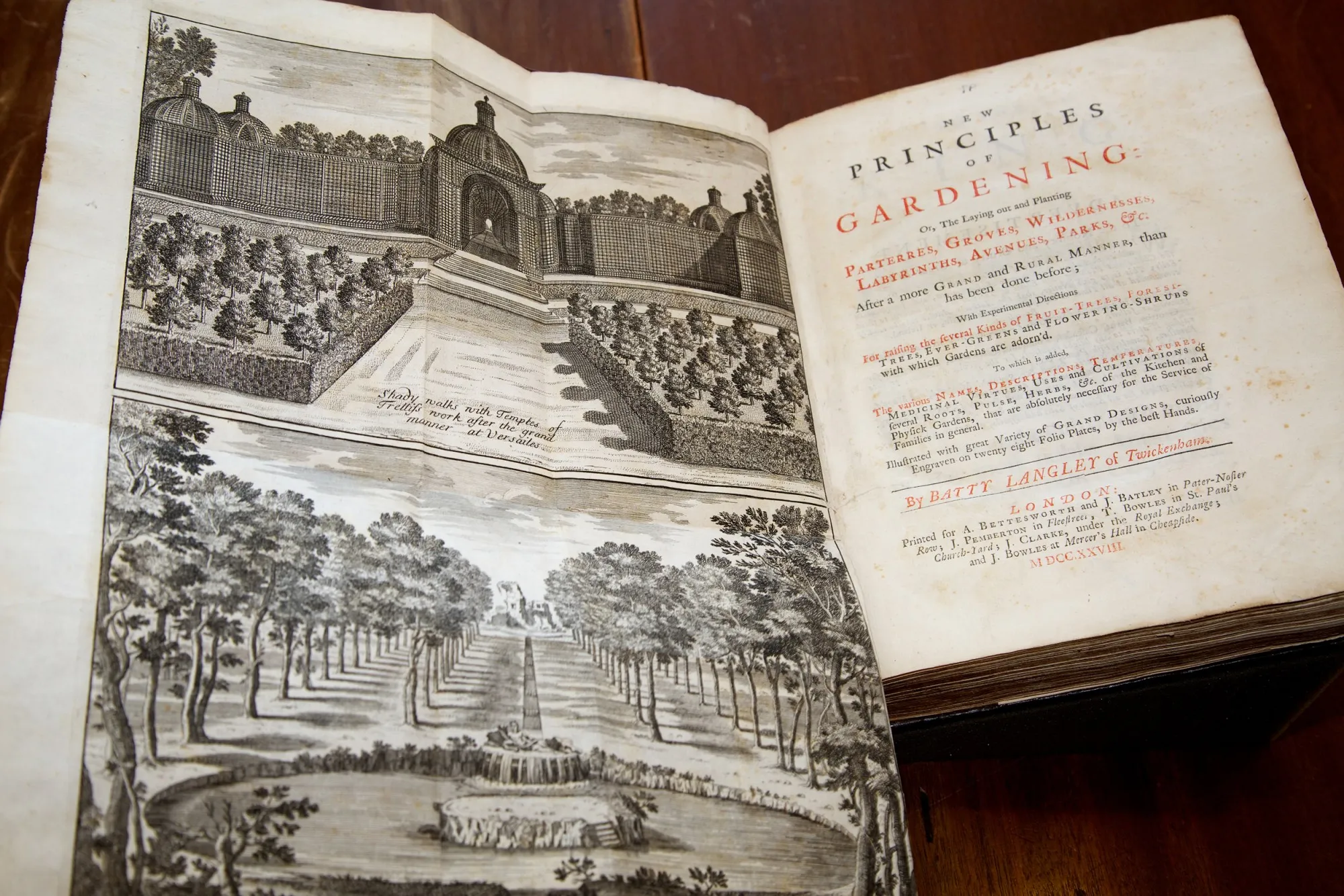
Another book Washington relied on heavily was Batty Langley's New Principles of Gardening (MVLA)
A Botanical Laboratory
The botanical garden was George Washington's laboratory.
His experimentation there was based on extensive reading of and correspondence with experts, but also on his unwillingness to accept anything on authority. He wanted to try plants in the climate and soils of his own country.
He was philosophical about failures in the botanical garden, as elsewhere.
In April 1786, gardeners "Took the covering off the Plants in my Botanical Garden, and found none living of all those planted the 13th of June last except some of the Acasee or Acacia, flower fence and privy [privet) .... Whether these plants are unfit for this climate, or whether covering and thereby hiding them entirely from the Sun the whole winter occasioned them to rot, I know not."
Consistent with his character, Washington tried to grow many of these plants again
Washington's "Vineyard Inclosure"
Washington was very clear as to the difference between his botanical garden and vineyard enclosure.
"The intention of the little garden by the Salt house &ca., was to receive such things as required but a small space for their cultivation," he wrote in 1793. "And what is called the Vineyard Inclosure, was designed for other articles of experiment, or for seed which required still greater space before they were adopted upon a larger scale."