
Explore Questions Americans Have Debated Since the Nation's Founding
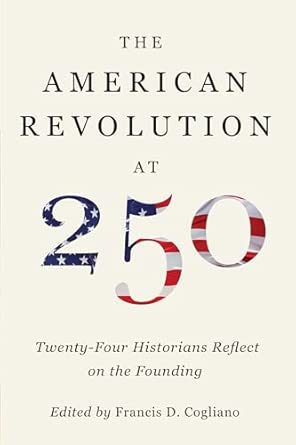
In these powerful and personal essays, some of the most celebrated historians of the American Revolutionary era reflect on the meaning of 1776 to the nation in 2026, offering fresh insights and food for thought on every page.
Dive Into the Defining Challenges of the Revolutionary Era
Discover the most pressing topics that Americans debated in 1776 and continue to debate today: the meaning of democracy; the nature of information wars; immigration and the rights and obligations of citizenship; race and slavery; public health; the various and conflicting legacies of the founders; and the shifting nature of commemoration itself.
Like the Revolutionary generation they know so well, on some issues these scholarly authorities find themselves largely in accord; on others they vehemently disagree. This is historical debate at its most urgent.
Featured Voices Behind This Work
- Allison Bigelow
- T. H. Breen
- Katherine Carté
- Lindsay M. Chervinsky
- Marlene L. Daut
- Andrew M. Davenport
- Christa Dierksheide
- Lauren Duval
- Joanne B. Freeman
- Annette Gordon-Reed
- Eliga H. Gould
- Patrick Griffin
- Nicholas Guyatt
- Ricardo A. Herrera
- Woody Holton
- Brendan McConville
- Michael A. McDonnell
- Peter S. Onuf
- Robert G. Parkinson
- Teresa R. Pollak
- John A. Ragosta
- Bertrand Van Ruymbeke
- Rosemarie Zagarri
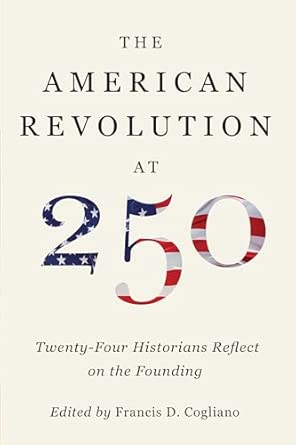
About the Book: The American Revolution at 250
This book, edited by Cogliano, features reflections from preeminent historians of the founding era on the anniversary of the United States’ birth. Freeman and Onuf are two of the contributors to this important collection of essays that confront some of the most pressing questions about the American Revolution and why the events from 250 years ago still matter today.
In these powerful and personal essays, some of the most celebrated historians of the American Revolutionary era reflect on the meaning of 1776 to the nation in 2026, offering fresh insights and food for thought on every page.
They tackle the most pressing topics that Americans debated in 1776 and continue to debate today: the meaning of democracy; the nature of information wars; immigration and the rights and obligations of citizenship; race and slavery; public health; the various and conflicting legacies of the founders; and the shifting nature of commemoration itself. Like the Revolutionary generation they know so well, on some issues these scholarly authorities find themselves largely in accord; on others they vehemently disagree. This is historical debate at its most urgent.
Contributors: Allison Bigelow, T. H. Breen, Katherine Carté, Lindsay M. Chervinsky, Marlene L. Daut, Andrew M. Davenport, Christa Dierksheide, Lauren Duval, Joanne B. Freeman, Annette Gordon-Reed, Eliga H. Gould, Patrick Griffin, Nicholas Guyatt, Ricardo A. Herrera, Woody Holton, Brendan McConville, Michael A. McDonnell, Peter S. Onuf, Robert G. Parkinson, Teresa R. Pollak, John A. Ragosta, Bertrand Van Ruymbeke, Rosemarie Zagarri.
Meet the Speakers

Frank Cogliano
A specialist in the history of the American Revolution and the early United States, Frank Cogliano has taught at the University of Edinburgh since 1997.
He is the author or editor of twelve books, including: A Revolutionary Friendship: Washington, Jefferson and the American Republic (2024; finalist for the 2025 George Washington Book Prize), Emperor of Liberty: Thomas Jefferson’s Foreign Policy (2014), and Thomas Jefferson: Reputation and Legacy (2006).
Cogliano's next book (with Peter S. Onuf), Thomas Jefferson Survives: American Independence in His Time and Ours, will be published by Liveright Press in June 2026. Along with Patrick Griffin, Christa Dierksheide, and Eliga Gould, he edits the Revolutionary Age series for the University of Virginia Press.
Cogliano is committed to engaging a wide audience with the study of history. He is the co-host of the American history podcast The Whiskey Rebellion with David Silkenat of the University of Florida. He is the president of the Open History Society in Edinburgh.
Cogliano makes regular media appearances, commenting on U.S. history, politics, and international relations for the BBC and other outlets.
He's been featured in five episodes of the BBC’s flagship program In Our Time, as well as BBC Radio 4’s You’re Dead to Me. He was the historical consultant for Glass Entertainment’s 6-part documentary, Thomas Jefferson.

Joanne B. Freeman
Joanne Freeman, Alan J. Boles, Jr. Professor of History, specializes in early American politics and culture. She has taught at Yale University since 1997. Her first book, Affairs of Honor: National Politics in the New Republic, won the Best Book award from the Society of Historians of the Early American Republic (2002). She also edited Alexander Hamilton: Writings -- one of the Atlantic Monthly’s “best books” of 2001; The Essential Hamilton: Letters and Other Writings; and co-edited Jeffersonian Republicans in Power, 1800-1824 with Johann Neem. Her most recent book, The Field of Blood: Violence in Congress and the Road to Civil War, was a finalist for the Gilder Lehrman Lincoln Prize.
An elected member of the Society of American Historians, the Connecticut Academy of Arts and Sciences, the Massachusetts Historical Society, and the American Antiquarian Society, Freeman was President of the Society for Historians of the Early American Republic from 2021-2022.
Freeman’s articles have appeared in a wide range of academic and popular publications, including the New York Times, the Atlantic, Politico, and the Washington Post; she often appears in documentaries and as a commentator on PBS, CNN, and MSNBC, NPR, and the BBC.
Long committed to public-minded history, Freeman has curated museum exhibitions, consulted for filmmakers, and gives frequent public lectures. A leading expert on Alexander Hamilton, her work was used by Lin-Manuel Miranda in writing Hamilton: An American Musical.
Freeman was a co-host of the history podcast, BackStory, and co-hosted the award-winning history podcast Now & Then with Heather Cox Richardson (2021-23). The two now co-host the weekly What the Heck Just Happened?, and Freeman hosts a weekly podcast, History Matters, and nighttime podcast, A Few Thoughts for Those Who Can’t Sleep, all available on her YouTube channel.

Peter S. Onuf
Peter S. Onuf, Thomas Jefferson Foundation Professor Emeritus in the Corcoran Department of History at the University of Virginia, is a specialist in the history of the early American republic, with a focus on Thomas Jefferson’s political thought.
Educated at Johns Hopkins University, where he received his A.B. in 1967 and Ph.D. in 1973, Onuf has taught at Columbia University, Worcester Polytechnic Institute, and Southern Methodist University before arriving in Virginia in 1990. His many books include:
Jefferson’s Empire: The Language of American Nationhood (2000), The Mind of Thomas Jefferson (2007), Jefferson and the Virginians: Democracy, Constitutions, and Empire (2018) and, with co-author Annette Gordon-Reed, Most Blessed of Patriarchs: Thomas Jefferson and the Empire of the Imagination (2016).
This coming June, Onuf and fellow Jefferson scholar Frank Cogliano will publish Jefferson Survives: American Independence in His Time and Ours. In 2008-2009 Onuf was Harmsworth Professor of American History at the University of Oxford; in 2014, he was elected to the American Academy of Arts and Sciences.

Lindsay M. Chervinsky
Dr. Lindsay M. Chervinsky is the Executive Director of the George Washington Presidential Library and a historian of the presidency, political culture, and the government.
She produces history that speaks to fellow scholars as well as a larger public audience. Chervinsky is the author of two books, The Cabinet: George Washington and the Creation of an American Institution (Harvard University Press, 2020), and her latest one, Making the Presidency: John Adams and the Precedents that Forged the Republic (Oxford Press, 2024).
She also co-edited Mourning the Presidents: Loss and Legacy in American Culture (University of Virginia Press, 2023). Chervinsky is the creator of the Audible course: The Best and Worst Presidential Cabinets in U.S. History.
Her research can be found in publications from op-eds to books, speaking on podcasts and other media, and teaching for every kind of audience.