
Animals of all kinds played an important role during the 18th century and in George Washington's life. They were also critical to the economy of the Mount Vernon estate.
Sheep
Mount Vernon was home to many sheep in George Washington’s time. His flock number ranged from 600 - 1,000 sheep. Sheep were very important, providing wool for clothing and blankets, manure for crop fertilization, meat for mutton and spring lamb, and lanolin for ointments.
Today, Mount Vernon raises Hog Island sheep, a rare breed that is native to Virginia and dates back to the 1600s. Hog Island is a barrier island off the Delmarva Peninsula where the sheep survived for hundreds of years until the Nature Conservancy purchased the island in 1974. The sheep were dispersed to historic sites mostly in Virginia. While we are not sure this is the breed Washington raised, they resemble sheep found in the colonies in the 1700s. Hog Island sheep are listed as “critical” with The Livestock Conservancy. Due to the critically low numbers of sheep, Mount Vernon is involved in a careful breeding program.
We follow Washington’s timeline for both breeding and shearing. Every October, our sheep are divided into breeding flocks, and we welcome new lambs in March. Our sheep are sheared every May using hand shears for the public to see.
Sheep at Mount Vernon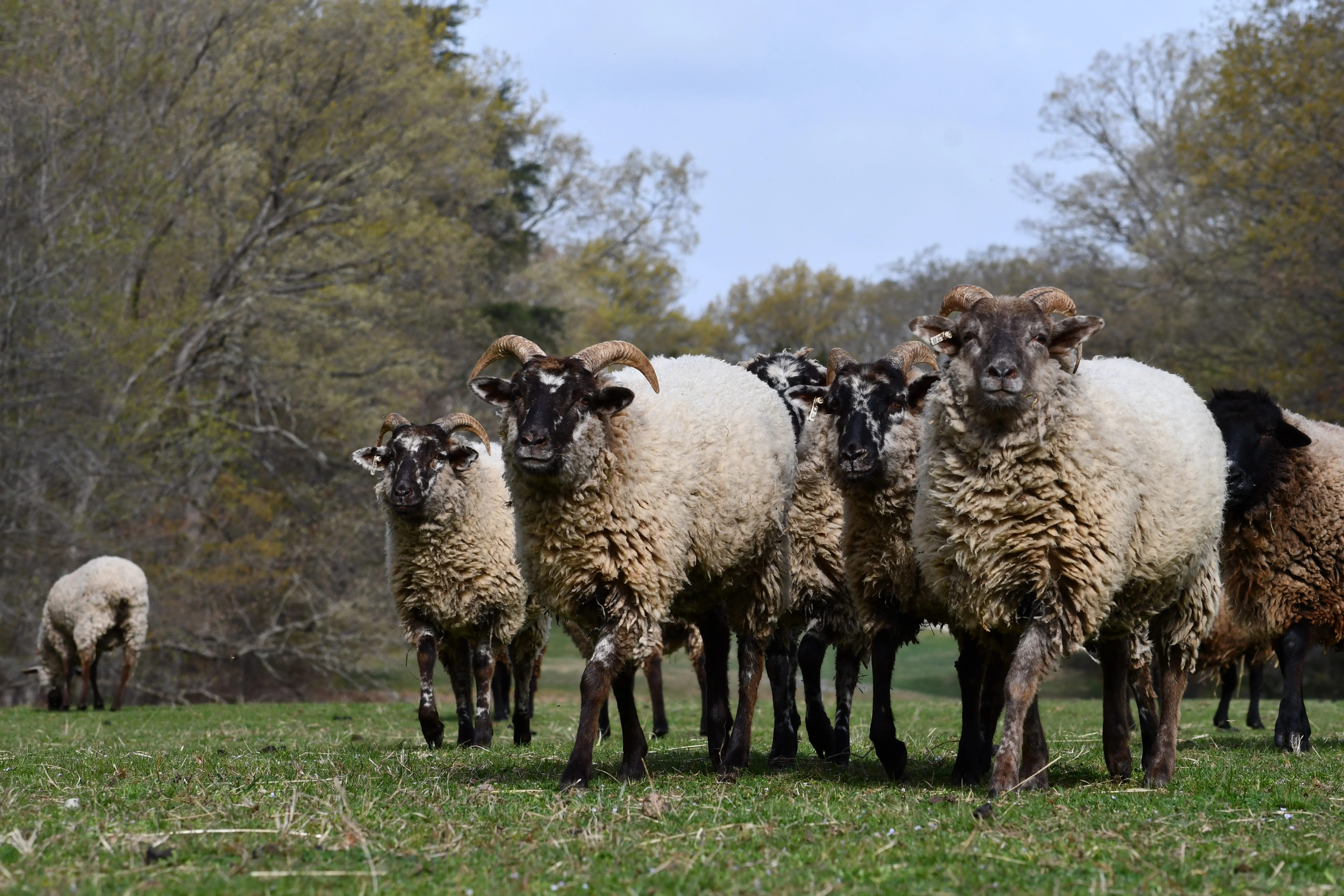
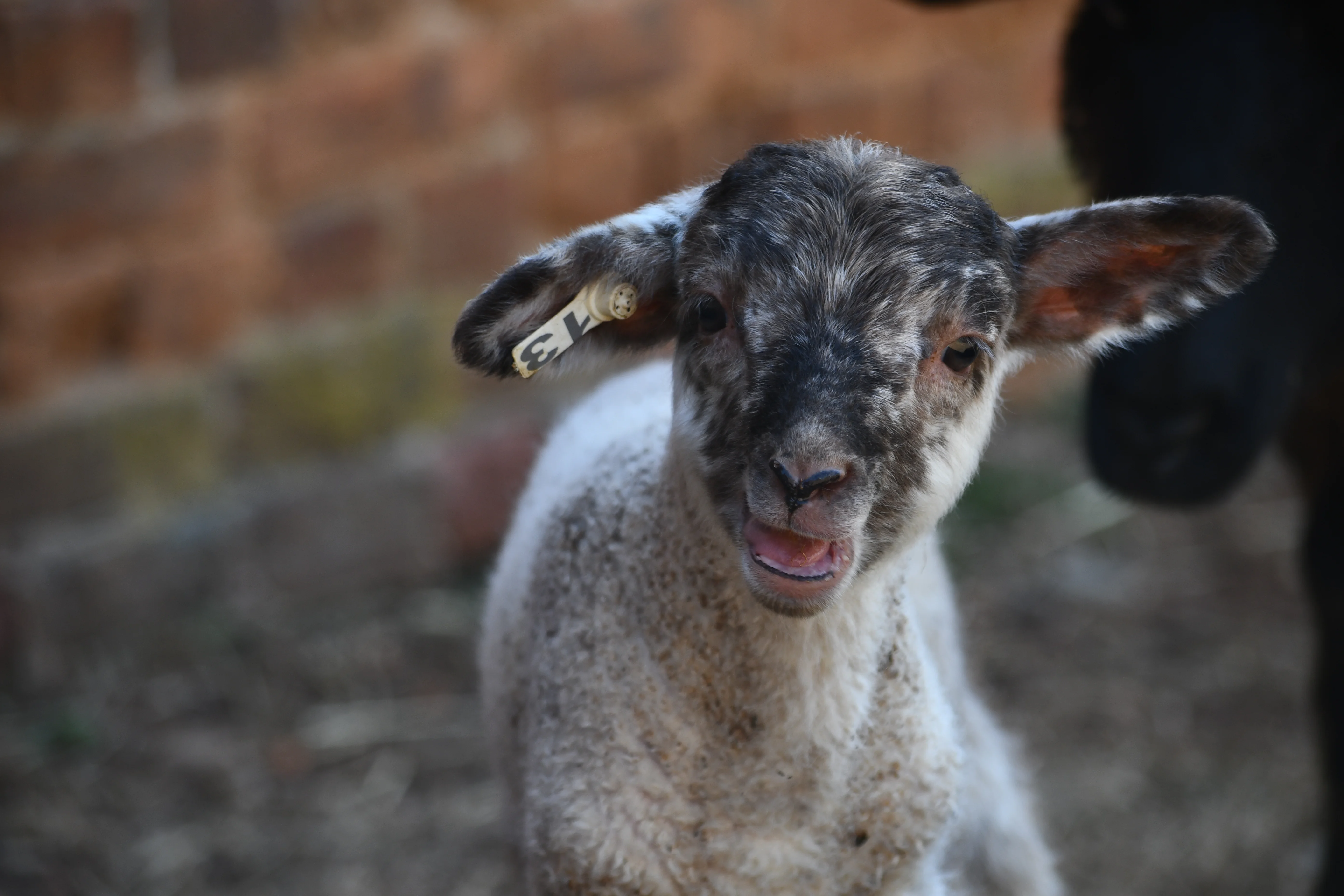
Sheep Shearing at George Washington's Mount Vernon
Carrie Uffelman, Livestock Handler at George Washington's Mount Vernon, invites you to come down and check out the sheep shearing demonstrations.
Mules
While not technically the originator of mules in America, Washington is frequently called “The Father of the American Mule." George Washington began breeding mules at Mount Vernon after he received a stud jack from the King of Spain in 1785. In 1786, the Marquis de Lafayette sent another jack and two jennets (female donkeys) to Mount Vernon. A mule is a hybrid cross between a male donkey and a female horse.
Washington was very fond of horses, but became convinced that mules worked longer and harder than horses and required less feed. In 1785, Washington’s inventories listed 130 horses and no mules. In 1799, 58 mules lived on Mount Vernon and only 25 horses.
Washington's enslaved groom Peter Hardiman would have been responsible for the daily care of George Washington’s horses, donkeys, and mules. This care would have involved feeding and grooming the equids and scheduling veterinary visits when needed.
Mount Vernon has previously employed a team of mules that worked on the Farm site plowing and harrowing fields, hauling compost, and pulling wagons. We also have an American Mammoth donkey that represents “Royal Gift”, Washington’s present from the King of Spain.
Donkeys at Mount Vernon
Cattle
During the peak of George Washington’s farming operation, over 300 cattle lived on the Estate. Cattle provided meat, milk, and associated products like butter, cream, and cheese. They were also a reliable source of labor on the farm. Washington branded all of his cattle with “GW” for identification purposes.
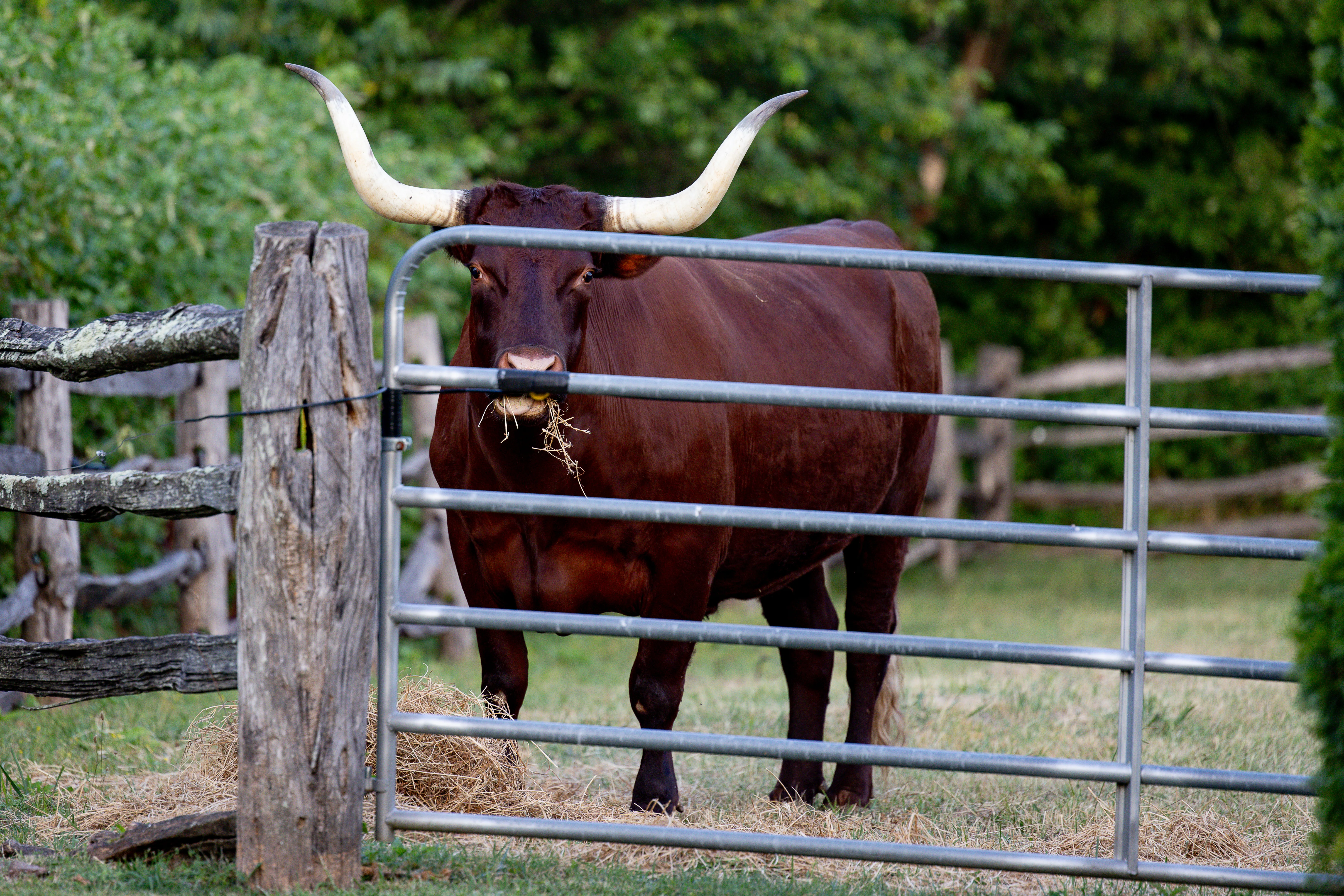
Today, Mount Vernon raises Milking Devon cattle, a breed developed in England and brought to Massachusetts in 1623. The Devons are known for their deep red color and versatility. They are a hardy breed and can thrive in rugged conditions. Mount Vernon’s heritage breed program raises Devons as part of a conservation effort to help preserve the breed. The cattle are listed as “critical” with The Livestock Conservancy, meaning less than 200 animals are registered in the United States annually.
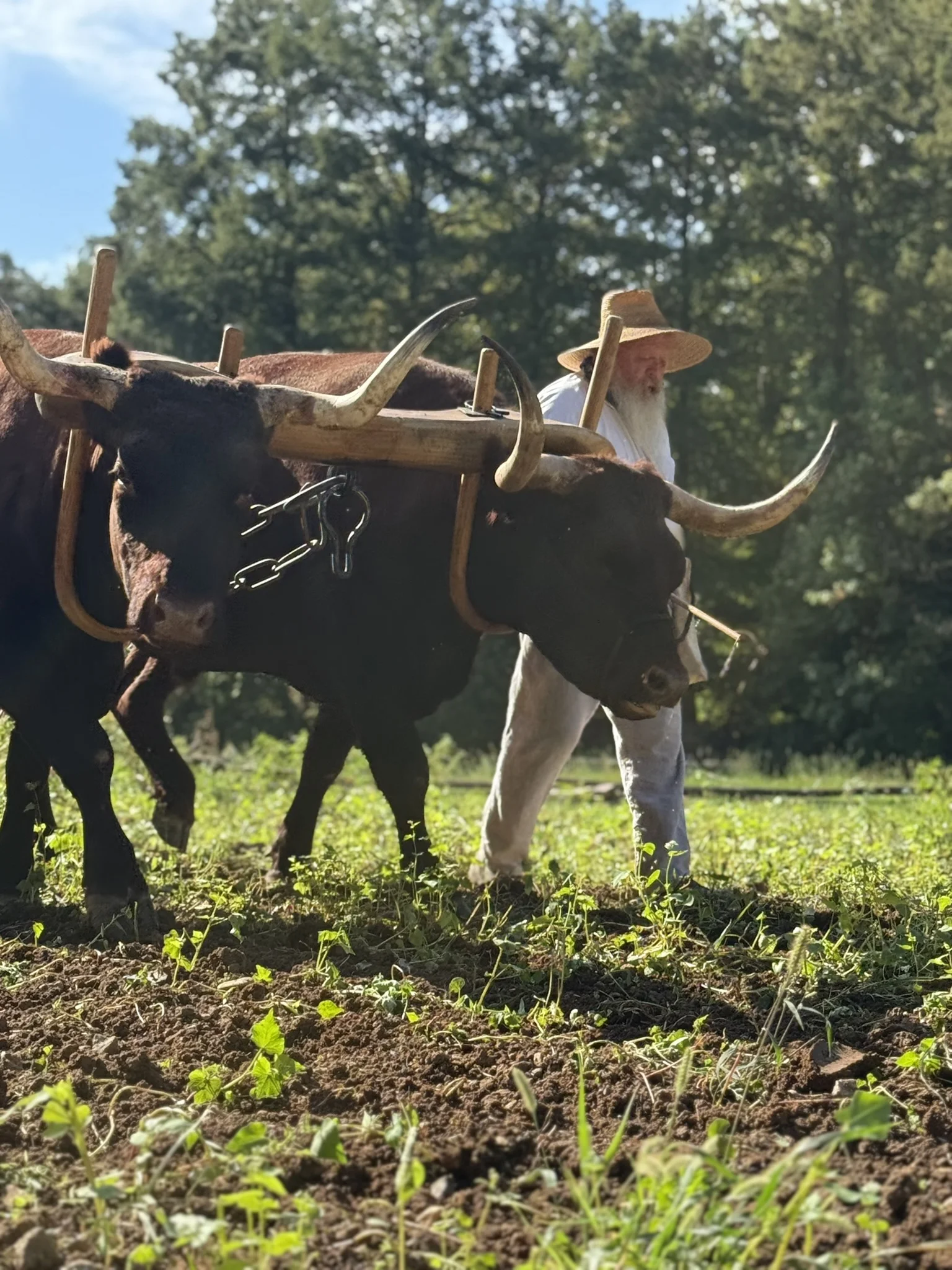
Oxen played a very important role on the farm, performing many jobs such as plowing and hauling carts. They were often referred to as a “poor man’s working team.” We have a working team of oxen, Spud and Knox, who haul compost, work our fields, and exercise with a stoneboat. Spud and Knox were born at Mount Vernon and trained by our livestock team.
What was George Washington's Favorite Animal?
Mount Vernon livestock handler Damara Gailliot describes some of the different animals George Washington bred on his farm, including American foxhounds and mules.
Horses
Thomas Jefferson once referred to George Washington as one of the finest horseman of his time. As an avid horseman, Washington maintained a stable of fine, well-kept horses. They provided transportation, pulled carriages, worked in the fields and wheat treading barn, and were even used for recreation. Washington enjoyed fox hunting on the Estate and had a pack of hounds specifically for this purpose. He owned an Arabian stallion named Magnolia, whom he used in a breeding program at Mount Vernon. Nelson and Blueskin were two of George Washington’s favorite horses and carried him during the Revolutionary War.
Today, we use our horses to perform a variety of tasks, including work in the 16-sided wheat treading barn during late summer and early fall, which demonstrates how wheat kernels are separated from the stalk.
Learn more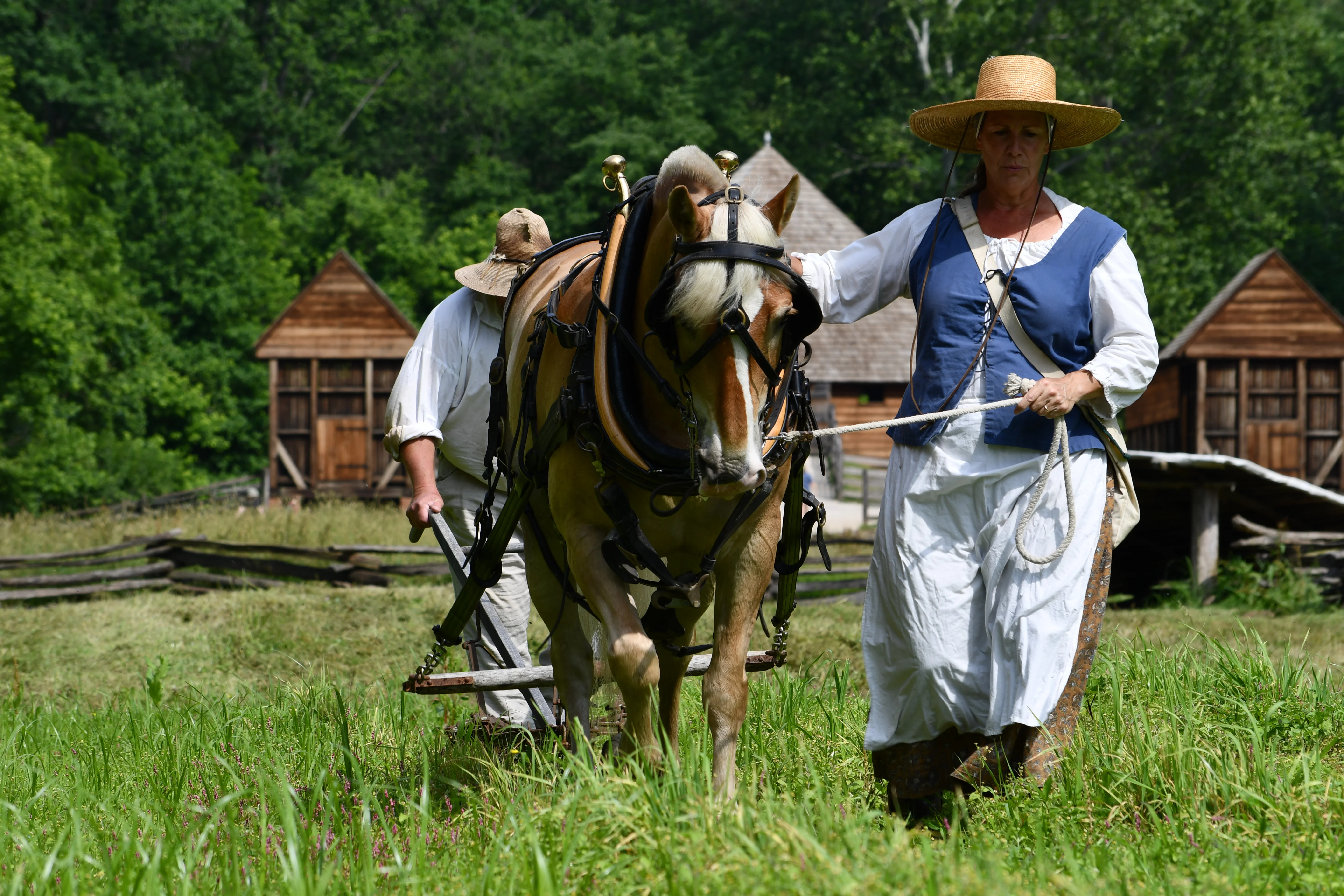
Hogs
Hogs were very popular in the 18th century as a valuable source of food. George Washington’s hogs ran loose in the woods, foraging on nuts and insects, until they were gathered in the fall for fattening. Ham, salted pork, bacon, lard, scrapple, and chitterlings were all very common foods in colonial times.
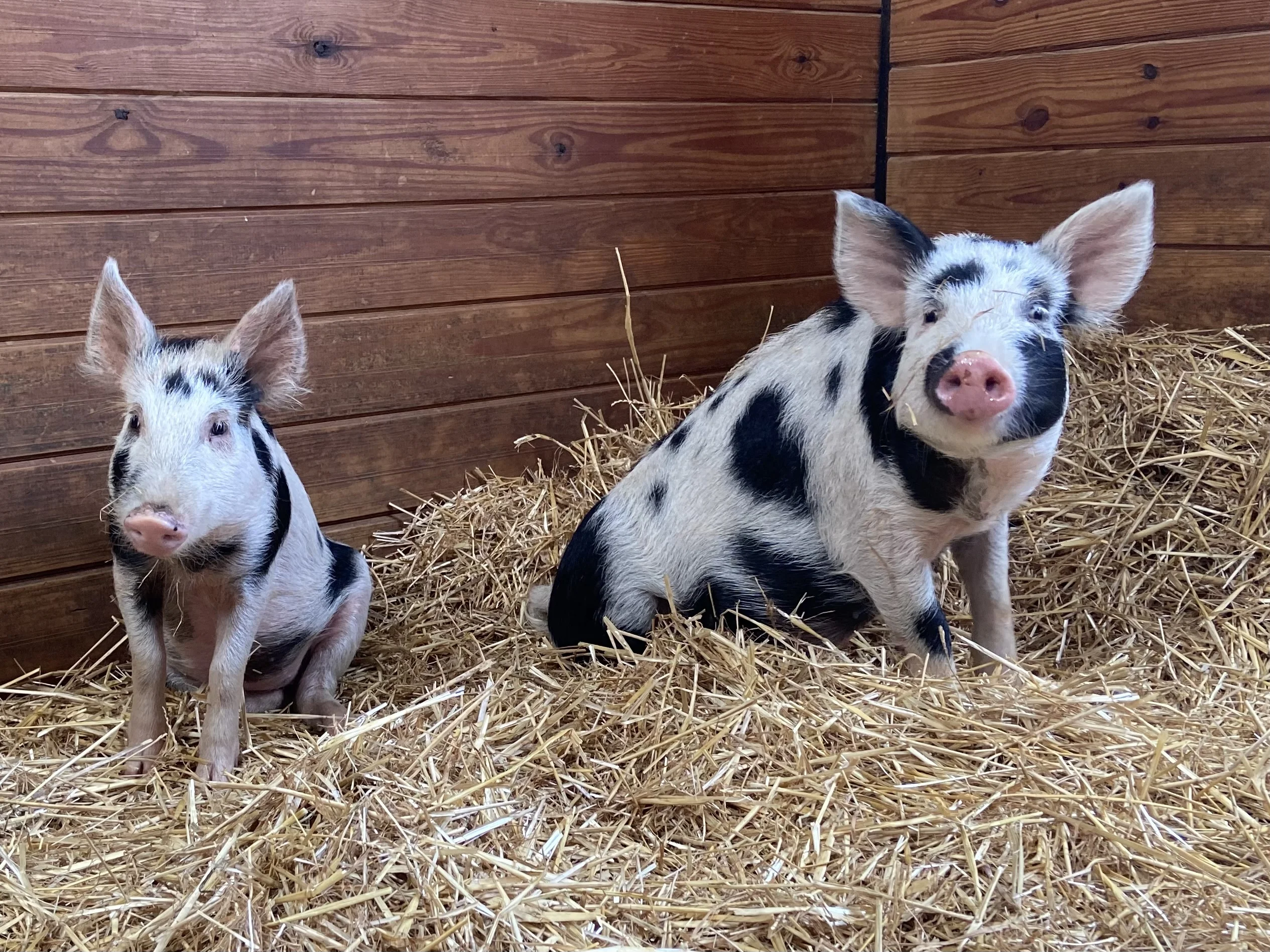
Today, Mount Vernon raises Ossabaw Island hogs. Ossabaw Island is off the coast of Georgia, near Savannah. They are descendants of pigs brought to North America over 400 years ago by Spanish explorers.
Ossabaw Island hogs come in a variety of colors—gray, black, red, tan, and even spotted. Listed as “critical” with The Livestock Conservancy, Mount Vernon has been breeding the Ossabaws for over 20 years. We have sold piglets to other historic sites and hobby farmers all over the country who are committed to preserving this rare breed.
Hogs at Mount Vernon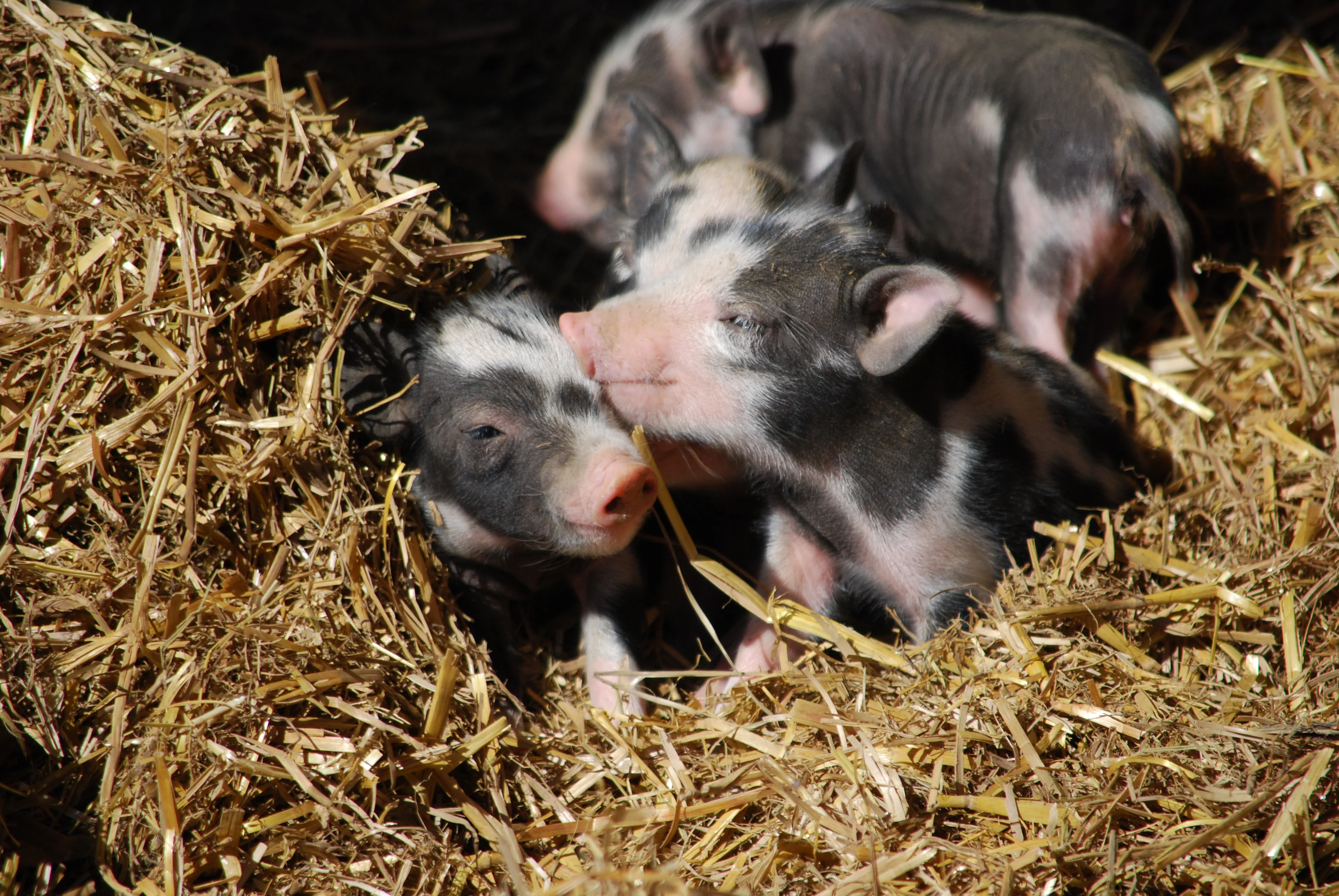
Dogs
General Washington loved dogs, and so do we. Mount Vernon invites guests to enjoy this landmark property along with their pets. Learn more about dogs on the Estate, yesterday and today.
Learn moreCats
There are no references to pet cats at Mount Vernon in the 18th century, but that can probably be explained by the fact that George and Martha Washington were such avid dog and bird people.
There were cats at Mount Vernon during the 18th century, probably “barn cats,” prized for their ability to keep the rodent population under control. Scientific analysis of organic materials found in the cellar of a slave quarter on the estate identified the bones of domestic cats, indicating that enslaved people may have kept felines as pets.

Mount Vernon still uses barn cats today to help control the mouse population. Here are two such Mount Vernon cats: Midge (left) and Sprocket. (MVLA)
Chickens
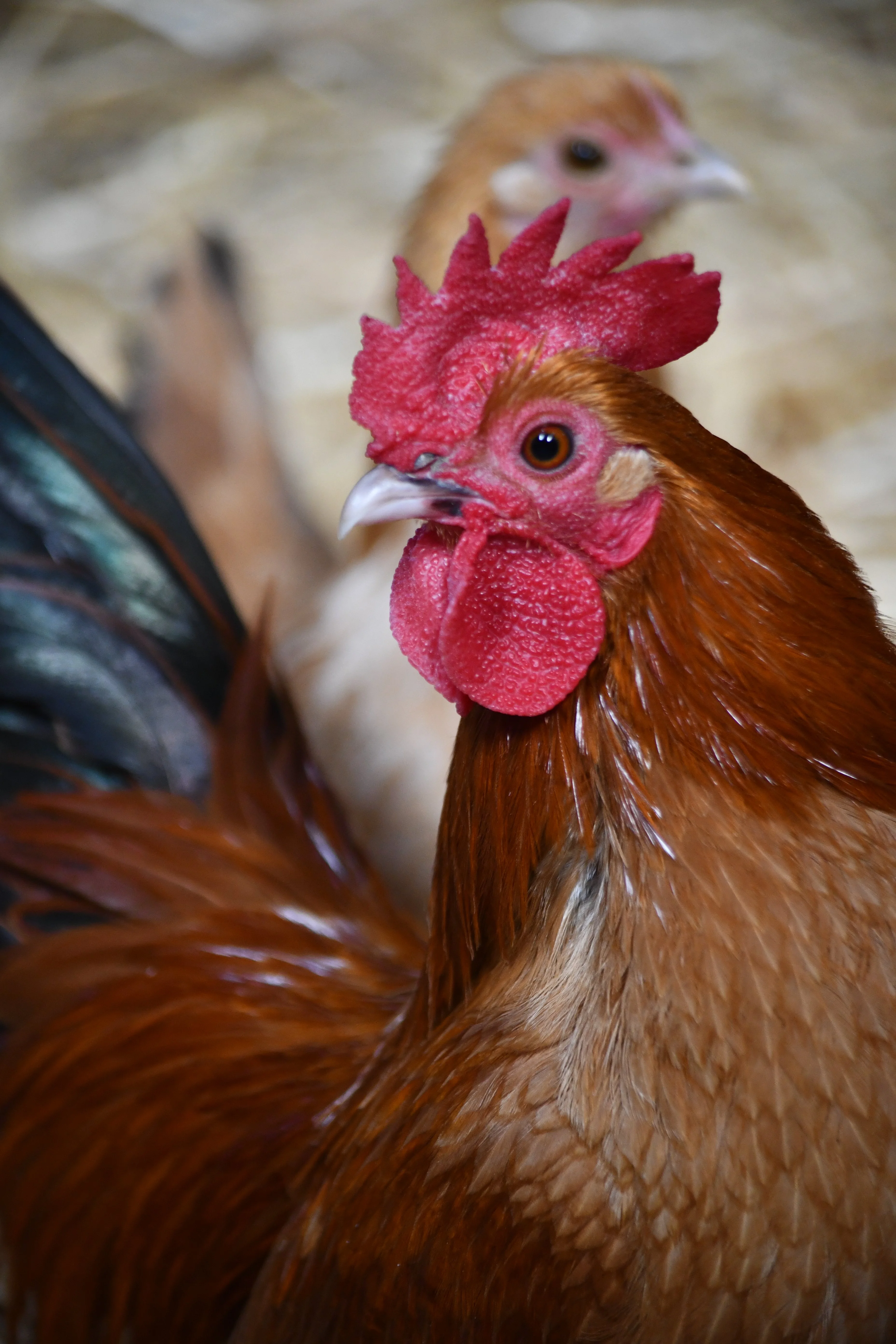
The Washingtons raised a variety of domesticated fowl, including chickens and turkeys, to supply their table with both meat and eggs. Care of these birds typically fell under the control of the plantation mistress, and there are hints that George Washington did not maintain a flock of chickens or other birds before his marriage.
In a letter written three months after his marriage to Martha, George Washington alerted his hired servant, John Alton, to his imminent arrival at Mount Vernon with a wife and children. In order to make the best impression on his new family, Washington wanted the beds made up, all the furniture polished, and to "get some Egg's [sic] and Chickens," suggesting that there were no such creatures at Mount Vernon until sometime after Mrs. Washington's arrival.
Turkeys
There were far fewer domesticated turkeys than chickens at Mount Vernon. However, they were by no means scarce. Throughout the 1760s, beginning about a year after their marriage, the Washingtons seem to have made a concerted effort to build up their turkey flock. While her husband was away for eight years during the American Revolution, Martha Washington continued to purchase and, presumably, have turkeys raised.
Wooden boxes, constructed by the plantation's carpenters, were provided as nesting places for the turkey hens in the spring. The hens might lay up to 30 eggs, which would hatch after about four weeks. The standard practice of the period would have been to keep the newborn chicks indoors where they could be safe from predators until they were strong enough to fend for themselves.
Turkey was served at both the Washingtons' table and in the slave quarters at Mount Vernon. In addition to roasting, Martha Washington's cookbook included recipes for sousing or pickling the birds "in Imitation of Sturgeon," stewing, boiling, and serving them in jelly. Turkey was also one of the principle ingredients in Yorkshire Christmas Pie, which was a focal point of Christmas dinner with the Washingtons.
View the recipe for Yorkshire Christmas Pie
A large number of turkey bones were excavated by archaeologists at the site of an original slave quarter at Mount Vernon. This suggests that the inhabitants ate turkey. Interestingly, while there are numerous references to the plantation's enslaved workers keeping chickens and ducks, there are no indications that they raised turkeys. This would suggest that the turkeys eaten in the slave quarters were acquired mainly through hunting.
Learn More about the slave quarters excavation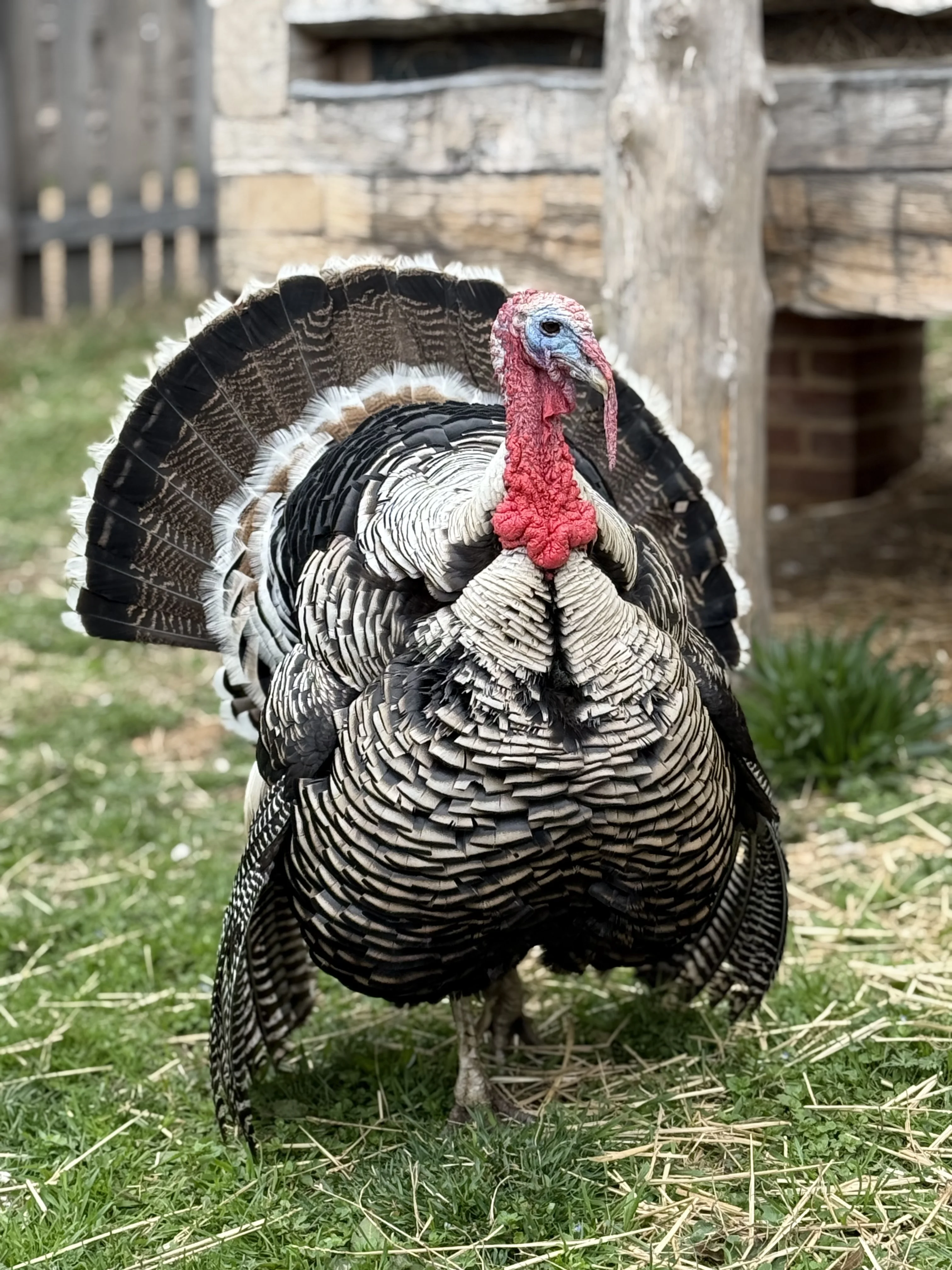
Geese
Geese, both wild and domesticated, were acquired for and raised at Mount Vernon over many years. In Washington’s time, geese were raised mainly for their feathers, which were used in feather beds and pillows, arrows, and quill pens.
It was not unusual in the Chesapeake at this period to let domestic geese interbreed with their wild cousins. These mixed-breed birds were often preferred because their meat tasted better than either the purely wild or domesticated birds. The wild geese might be slightly wounded or have their wings clipped in order to keep them on the farm. Another tactic for introducing wild geese was to take their eggs and introduce them to the nests of the domestic variety. Typically allowed to wander at will, geese were generally penned only in the winter, when they would be enticed into the yard with barley or cornmeal.
One Mount Vernon visitor recorded that the dinner he was served there in the winter of 1799 included goose as one of the selections from which he could choose at the first course. The young man did not mention how it was cooked, but a popular English cookbook of the period which was owned by Martha Washington included many recipes for goose. The birds might be roasted; boiled with onions or cabbage; served with a sweet green sauce made of sorrel; or served in a ragoo or as Goose a la Mode, a rather complicated recipe using dried tongue, chicken, sweet herbs, onion, ham or bacon, red wine, ketchup, veal sweetbreads, truffles, morels, butter, flour, pepper, salt, and mace, with some lemon for garnish. Instructions were also given for drying a goose so that it would keep for two or three months. A goose was one of the primary ingredients in Yorkshire Christmas Pye, as well as the star attraction in “Goose-Pye.”


Ducks
While there are many references to ducks in George Washington’s papers, most of them record his love of hunting wild ducks rather than the cultivation of ducks at Mount Vernon. According to one livestock historian, ducks were probably raised less frequently than other varieties of fowl, perhaps because of the great abundance of wild ducks around the Chesapeake Bay. One visitor to Mount Vernon in 1785 wrote, “The situation is a heavenly one, upon one of the finest rivers in the world. I suppose I saw thousands of wild ducks upon it, all within gunshot.”
The Washington family enjoyed eating duck. Following his retirement from the presidency, George Washington met some friends in nearby Alexandria for dinner at the City Hotel. The proprietor, John Gadsby, mentioned that he had a good supply of canvas-back ducks in the larder, which led Washington to reply, “Very good, sir…give us some of them, with a chafing-dish, some hommony [sic], and a bottle of good Madeira, and we shall not complain.”

Aladdin the Camel
In 1787, George Washington paid 18 shillings to bring a camel to Mount Vernon to entertain his guests. Since 2008, Mount Vernon has welcomed Aladdin the camel each Christmas season for the same reason.
Learn moreDeer
George Washington transformed the area just below the lawn overlooking the Potomac into an 18-acre park for tame deer. Washington was very fond of the deer, admitting in a letter of August 8, 1792, that he had given up his beloved pack of hounds because the deer were afraid of them.
Several visitors mentioned the deer, but the most charming is probably the one left by British Lieutenant John Enys from February 1788: “…before the South front is a peice [sic] of Ground kept as a Park in which th[e]re are about forty Deer, some English, some Natives of this country but among the rest one very singular one wh[i]ch he lately got as a present from the Back country called Kentucky. It is the size and shape of the American Deer and its Spots are of the same Colour [sic] but the rest of its Body is as white as the Driven Snow. They are all extreemly [sic] tame, come to be fed when they are called and will suffer you to play with them.”
Although they were beautiful, the deer could also be dangerous. Washington’s diary entry for Sunday, November 9, 1788, records that “One of the Bucks in the Paddock having much wounded the Young woman Dolshy [an enslaved spinner], Doctr. Craik was sent for who came and stayed all Night.”
While Washington was away from Mount Vernon during the presidency, the fences were neglected and his deer escaped from the park. Within just a few years, he noted that, “The old ones are now partly wild, and partly tame; their descendants are more wild, but associate with them; and seldom go beyond the limits of my own woodland.”
LEarn More about Washington's Deer Park
George Washington's drawing of the deer park wall at Mount Vernon. (MVLA)

Bison
Washington spent about 10 years on the frontier as a young man, both as a surveyor and as a soldier during the French and Indian War. After he left the service, Washington went on frequent sightseeing and hunting expeditions with his dear friend, Dr. James Craik. In addition to gaining a familiarity with the land itself, these experiences also enabled Washington to know the inhabitants of these areas—both human and animal.
While exploring the Great Kanawha River by canoe in the fall of 1770, he described a country abounding "in Buffalo & wild game of all kinds." The buffalo mentioned in this account is generally known as an Eastern bison.
Bison provided one of the foods that sustained Washington and his party on the frontier. While on the Ohio River in 1770, Washington ran into Kiashuta, an Iroquois leader he had met on his mission to the French commandant in 1753. The two men were pleased to see one another, and Washington's "old acquantaince" made a gift to him of "a Quarter of very fine Buffalo..." and expressed an interest in opening up trade with Virginians.
Washington had an interest in raising bison for many years. In 1775, just before he left Mount Vernon for the Second Continental Congress, he instructed overseer James Cleveland to "try and buy me all the Buffaloe [sic] Calves you can get and make them as gentle as possible... I am very anxious to raise a Breed of them." It is likely that Washington intended to train young buffalo to pull plows and wagons. He first expressed this idea during the same period in which he was actively importing donkeys from Spain, Malta, and South America, in hopes of raising superior mules for use by the country's farmers. It is possible he might have contemplated a similar cross between cattle and buffalo, in order to obtain a larger, stronger draft animal, which might need less care than oxen and could even produce a hardier variety of wool than could his sheep.
Though it took many years, there were finally two bison at Mount Vernon by 1800, although it is not clear when they arrived. The only known record of buffalo at Mount Vernon comes from an estate sale ten months after Washington's death.
Learn more

Parrots
In the 1790s, during George Washington’s presidency, his step-granddaughter Nelly had a green parrot as a pet. She wrote to tell a friend in 1794 that she was teaching the bird to sing, with admittedly dubious results “...had the honor & glory of teaching our pretty green pet to sing Pauvre Madelon. You may guess what kind it was. A master peice [sic] of thorough Base [sic] (in music spelt [sic] Bass [sic], but I thought Base [sic] would give you a better idea of his harmonious voice) he is vastly improved I assure you…”
As the family was about to head back to Mount Vernon after George Washington’s retirement in March 1797, Washington wrote “On one side I am called upon to remember the Parrot [sic], on the other to remember the dog. For my own part I should not pine much if both were forgot.”
After her husband's death, Martha Washington kept a cockatoo for company. A guest who stopped by to see Mrs. Washington in the spring of 1802 found that she was too ill to have visitors. Touring the house anyway, the disappointed man noted that there “were several species of parrot” on the piazza, among which was a cockatoo, who was a special pet of Mrs. Washington. When the visitor’s female friend sat down for a few minutes, the cockatoo hurriedly left his cage and “endeavoured to gain her favour by a familiarity which thwarted his design. Alarmed at the hurried motions & chattering of the poor fellow, she fled & left him as destitute as before.” The doctor caring for Mrs. Washington came along about that time and helped the couple to understand that “this bird was the favourite of Lady Washington, who fed & caressed him daily & being neglected since her sickness, he seemed quite lost & dejected.”
Learn more

Bees
There is only one brief mention in George Washington’s papers indicating that bees were raised at Mount Vernon. On July 28, 1787, three hundred nails were given out at the Storehouse to an indentured English joiner named Matthew Baldridge, “to make a bee house.” In addition to getting honey from his own bees, Washington is known to have purchased honey, as well as other foodstuffs such as chickens, eggs, vegetables, and fruit from his enslaved workers.
See what's in bloom in spring at Mount vernon

Honey Bees at Mount Vernon
John Ferree, Mount Vernon's beekeeper, discusses the roles honey bees played at Mount Vernon.
Watch the video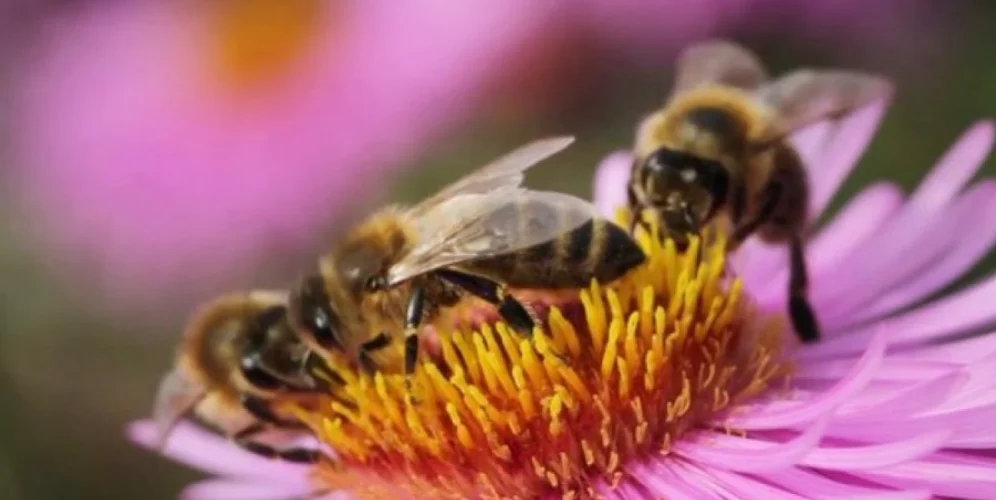
Goldfish
There is an interesting clue to another type of pet in a painting done circa 1834 by Alexandria artist John Gadsby Chapman entitled The Bedchamber of Washington In Which He Died With All The Furniture As It Was At The Time.—Drawn on the spot by permission of Mrs. John Washington of Mount Vernon by Jn. G. Chapman.
In order to do this painting, Chapman interviewed several of Martha Washington’s descendants. They knew what the room had looked like in the 18th century and owned pieces of furniture which had been in the room. Chapman painted pieces of furniture which were in several houses and placed them in the setting of the Washington bedchamber, presumably in the places they had originally stood.
On Martha Washington’s desk, which is shown on the left side of the painting, is a glass bowl containing a goldfish.
Learn More about the Washington Bedchamber

The Bedchamber of Washington, in which He Died, with All the Furniture, as It Was at the Time, Drawn on the Spot by Permission of Mrs. John Washington of Mount Vernon, by John Gadsby Chapman, 1834. Courtesy of the Wethersfield Estate, Amenia, NY.

Detail of painting depicting goldfish bowl in the Washington bedchamber
Animal Day at Mount Vernon
Take a look behind the scenes and meet those responsible for taking care of Mount Vernon's animals.
Meet the Animals
Visit the animals living at Mount Vernon, including breeds raised on the estate in George Washington’s time.
Learn more