
Unanimously elected twice, President Washington established many crucial presidential precedents.
George Washington helped shape the office's future role and powers, as well as set both formal and informal precedents for future presidents. Washington believed that it was necessary to strike a delicate balance between making the presidency powerful enough to function effectively in a national government, while also avoiding any image of establishing a monarchy or dictatorship. In the process, President Washington significantly influenced the path for the presidency moving forward, setting standards in all aspects, including political power, military practice, and economic policy.
Explore Deeper
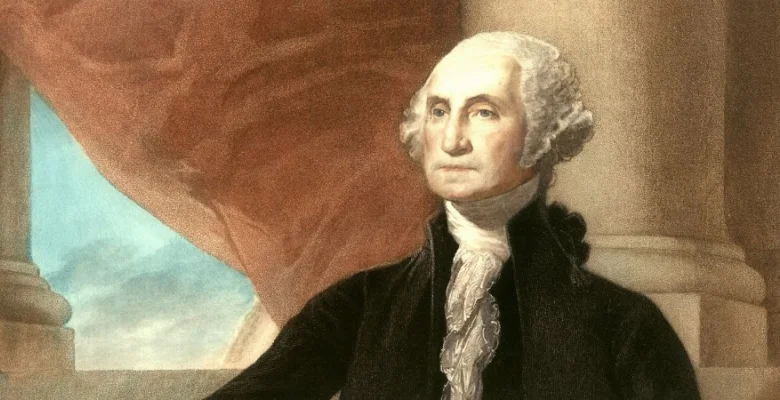
Ten Facts about Washington's Presidency
There were many precedents and challenges confronting Washington as our first president.
Learn More
Washington's Election
Everyone expected George Washington to win the first election in 1789. But an equally important question remained unanswered: would he accept the job?
Learn more
Washington's Inauguration
Explore George Washington's historic journey to New York City for his first presidential inauguration in 1789.
Learn More
The First First Lady
Just as her husband realized that his every action might set a precedent for future presidents, so was Martha Washington aware that her behavior as first lady would become the template for the wives of future chief executives.
Learn more
Slavery and Washington’s Presidency
After the American victory in the Revolution, George Washington repeatedly voiced opposition to slavery in personal correspondence. He privately noted his support for a gradual, legislative end to slavery, but as a public figure, he did not make abolition a cause.
Learn more
Presiding in a Crisis
President Washington confronted crises
and set the template for presidential leadership.
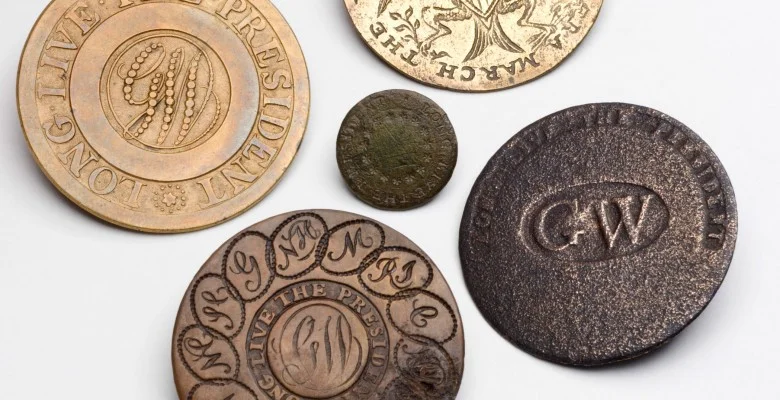
Presidential Objects
Rare artifacts and personal belongings from George Washington's presidency offer a glimpse into the early days of the nation.
Explore
The First Cabinet
George Washington’s cabinet included four original members: Secretary of State Thomas Jefferson, Secretary of Treasury Alexander Hamilton, Secretary of War Henry Knox, and Attorney General Edmund Randolph.
Learn More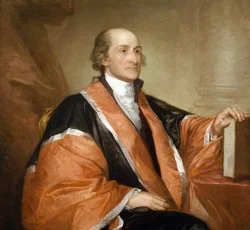
The First Supreme Court
As the first president, and since there were no sitting justices at the beginning of his term, George Washington had the unique opportunity to fill the entire body of United States federal judges with his selections-- including the Supreme Court.
Learn more
State of the Union Address
On January 8, 1790, President George Washington delivered to Congress the first State of the Union address in American history. This precedent setting address presented defense, foreign policy, economic, education, and immigration related topics.
Learn MoreWho Was Washington's Vice President?
Washington vs. Jefferson
Discover how conflict between the two most famous founding fathers shaped the U.S. presidency.

First US Census
The 1790 census was the first federally sponsored count of the American people and one of the most significant undertakings of Washington's first term.
Learn more
A Philadelphia Story
In 1793, a yellow fever epidemic hit the city hard, and sent George Washington and the federal government packing.
Learn moreGeorge Washington did not have an easy time as president for many reasons:

Presidential Entertaining
In addition to his appearance in public settings, Washington paid close attention to the manner of domestic entertaining that he felt best defined the new American presidency.
Learn More
First 100 Days
Today we judge our modern Presidents by how much they achieved in their first 100 days. See how Washington stacked up to the others.
First 100 Days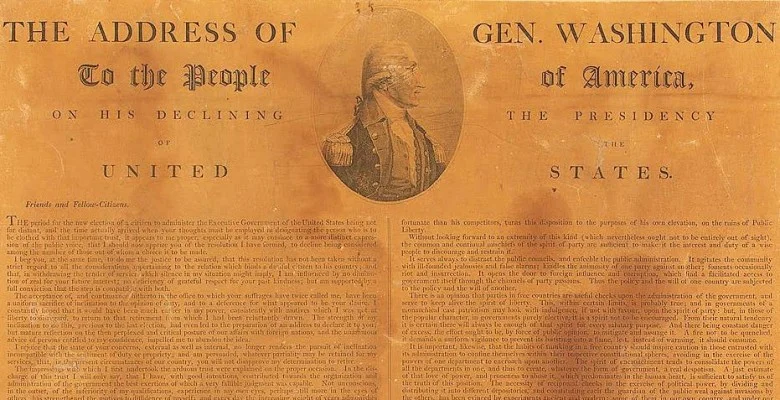
The Farewell Address
Washington’s iconic Farewell Address stands today as a timeless warning about the forces that threaten American democracy.
Learn more
Four More Years?
Peek inside the secret plot to push Washington into a third presidential term.
Learn moreKey Information about Washington's Presidency
| Unanimously elected: | February 4, 1789 |
| Inauguration: | April 30, 1789 |
| Resigned: | March 4, 1797 |
| Terms served: | 2 |
| Vice President: | John Adams |
| Political affiliation: | None |
| Salary: | $25,000 |
| States Joined the Union: | North Carolina (1789), Rhode Island (1790), Vermont (1791), Kentucky (1792), Tennessee (1796) |
New Video
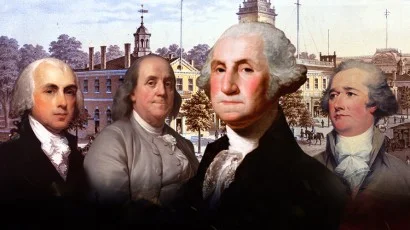
A More Perfect Union
Watch our animated video presentation about George Washington and forming the U.S. Constitution.
Video
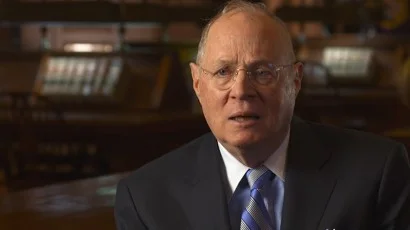
Justice Kennedy on George Washington
Watch our interview with Supreme Court Justice Anthony Kennedy. Learn about the vital role that Washington played during our founding.
Washington's Sacred Union
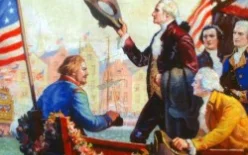
Historian Susan Dunn writes that Washington's ultimate goal as America's first president was to set the new nation on a path to reason and happiness.
Alexander Hamilton
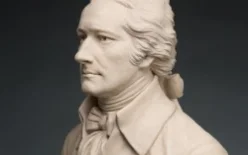
The relationship between George Washington and Alexander Hamilton was consequential for the lives of both men—and for the founding of the United States.
Primary Sources
Key Acts, Treaties, and Speeches from Washington's Presidency
- Washington's First Inaugural Address
- Washington's Second Inaugural Address
- First Bank of the United States
- Thanksgiving Proclamation
- State of the Union Address (1790)
- Naturalization Acts of 1790 and 1795
- Copyright Act of 1790
- Residence Act of 1790
- Militia Act of 1792
- Fugitive Slave Act of 1793
- The Naval Act of 1794
- The Jay Treaty (1795)
- Pinckney's Treaty (1795)
- Washington's Farewell Address (1796)